In this article, you will read about:
9 of the Best Books on Tantra
Putting Theory into Practice with Tantra Sadhana App
In the rich spiritual tradition of India,Tantra stands as a transformative and integrative path that combines devotion, philosophy, external rituals, and internal energy work.
While modern literature often distorts Tantra into either mysticism or indulgence, the real path is one of discipline, purity, and awakening.
The following spiritual Tantra books provide seekers with guidance rooted in ancient wisdom, practical methods, and the goal of ultimate liberation.
1. Rudra Yamal Tantra
One of the most foundational scriptures in Shaiva-Shakta traditions, the Rudra Yamala Tantra presents deep insights into various core concepts and applications of Tantra through a dialogue between Rudra (Shiv) and Devi (Parvati).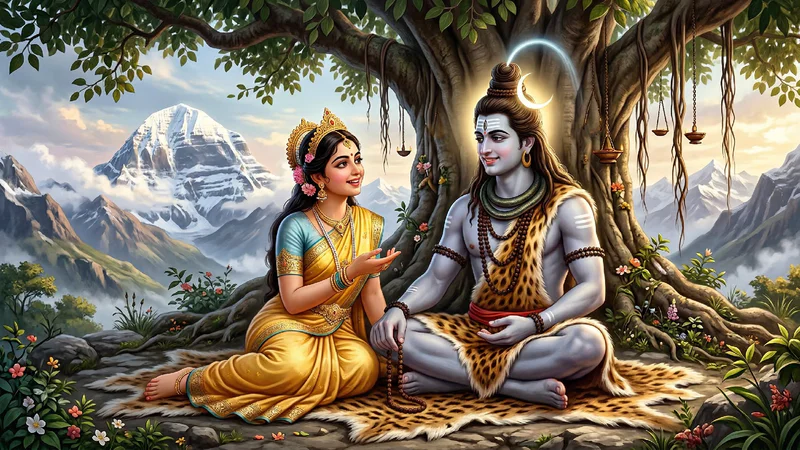
Translated Excerpt:
“Shakti is Kundalini Devi, the true form of the Mother of the world. The vital breath of Shakti pervades the macrocosm, including constellations, Nakshatras, and lunar days. Practising according to the rules, She gives the state of Khechara in one month, a diamond body in two, etc. Eventually, a Sadhaka becomes one with Supreme Shiva by knowledge of the vital airs.”
Thus, it sheds light on some of the core concepts of Yoga: the union of Shakti (Dynamic Energy) and Shiva (Supreme Consciousness).
2. Vijnan Bhairav Tantra
The Vijnan Bhairav Tantra lists 112 powerful meditation techniques that utilise the power of sensations like breath, sound, and touch to help practitioners experience higher states of consciousness.
Translated Excerpt:
“The one who knows that all perceptions—whether of pain or pleasure, sound or silence, form or formlessness—arise within Consciousness, and are not separate from it, such a person rests in the state of Bhairava.”
Such insights into the nature of Consciousness show spiritual seekers the right mindset to practise these meditation techniques.
3. Tantralok by Abhinavagupta
Abhinavagupta’s Tantralok (Light of the Tantras) is considered a monumental Tantra Mantra guide within the Trik/Kashmir Shaiv tradition. A distilled version of the Tantralok, called Tantrasar, is ideal for understanding its essence.
Translated Excerpt:
“The Self is not inert or fixed—it pulsates with awareness, even in seeming stillness. Just as a flame flickers while appearing motionless, so too does Consciousness throb as all perception, thought, and experience. To know the Self is to feel this subtle throb in everything—even silence.”
This highlights the uniqueness of the tradition’s non-dual philosophy: seeing the Self or Shiv as an active rather than passive consciousness.
4. Kularnav Tantra
A classical Kaul text, the Kularnav Tantra emphasises the importance of the Guru-disciple relationship, purity in practice, and initiation. It is often cited for its strong stance on ethics and the sacredness of lineage-based Tantra Sadhana.
Translated Excerpt:
"Initiation should be done with mantras imparted in a state of inner purity and deep concentration. The Guru must be Self-realised, devoted, and disciplined, and the disciple must be humble, receptive, and faithful. True initiation is not just a ritual—it is the awakening of the soul's memory of its Divine Source."
This is how the text specifies the appropriate conditions for the transmission of Tantric knowledge.
5. Mahanirvan Tantra
Mahanirvan Tantra is one of the more accessible Tantric scriptures that outline deity worship and other paths to Moksh—not just for renunciants but also for householders engaged in worldly life and the fulfilment of duties.
Translated Excerpt:
“Liberation comes only through knowledge of the Self, and that knowledge arises when the mind is purified through devotion to the Divine Mother. Worship Her with sincerity, and She will remove the veil of ignorance, revealing your own true nature as the Eternal.”
Thus, it emphasises the worship of the Divine Mother, Aadya Shakti, in Her various forms as a complete path to liberation.
6. Tripura Rahasya
It narrates the dialogue between Lord Dattatreya and his disciple, Parashuram, conveying the teachings of the Goddess Tripura Sundari. While less ritualistic, Tripura Rahasya is among the best books on Tantra for Sri Vidya Sadhaks.
Translated Excerpt:
“She is called Tripura because She shines in the three states of being—waking, dreaming, and deep sleep. She is ever present, yet unseen. The sages say, ‘Just as a lamp illumines objects, but is not seen when light fills the space, so is She—the hidden witness of all.’”
The text describes Lalita Tripura Sundari as Brahman itself: the unchanging consciousness underlying all of manifest reality.
7. Kulachudamani Tantra
The Kulachudamani Tantra is essential for understanding the Chakra system, Kundalini Shakti, and subtle body transformation. It provides clear instructions on mantra activation and energy channel purification, which are critical in Tantra.
Translated Excerpt:
“The Ten Great Wisdom Goddesses (Mahavidyas) are not separate from the Devi Herself. They are Her moods, Her powers, Her flames of Divine Will. When the Supreme Mother desired to display Her many forms, She manifested as them.”
This is one of the key insights on the Das Mahavidyas provided by the scripture to introduce readers to their Tantra Sadhana.
8. Prapanchasar Tantra
Attributed to Jagadguru Adi Shankaracharya, the Prapanchasar Tantra serves as one of the excellent spiritual Tantra books for those with a Vedantic background exploring Tantric ritualism as well as the Shakta philosophy.
Translated Excerpt:
“When mantra is joined with breath, and breath is guided with awareness, the Devi awakens in the Sadhak’s body. Not in temples alone, but in the nerves, the fire, the mind—She dances there, alive and real.”
Descriptions like these weave the Vedantic and Tantric aspects of Shaktism beautifully.
9. Introduction to Tantra Shastra by Sir John Woodroffe (Arthur Avalon)
Among English-language authors, Sir John Woodroffe stands out for his scholarship. All of his books on Tantra are must-reads. Introduction to Tantra Shastra is an accessible gateway into the broad logic, objective, and worldview of Tantra, and therefore great to begin with.
Translated Excerpt:
“The body is not to be rejected but divinised. It is the moving temple of the Divine Mother. Through it, by the aid of mantra, Mudra, and Dhyana, the Sadhak realises that the human is Divine.”
This conveys that instead of renouncing the world or the body, Tantra embraces them as sacred tools for awakening.
Each of these books represents a living strand in the vast weave of Tantra. Whether you are looking for a Tantra Mantra guide or spiritual Tantra books rooted in philosophy, this list offers a reliable starting point for your exploration.
Putting Theory into Practice with Tantra Sadhana App
Tantra Sadhana, a free and ad-free app, has been created by Om Swami after mastering the worship of the Das Mahavidyas (10 Wisdom Goddesses of Tantra) himself, following the principles of Divyachar, the Tantric path of mental worship.
It takes you on a journey through 10 worlds dedicated to the 10 Mahavidyas, from Ma Kali to Ma Kamalatmika, where you awaken them by performing their Tantric Mantra Jap, Yagna, and esoteric Sadhana sequentially.
As Om Swami’s words of guidance and awakened chants are available throughout the journey, no personal Guru is required to complete it.
If the path of Tantra and Shakti appeals to you, make the most of this accessibility and convenience that wasn’t available ever before.