In this article, you will read about:
Dhumavati Jayanti Dates, Tithi, Timing, and Muhurat
Spiritual Significance and Importance of Dhumavati Jayanti
Story and Vrat Katha of Dhumavati Jayanti
Traditions and Rituals Surrounding Dhumavati Jayanti
About Goddess Dhumavati
How to Celebrate Dhumavati Jayanti on Tantra Sadhana App
Dhumavati Jayanti Dates, Tithi, Timing, and Muhurat
Dhumavati Jayanti, also known as Dhumavati Prakatya Divas, is observed on the Ashtami Tithi of the Jyeshtha month.
Dhumavati Jayanti 2027: 11-12 June (Fri-Sat)
Ashtami Tithi: 5:13 AM on 11 June to 3:44 AM on 12 June
Spiritual Significance and Importance of Dhumavati Jayanti
Dhumavati Jayanti or Dhumavati Prakatya Divas is not a festival of external celebration but a day meant for inner confrontation and spiritual maturity. Within the Tantric framework, Her worship is considered advanced, as it requires the practitioner to face aspects of life that are usually avoided—loss, failure, ageing, and isolation.
From a worldly perspective, Ma Dhumavati represents despair, decline, and misfortune. Yet, Her deeper teaching is that these very states are gateways to wisdom.
When all supports fall away—status, relationships, health, or certainty—what remains is the opportunity to discover an inner equilibrium that is not dependent on circumstances.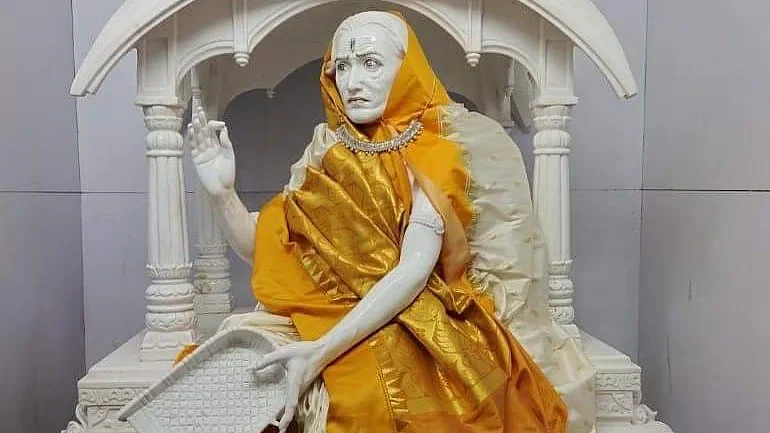
Her worship is therefore traditionally undertaken by serious practitioners, often in solitude or austere conditions, including cremation grounds. This is not for morbidity, but to dissolve fear and attachment.
Tantra, as a system, does not reject the unpleasant; it transforms it.
Ma Dhumavati embodies this principle fully—She reveals that what the mind rejects often contains the highest truth.
Her symbolism also extends to Mahapralay, the cosmic dissolution, where all forms return to the void. On an individual level, this reflects the dissolution of ego, identity, and accumulated karmic impressions.
Her teaching is not about escaping life, but about seeing through it. When one stops resisting disappointment and instead observes it fully, it becomes a source of clarity rather than suffering.
Ultimately, Dhumavati Jayanti serves as a reminder that no one is immune to loss or change. The real question Her energy poses is whether one can remain centred when everything external collapses.
In that state of emptiness, She reveals her highest gift—the transformation of inner darkness into freedom. For Tantra practitioners, Her Tamasic energy becomes the force that destroys mental activity itself, leading toward Samadhi.
Story of Dhumavati Jayanti
The origin of Ma Dhumavati is rooted in the Devi Bhagavatam, where Her manifestation is linked to one of the most intense moments in Puranic lore. When Mata Sati immolated Herself in the Yajna of Her father Daksh, a powerful form emerged from the smoke of that sacrificial fire. This smoky, formless emergence gave rise to Ma Dhumavati. Her very name derives from Dhum, meaning 'smoke'.
This origin is significant because it places Her not in the act of creation or preservation, but in the aftermath of destruction. She represents what remains when everything else has burned away—the residue of experience, the silence after collapse, and the truth that cannot be avoided.
Further Tantric references, such as the Narad Pancharatra, describe Her as a source of even more intense manifestations like Ugrachandika, emphasising Her role as a generator of fierce transformative energies.
Her iconography reinforces this state. She is often shown seated in a chariot without horses, symbolising stillness and the absence of worldly direction. This represents action arising from non-action—the still point where all movement dissolves into pure awareness.
Dhumavati Jayanti Vrat Katha
The Dhumavati Jayanti Vrat Katha, narrated in the Pranatoshini Tantra, originates from a moment of intense cosmic hunger experienced by Goddess Parvati while she resided on Mount Kailash with Lord Shiva. According to the legend, the Goddess was overcome by such extreme hunger that She pleaded with Shiva for food. When the Lord, absorbed in his meditative state, asked Her to wait, Her hunger grew so uncontrollable that She eventually devoured Shiva himself. This act of consuming the source of the universe caused a thick, dark smoke to emerge from Her body, signalling the transformation of Her radiant form into one of sorrow and desolation.
Following this act, Lord Shiva requested to be released, and upon emerging, He addressed the Goddess’s transformed state. He declared that since She had consumed Her own husband, She would henceforth be known as Dhumavati—the "Smoky One"—and would take on the form of a widow. Shiva explained that this manifestation was necessary to reveal the ultimate truth of the universe: that all material beauty and life must eventually dissolve into the void. Consequently, She is depicted as an aged, solitary figure on a horseless chariot, serving as a reminder to devotees to seek the eternal reality that lies beyond the temporary illusions of worldly existence.
Devotees mimic the Goddess's state of intense hunger by observing a strict fast (Vrat) on Dhumavati Jayanti.
Traditions and Rituals Surrounding Dhumavati Jayanti
On this day, devotees rise early to worship Ma Dhumavati. Initiated Tantra Sadhaks perform the primary puja ritual in a remote location. Flowers, and incense sticks, and smoky Dhoop are offered to the Goddess. Special Prasad is offered. Black sesame seeds wrapped in black fabric are offered to Ma on this day to invoke Her grace.
Certain Tantric Dhumavati Devi Mantras and Stotrams are recited during Her Puja, followed by an Aarti. Feeding crows is considered auspicious on this day, as the crow is the Vahan (vehicle) of Maa Dhumavati and is a vital part of many of Her Tantric Sadhanas, such as the Kaag Sadhana in the Tantra Sadhana app.
About Goddess Dhumavati
Ma Dhumavati is the 7th among the Das Mahavidyas (10 Wisdom Goddesses of Tantra), yet She is also called Jyeshtha, meaning the Eldest. This apparent contradiction reflects Her deeper symbolism—She represents the final stage of experience, where all illusions of youth, beauty, and fulfilment have been exhausted.
Her form is intentionally stark. She is depicted as old, widowed, and unattractive, signifying that all physical charm and material appeal are temporary.
Ma Dhumavati forces the practitioner to confront the inevitable truths described in scriptures like the Bhagavad Gita—that the body ages, declines, and perishes, while only the Self remains unchanged.
She is often described as the void stage among the Mahavidyas—the state where identity dissolves, desires collapse, and one encounters existence stripped of illusion.
This aligns Her with the cosmic principle of Mahapralay, the dissolution of all creation into the unmanifest. Her association with Ketu, the shadow planet, further reinforces themes of detachment, isolation, and transcendence beyond material structures.
Despite Her unsettling imagery, Ma Dhumavati is not merely a Goddess of Despair. She is described as tender-hearted, capable of granting both worldly and spiritual boons.
Her domain includes states such as sleep, forgetfulness, and dullness for ordinary beings; but for Yogis, She becomes the force that dissolves thought, leading to Samadhi.
How to Celebrate Dhumavati Jayanti on Tantra Sadhana App
Tantra Sadhana App by Himalayan monk, Om Swami, offers a free and ad-free virtual journey to awaken each of the Das Mahavidyas through the Tantric path of Divyachar (mental worship).
Each Mahavidya, from Ma Kali to Ma Kamalatmika, has a separate 3D world. Sadhaks can navigate it to unlock and perform Her Tantric mantra chanting, Tantric fire offerings, and special Tantra Sadhana for specified periods.
The seeker is guided step by step through each ritual. Consecrated and awakened by Om Swami, the mantras are directly from the scriptural texts.
This makes the app a perfect gateway not just for experienced initiates but also for beginner-level seekers who don’t have a personal Guru but still want to worship the Das Mahavidyas of Tantra.
Ma Dhumavati's Secret Shrine
On Dhumavati Jayanti, the Secret Shrine on the app offers a simplified way to worship Ma Dhumavati — for beginner-level and experienced Sadhaks alike.
On this day, you can enter the Shrine to chant Her awakened Dhyan Shlok and Tantric Mool Mantra with Bijaksharas, even if you haven’t unlocked Her main world in the Mahavidya realm yet.
Adhering to the principles of Divyachar (the Tantric path of mental worship), the app allows practitioners to engage with Her Sadhana without any traditional infrastructure or a personal Guru.
Make the most of this opportunity to expose and dissolve your hidden insecurities and make peace with the avoided truths of your life.