In this article, you will read about:
Ancient Roots of Hindu Tantra and Tibetan Tantra
How Tantra Sadhana Is Approached in Both Traditions
Buddhist vs. Hindu Tantra: Key Philosophical Differences
Why Hindu Tantra Remains a Self-Sufficient Spiritual Path
Tantra is one sacred word, yet it flows through history in different forms. Tibetan Tantra and Hindu Tantra arise from the same ancient stream of wisdom, but they take different shapes as they pass through different lands and philosophies.
Understanding the differences between Tibetan Tantra and Hindu Tantra allows a seeker to approach Tantra Sadhana with clarity, reverence, and right understanding rather than confusion.
A Story from the Himalayas
High in the Himalayas, a young seeker once asked an old Yogi, “Master, people speak of Tibetan Tantra and Hindu Tantra as though they are the same. Are they truly one?”
The Yogi smiled, lifted a handful of snow, and replied, “When snow melts, it becomes water. When water freezes, it becomes ice. The essence is One, but its movement decides its form.”
That is how it is with Tantra.
Hindu Tantra: The World as a Living Goddess
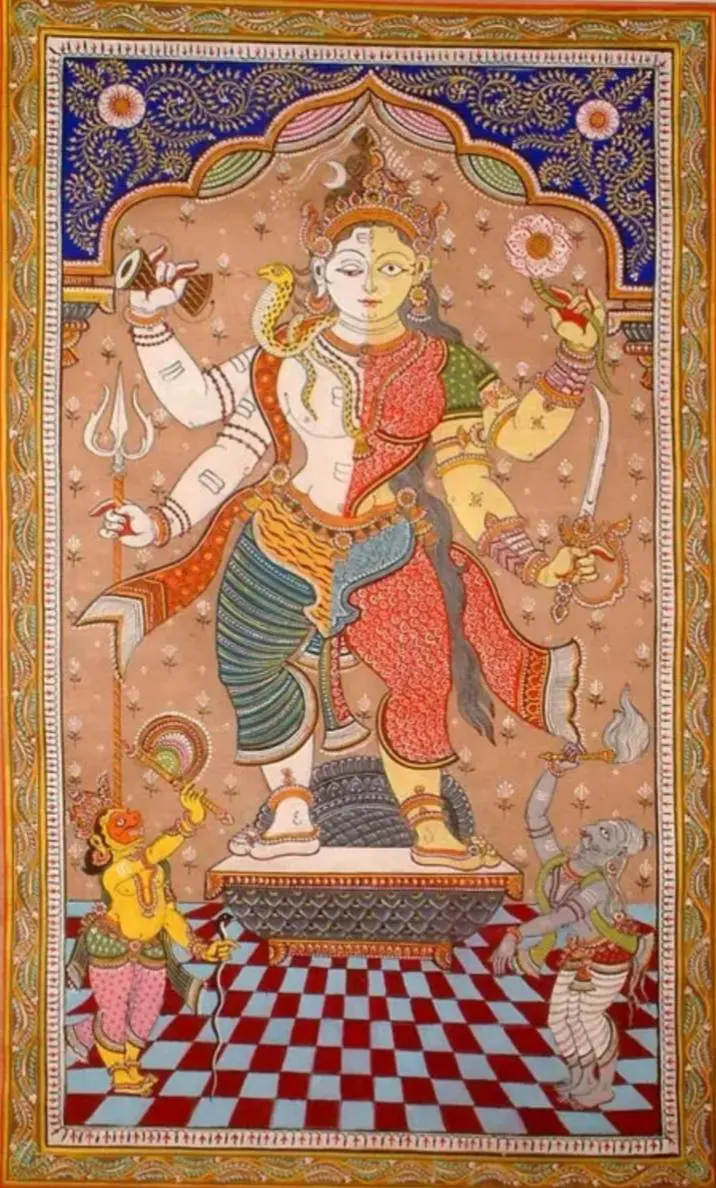
Hindu Tantra was born and matured on Indian soil, nourished by the Vedas, Agamas, and classical Tantric texts such as the Rudra Yamal Tantra, Kularnav Tantra, Mahanirvan Tantra, and Vijnan Bhairav Tantra. Its vision is fearless and intimate.
Hindu Tantra does not ask the seeker to reject life. It asks the seeker to recognise the Divine within life.
In Hindu Tantra, the Universe is not an illusion to escape. It is Shakti Herself, pulsating as form, breath, and awareness.
The Kularnav Tantra states:
yad bhāvam tat bhavati |
“As one’s inner vision is, so one becomes.”
Here, Tantra Sadhana unfolds through mantra, awareness of breath, inner worship, and devotion. The body is not an obstacle. It is a sacred vessel where consciousness awakens naturally.
This is why Hindu Tantra speaks openly of Shiv and Shakti, consciousness and energy, stillness and movement.
Liberation is not found by choosing one over the other, but by realising they were never separate.
Tibetan Tantra: A Path Shaped by Buddhist Philosophy
When Indian Tantric teachings travelled beyond India, they entered Tibet due to its close proximity to Pragjyotishpur or Kamakhya, the seat of Tantric Practices in India, through masters like Padmasambhava and Atisha.
There, Tantra merged with Mahayan Buddhism and evolved into what is now known as Tibetan Tantra.
When it comes to Buddhist vs Hindu Tantra, the philosophical foundation becomes the defining difference.
Tibetan Tantra is primarily concerned with the nature of the mind. Suffering is said to arise from ignorance, and liberation comes from recognising emptiness, known as Shunyata.
The Hevajra Tantra states:
“The mind itself is the Buddha
when freed from grasping.”
In Tibetan Tantra, deities are approached as enlightened states of awareness rather than eternal cosmic principles. Visualisation, Mandalas, and disciplined contemplation take precedence over ritual continuity.
This distinction is essential in any clear comparison of Tantras.
A Quiet Difference in Worldview
Hindu Tantra asks a simple but profound question. If everything is empty, who experiences liberation?
And the answer is simple but profound: Supreme Consciousness that shines through all forms.
The Vijnan Bhairav Tantra declares:
yatra yatra mano yāti tatra tatra śivaḥ |
“Wherever awareness rests fully, there is Shiv.”
Here lies a subtle yet decisive difference between Tibetan Tantra and Hindu Tantra.
Hindu Tantra affirms an eternal, self-aware consciousness that expresses itself as the universe. Tibetan Tantra avoids fixed identity and points instead toward freedom through non-grasping.
Both seek freedom, but they walk differently.
Ritual, Symbol, and Tantra Sadhana
In Hindu Tantra, a ritual is not mechanical. A Mantra and Yantra are not just sacred sound and geometry but the deity in sound and geometric forms. They are living forms of Cosmic Existence.
The ritual is a way of meaningful communication between our realm and the realm of these great cosmic beings.
The Sri Chakra is the Divine Mother Herself. Therefore, a devotee doesn’t address the Yantra as 'it'. The Yantra is "She", Mother Divine.
In Tibetan Tantra, Mandalas are created and dissolved to train the mind in impermanence. Visualisation serves as a tool for inner discipline rather than devotional continuity.
Hindu Tantra feels like a living relationship with the Divine, while Tibetan Tantra functions more as a method of philosophical inquiry.
The Body in Buddhist vs. Hindu Tantra
Hindu Tantra treats the body as the temple of Shakti. Breath, sensation, and even desire are refined into awareness.
The Mahanirvan Tantra teaches:
bhogena mokṣaṁ gacchanti |
“Liberation can arise through conscious experience.”
Tibetan Tantra also works with the body, but primarily as a support for mind training. Channels, breath, and inner heat practices are used to dissolve ignorance rather than affirm cosmic personhood.
Liberation: Two Languages, One Silence
Hindu Tantra speaks of Moksh, freedom through recognising one’s true nature as Shiv or the Self.
ātmaiva devatā proktā, sādhanaṁ ātmabodhanam |
“The Self alone is the Divine, and Sadhana is for Self-realisation.”
Tibetan Tantra speaks of Buddhahood, awakening freedom from suffering for the benefit of all beings.
The words differ. The silence they point to is the same.
The Tantra Sadhana App
The founder of Tantra Sadhana App, Om Swami, says it is not about acquiring power, but about dissolving the one who seeks it. It is the science of becoming whole, where life itself becomes the Sadhana.
A realised Siddha from the Himalayas, He has walked this path Himself, awakening all the major Tantric mantras.
Understanding the limitations of modern life, He has made authentic Hindu Tantra accessible through the Tantra Sadhana App, in line with the scriptures, thus preserving its sanctity and depth.
Here, seekers begin gently, safely, and sincerely, allowing Tantra Sadhana to unfold naturally within daily life.
The app is all about the worship of the Das Mahavidyas (10 Wisdom Goddesses of Tantra), adhering to the protocols of the Tantric path of Divyachar, in which all worship is performed mentally rather than using physical ingredients.
If the path of Tantra piques your curiosity as a spiritual seeker, this could be your gateway into practising authentic Hindu Tantra from the comfort of your own home.
References:
Vijnana Bhairava Tantra – Translations by Swami Lakshman Joo; Jaideva Singh
Kularnava Tantra – Kaula Tantra text (WisdomLib editions)
Mahanirvana Tantra – Sir John Woodroffe (Arthur Avalon), The Great Liberation
Rudra Yamala Tantra – Early Shaiva–Shakta Tantric source
Shaiva & Shakta Agamas – Doctrinal background of Hindu Tantra
Hevajra Tantra – David Snellgrove (Vajrayana Buddhism)
Padmasambhava & Atisha Traditions – Indian Tantra transmission into Tibet
Madhyamaka Philosophy (Nagarjuna) – Conceptual basis of Buddhist Tantra