In this article, you will read about:
What is Lalita Sahasranama?
Origin Story of Lalita Sahasranama
Benefits of Chanting Lalita Sahasranama
Sri Lalita Sahasranama Stotram
Sri Lalita Sahasranama Stotram Lyrics with Meanings
Worshipping Ma Tripura Sundari on Tantra Sadhana App
Goddess Lalita Tripura Sundari is revered as the Supreme, All-Pervading Consciousness and the most beautiful form of the Goddess, ruling over the 3 worlds (Tripura), all 3 states of experience (physical, subtle, causal) and the 3 states of consciousness (waking, dream, deep sleep).
She is the ultimate form of Ma Adi Parashakti, the Primordial Cosmic Energy and Mother of the Universe.
Lalita – the one who plays; creation, preservation, and dissolution are seen as Her divine play.
Tripura – She who rules or is beautiful in the 3 worlds (physical, subtle, causal) and 3 states of consciousness (waking, dream, deep sleep).
Sundarī – the most beautiful.
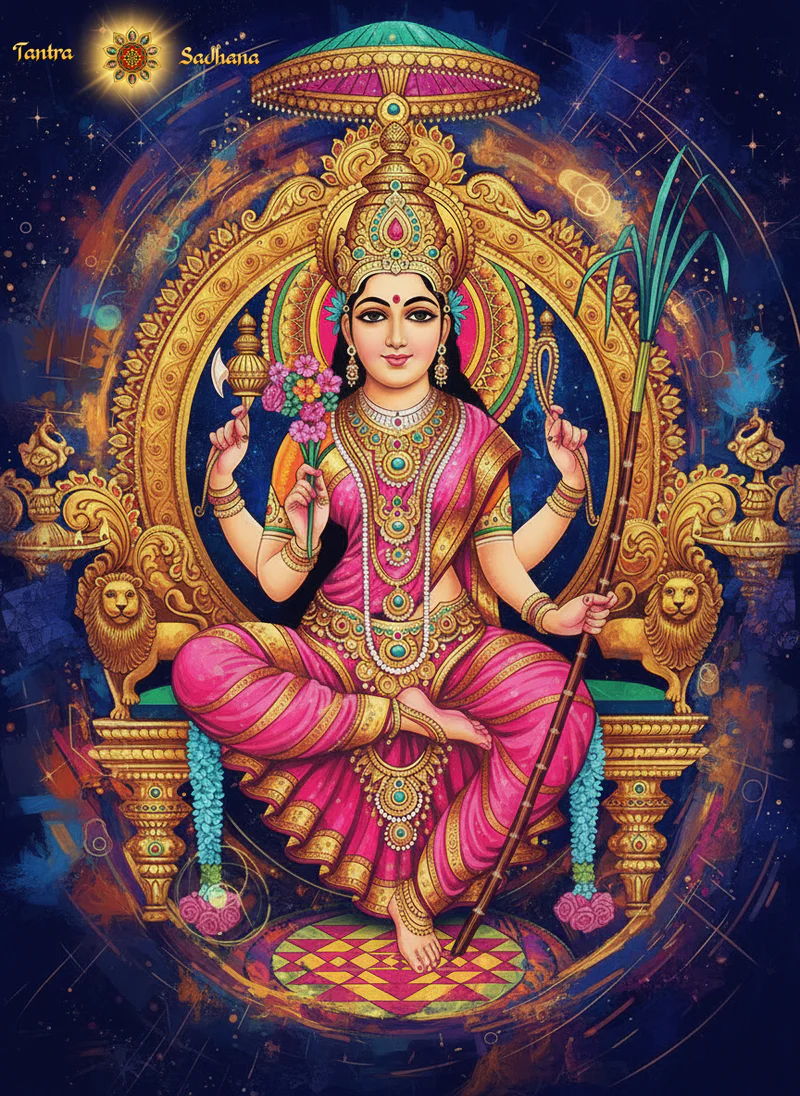
What is Lalita Sahasranama?
The Sri Lalita Sahasranama (also called Lalitha Sahasranamam in South India) is a sacred hymn of 1000 divine names of Goddess Lalita Tripura Sundari, found in the Brahmanda Purana as a dialogue between Hayagriva, an incarnation of Lord Vishnu, and the great Sage Agastya.
It describes Her cosmic nature, attributes, and the subtle principles of creation, consciousness, and Shakti in union with Shiva, unveiling the secrets of creation and the mystical depths of Sri Vidya Sadhana.
Understanding and chanting it regularly is considered an extremely powerful spiritual practice for devotion, positive inner transformation, and attaining both worldly and spiritual fulfilment.
Origin Story of Lalita Sahasranama
Ma Tripura Sundari first emerged from the sacred firepit or Chidagni Kund of the consciousness of the Devas, after which the Devas confessed their ignorance and begged Her for guidance on how to propitiate and welcome Her.
She called upon Her eight companion energies, the Vagdevis to sing Her glories, who addressed Her with these 1000 names, marking the first scriptural mention of Kundalini and the Chakras.
Each name is an utterance of pure love and devotion, a unique way to describe, visualise, and call out to Ma.
Lord Hayagriva instructed Sage Agastya to meditate on these names, devoting one Ayana (six months) to each name over five hundred years, after which Lord Shiv would reveal the complete Sadhana of Devi.
The recitation of Sri Lalita Sahasranamam is a central practice in Sri Vidya and Shakta traditions. It is performed both as an act of loving devotion and as a sadhana.
This sacred hymn purifies our consciousness and slowly removes inner darkness, confusion, and negativity. It brings clarity, wisdom, and balance, while also blessing us with well-being in worldly life and guiding us towards liberation.
It is traditionally believed that chanting the names with an understanding of their meanings deepens their power, as each name touches a subtle layer of consciousness and awakens a specific aspect of the Divine Mother’s energy.
Benefits of Chanting Lalita Sahasranama
Each name in Sri Lalita Sahasranama praises Ma Lalita's boundless attributes - Her beauty, energy, strength, glory, compassion, even Her residence, Herself as the formless - thus helping the seeker form a vivid, clear image of the Goddess and directly experience Her Divine presence.
In short, it is a manual for self-realisation.
Every name serves as a powerful mantra in itself, with several embedding secret Bij Aksharas (seed syllables). Regular practice purifies the mind, awakens the Kundalini, and, through intense guided Sadhana, activates the Chakras (energy centres) for self-realisation.
From a purely devotional standpoint, and even from a scriptural perspective, the Sahasranama bestows many other blessings.
Lord Hayagriva Himself proclaims after revealing the Sahasranama to Sage Agastya:
anena sadṛśaṃ stotraṃ na bhūtaṃ na bhaviṣyati .
sarvarogapraśamanaṃ sarvasampatpravardhanam ..
Translation:
No hymn equal to it has ever been or will ever be created.
He explains how the Stotram blesses the seeker on different frontiers, dissipating all diseases and showering prosperity:
Health and Longevity
Lalita Sahasranamam, when chanted with love and devotion, dissolves all diseases, fevers, and sufferings. It blesses us with a long, healthy life, heals every ailment through Her Grace, and shields us from untimely or sudden death. Even hearing it once in a lifetime showers oceans of merit, drawing Her eternal protection.
Prosperity and Fulfilment
The Divine Mother's names rain down boundless prosperity, fulfilling Dharma, Artha, Kama, and Moksh in our lives - the 4 goals of human life. Her names bless a devotee with steady wealth, poetic wisdom, fame, and desirous couples with children.
The merit from chanting Her names rivals installing crores of Shiva Lingas in Kashi, offering one crore Ashwamedha Yagnas, digging life-giving wells in barren deserts, bathing in the Ganges and holy Tirths across millions of births, or feeding crores of the needy.
Spiritual Salvation
In this Kali Yug, where Adharma is rampant, it is said that a seeker can get salvation easily through chanting Her names alone.
All these benefits, however, come with a caution. Chanting without loving devotion for Ma, rushing through Her names without feeling, or neglecting daily purity and devotion are not encouraged. Neither will it result in any tangible difference in a seeker's life.
Material wishes may seem endless and attract us, but the true benefit, the very wish which had drawn Sage Agastya's blessing of this Sahasranama from Lord Hayagriva, is Her gift of inner victory: letting the Devas triumph over the demons within.
In other words, letting good win over evil every time.
Sri Lalita Sahasranama Stotram
॥ nyāsaḥ ॥
asya śrīlalitāsahasranāmastotramālāmantrasya |
vaśinyādivāgdevatā ṛṣayaḥ |
anuṣṭupchandaḥ |
śrīlalitāparameśvarī devatā |
śrīmadvāgbhavakūṭeti bījam |
madhyakūṭeti śaktiḥ |
śaktikūṭeti kīlakam |
śrīlalitāmahātripurasundarī-prasādasiddhidvārā
cintitaphalāvāptyarthe jape viniyogaḥ |
॥ dhyānam ॥
sindūrāruṇavigrahāṃ trinayanāṃ māṇikyamaulisphurat
tārānāyakaśekharāṃ smitamukhīmāpīnavakṣoruhām |
pāṇibhyāmalipūrṇaratnacaṣakaṃ raktotpalaṃ vibhratīṃ
saumyāṃ ratnaghaṭastharaktacaraṇāṃ dhyāyetparāmambikām ||aruṇāṃ karuṇātaraṅgitākṣīṃ
dhṛtapāśāṅkuśapuṣpabāṇacāpām |
aṇimādibhirāvṛtāṃ mayukhaiḥ
ahamityeva vibhāvaye bhavānīm ||dhyāyetpadmāsanasthāṃ vikasitavadanāṃ padmapatrāyatākṣīṃ
hemābhāṃ pītavastrāṃ karakalitalasaddhemapadmāṃ varāṅgīm |
sarvālaṅkārayuktāṃ satatamabhayadāṃ bhaktanamrāṃ bhavānīṃ
śrīvidyāṃ śāntamūrtiṃ sakalasuranutāṃ sarvasampatpradātrīm ||sakuṅkumavilepanāmalikacumbikastūrikāṃ
samandahasitekṣaṇāṃ saśaracāpapāśāṅkuśām |
aśeṣajanamohinīmaruṇamālyabhūṣāmbarāṃ
japākusumabhāsurāṃ japavidhau smaredambikām ||
॥ atha śrī-lalitā-sahasranāma-stotram ॥
oṃ śrīmātā śrīmahārājñī śrīmat-siṃhāsaneśvarī |cidagni-kuṇḍa-sambhūtā devakārya-samudyatā ||1||
udyadbhānu-sahasrābhā caturbāhu-samanvitā |
rāgasvarūpa-pāśāḍhyā krodhākārāṅkuśojjvalā ||2||manorūpekṣu-kodaṇḍā pañcatanmātra-sāyakā |
nijāruṇa-prabhāpūra-majjadbrahmāṇḍa-maṇḍalā ||3||campakāśoka-punnāga-saugandhika-lasatkacā |
kuruvindamaṇi-śreṇī-kanatkoṭīra-maṇḍitā ||4||aṣṭamīcandra-vibhrāja-dalikasthala-śobhitā |
mukhacandra-kalaṅkābha-mṛganābhi-viśeṣakā ||5||vadanasmara-māṅgalya-gṛhatoraṇa-cillikā |
vaktralakṣmī-parīvāha-calanmīnābha-locanā ||6||navacampaka-puṣpābha-nāsādaṇḍa-virājitā |
tārākānti-tiraskāri-nāsābharaṇa-bhāsurā ||7||kadambamañjarī-kḷpta-karṇapūra-manoharā |
tāṭaṅka-yugalī-bhūta-tapanoḍupa-maṇḍalā ||8||padmarāga-śilādarśa-paribhāvi-kapolabhūḥ |
navavidruma-bimbaśrī-nyakkāri-radanacchadā ||9||śuddha-vidyāṅkurākāra-dvijapaṅkti-dvayojjvalā |
karpūra-vīṭikāmoda-samākarṣi-digantarā ||10||nija-sallāpa-mādhurya-vinirbhartsita-kacchapī | (nija-saṃlāpa)
mandasmita-prabhāpūra-majjatkāmeśa-mānasā ||11||anākalita-sādṛśya-cibukaśrī-virājitā |
kāmeśa-baddha-māṅgalya-sūtra-śobhita-kandharā ||12||kanakāṅgada-keyūra-kamanīya-bhujānvitā |
ratnagraiveya-cintāka-lola-muktā-phalānvitā ||13||kāmeśvara-premaratna-maṇi-pratipaṇa-stanī |
nābhyālavāla-romāli-latā-phala-kucadvayī ||14||lakṣyaroma-latādhāratā-samunneya-madhyamā |
stanabhāra-dalanmadhya-paṭṭabandha-valitrayā ||15||aruṇāruṇa-kausumbha-vastra-bhāsvat-kaṭītaṭī |
ratna-kiṅkiṇikā-ramya-raśanā-dāma-bhūṣitā ||16||kāmeśa-jñāta-saubhāgya-mārdavoru-dvayānvitā |
māṇikya-mukuṭākāra-jānudvaya-virājitā ||17||indragopa-parikṣipta-smaratūṇābha-jaṅghikā |
gūḍhagulphā kūrmapṛṣṭha-jayiṣṇu-prapadānvitā ||18||nakha-dīdhiti-saṃchanna-namajjana-tamoguṇā |
padadvaya-prabhājāla-parākṛta-saroruhā ||19||siñjāna-maṇimañjīra-maṇḍita-śrī-padāmbujā |
marālī-mandagamanā mahālāvaṇya-śevadhiḥ ||20||sarvāruṇā'navadyāṅgī sarvābharaṇa-bhūṣitā |
śiva-kāmeśvarāṅkasthā śivā svādhīna-vallabhā ||21||sumeru-madhya-śṛṅgasthā śrīmannagara-nāyikā |
cintāmaṇi-gṛhāntasthā pañca-brahmāsana-sthitā ||22||mahāpadmāṭavī-saṃsthā kadambavana-vāsinī |
sudhāsāgara-madhyasthā kāmākṣī kāmadāyinī ||23||devarṣi-gaṇa-saṃghāta-stūyamānātma-vaibhavā |
bhaṇḍāsura-vadhodyukta-śaktisenā-samanvitā ||24||sampatkarī-samārūḍha-sindhura-vraja-sevitā |
aśvārūḍhādhiṣṭhitāśva-koṭi-koṭibhirāvṛtā ||25||cakrarāja-rathārūḍha-sarvāyudha-pariṣkṛtā |
geyacakra-rathārūḍha-mantriṇī-parisevitā ||26||kiricakra-rathārūḍha-daṇḍanāthā-puraskṛtā |
jvālā-mālinikākṣipta-vahniprākāra-madhyagā ||27||bhaṇḍasainya-vadhodyukta-śakti-vikrama-harṣitā |
nityā-parākramāṭopa-nirīkṣaṇa-samutsukā ||28||bhaṇḍaputra-vadhodyukta-bālā-vikrama-nanditā |
mantriṇyambā-viracita-viṣaṅga-vadha-toṣitā ||29||viśukra-prāṇaharaṇa-vārāhī-vīrya-nanditā |
kāmeśvara-mukhāloka-kalpita-śrīgaṇeśvarā ||30||mahāgaṇeśa-nirbhinna-vighnayantra-praharṣitā |
bhaṇḍāsurendra-nirmukta-śastra-pratyastra-varṣiṇī ||31||karāṅguli-nakhotpanna-nārāyaṇa-daśākṛtiḥ |
mahā-pāśupatāstrāgni-nirdagdhāsura-sainikā ||32||kāmeśvarāstra-nirdagdha-sabhaṇḍāsura-śūnyakā |
brahmopendra-mahendrādi-deva-saṃstuta-vaibhavā ||33||hara-netrāgni-saṃdagdha-kāma-sañjīvanauṣadhiḥ |
śrīmadvāgbhava-kūṭaika-svarūpa-mukha-paṅkajā ||34||kaṇṭhādhaḥ-kaṭi-paryanta-madhyakūṭa-svarūpiṇī |
śakti-kūṭaikatāpanna-kaṭyadhobhāga-dhāriṇī ||35||mūla-mantrātmikā mūlakūṭatraya-kalevarā |
kulāmṛtaika-rasikā kulasaṃketa-pālinī ||36||kulāṅganā kulāntasthā kaulinī kulayoginī |
akulā samayāntasthā samayācāra-tatparā ||37||mūlādhāraika-nilayā brahmagranthi-vibhedinī |
maṇi-pūrāntaruditā viṣṇugranthi-vibhedinī ||38||ājñā-cakrāntarālasthā rudragranthi-vibhedinī ||
sahasrārāmbujārūḍhā sudhā-sārābhivarṣiṇī ||39||taḍillatā-samaruciḥ ṣaṭcakropari-saṃsthitā |
mahāsaktiḥ kuṇḍalinī bisatantu-tanīyasī ||40||bhavānī bhāvanāgamyā bhavāraṇya-kuṭhārikā |
bhadrapriyā bhadramūrtirbhakta-saubhāgyadāyinī ||41||bhaktipriyā bhaktigamyā bhaktivaśyā bhayāpahā |
śāmbhavī śāradārādhyā śarvāṇī śarmadāyinī ||42||śāṅkarī śrīkarī sādhvī śaraccandra-nibhānanā |
śātodarī śāntimatī nirādhārā nirañjanā ||43||nirlepā nirmalā nityā nirākārā nirākulā |
nirguṇā niṣkalā śāntā niṣkāmā nirupaplavā ||44||nityamuktā nirvikārā niṣprapañcā nirāśrayā |
nityaśuddhā nityabuddhā niravadyā nirantarā ||45||niṣkāraṇā niṣkalaṅkā nirupādhirnirīśvarā |
nīrāgā rāgamathanī nirmadā madanāśinī ||46||niścintā nirahaṃkārā nirmohā mohanāśinī |
nirmamā mamatāhantrī niṣpāpā pāpanāśinī ||47||niṣkrodhā krodhaśamanī nirlobhā lobhanāśinī |
niḥsaṃśayā saṃśayaghnī nirbhavā bhavanāśinī ||48||nirvikalpā nirābādhā nirbhedā bhedanāśinī |
nirnāśā mṛtyumathanī niṣkriyā niṣparigrahā ||49||nistulā nīlacikurā nirapāyā niratyayā |
durlabhā durgamā durgā duḥkhahantrī sukhapradā ||50||duṣṭadūrā durācāra-śamanī doṣavarjitā |
sarvajñā sāndrakaruṇā samānādhika-varjitā ||51||sarvaśaktimayī sarva-maṅgalā sadgatipradā |
sarveśvarī sarvamayī sarvamantra-svarūpiṇī ||52||sarva-yantrātmikā sarva-tantrarūpā manonmanī |
māheśvarī mahādevī mahālakṣmīrmṛḍapriyā ||53||mahārūpā mahāpūjyā mahāpātaka-nāśinī |
mahāmāyā mahāsattvā mahāśaktirmahāratiḥ ||54||mahābhogā mahaiśvaryā mahāvīryā mahābalā |
mahābuddhirmahāsiddhirmahāyogeśvareśvarī ||55||mahātantrā mahāmantrā mahāyantrā mahāsanā |
mahāyāga-kramārādhyā mahābhairava-pūjitā ||56||maheśvara-mahākalpa-mahātāṇḍava-sākṣiṇī |
mahākāmeśa-mahiṣī mahātripura-sundarī ||57||catuḥṣaṣṭyupacārāḍhyā catuḥṣaṣṭikalāmayī |
mahācatuḥ-ṣaṣṭikoṭi-yoginī-gaṇasevitā ||58||manuvidyā candravidyā candramaṇḍala-madhyagā |
cārurūpā cāruhāsā cārucandra-kalādharā ||59||carācara-jagannāthā cakrarāja-niketanā |
pārvatī padmanayanā padmarāga-samaprabhā ||60||pañca-pretāsanāsīnā pañcabrahma-svarūpiṇī |
cinmayī paramānandā vijñāna-ghanarūpiṇī ||61||dhyāna-dhyātṛ-dhyeyarūpā dharmādharma-vivarjitā |
viśvarūpā jāgariṇī svapantī taijasātmikā ||62||suptā prājñātmikā turyā sarvāvasthā-vivarjitā |
sṛṣṭikartrī brahmarūpā goptrī govindarūpiṇī ||63||saṃhāriṇī rudrarūpā tirodhāna-karīśvarī |
sadāśivā'nugrahadā pañcakṛtya-parāyaṇā ||64||bhānumaṇḍala-madhyasthā bhairavī bhagamālinī |
padmāsanā bhagavatī padmanābha-sahodarī ||65||unmeṣa-nimiṣotpanna-vipanna-bhuvanāvalī |
sahasra-śīrṣavadanā sahasrākṣī sahasrapāt ||66||ābrahma-kīṭa-jananī varṇāśrama-vidhāyinī |
nijājñārūpa-nigamā puṇyāpuṇya-phalapradā ||67||śruti-sīmanta-sindūrī-kṛta-pādābja-dhūlikā |
sakalāgama-sandoha-śukti-sampuṭa-mauktikā ||68||puruṣārthapradā pūrṇā bhoginī bhuvaneśvarī |
ambikā'nādi-nidhanā haribrahmendra-sevitā ||69||nārāyaṇī nādarūpā nāmarūpa-vivarjitā |
hrīṃkārī hrīmatī hṛdyā heyopādeya-varjitā ||70||rājarājārcitā rājñī ramyā rājīvalocanā |
rañjanī ramaṇī rasyā raṇatkiṅkiṇi-mekhalā ||71||ramā rākenduvadanā ratirūpā ratipriyā |
rakṣākarī rākṣasaghnī rāmā ramaṇalampaṭā ||72||kāmyā kāmakalārūpā kadamba-kusuma-priyā |
kalyāṇī jagatīkandā karuṇā-rasa-sāgarā ||73||kalāvatī kalālāpā kāntā kādambarīpriyā |
varadā vāmanayanā vāruṇī-mada-vihvalā ||74||viśvādhikā vedavedyā vindhyācala-nivāsinī |
vidhātrī vedajananī viṣṇumāyā vilāsinī ||75||kṣetrasvarūpā kṣetreśī kṣetra-kṣetrajña-pālinī |
kṣayavṛddhi-vinirmuktā kṣetrapāla-samarcitā ||76||vijayā vimalā vandyā vandāru-jana-vatsalā |
vāgvādinī vāmakeśī vahnimaṇḍala-vāsinī ||77||bhaktimat-kalpalatikā paśupāśa-vimocinī |
saṃhṛtāśeṣa-pāṣaṇḍā sadācāra-pravartikā ||78||tāpatrayāgni-santapta-samāhlādana-candrikā |
taruṇī tāpasārādhyā tanumadhyā tamo'pahā ||79||citistatpada-lakṣyārthā cidekarasa-rūpiṇī |
svātmānanda-lavībhūta-brahmādyānanda-santatiḥ ||80||parā pratyakcitīrūpā paśyantī paradevatā |
madhyamā vaikharīrūpā bhakta-mānasa-haṃsikā ||81||kāmeśvara-prāṇanāḍī kṛtajñā kāmapūjitā |
śṛṅgāra-rasa-sampūrṇā jayā jālandhara-sthitā ||82||oḍyāṇapīṭha-nilayā bindu-maṇḍalavāsinī |
rahoyāga-kramārādhyā rahastarpaṇa-tarpitā ||83||sadyaḥprasādinī viśva-sākṣiṇī sākṣivarjitā |
ṣaḍaṅgadevatā-yuktā ṣāḍguṇya-paripūritā ||84||nityaklinnā nirupamā nirvāṇa-sukha-dāyinī |
nityā-ṣoḍaśikā-rūpā śrīkaṇṭhārdha-śarīriṇī ||85||prabhāvatī prabhārūpā prasiddhā parameśvarī |
mūlaprakṛtiravyaktā vyaktāvyakta-svarūpiṇī ||86||vyāpinī vividhākārā vidyāvidyā-svarūpiṇī |
mahākāmeśa-nayana-kumudāhlāda-kaumudī ||87||bhakta-hārda-tamobheda-bhānumadbhānu-santatiḥ |
śivadūtī śivārādhyā śivamūrtiḥ śivaṅkarī ||88||śivapriyā śivaparā śiṣṭeṣṭā śiṣṭapūjitā |
aprameyā svaprakāśā manovācāmagocarā ||89||cicchaktiś cetanārūpā jaḍaśaktirjaḍātmikā |
gāyatrī vyāhṛtiḥ sandhyā dvijavṛnda-niṣevitā ||90||tattvāsanā tattvamayī pañca-kośāntara-sthitā |
niḥsīma-mahimā nitya-yauvanā madaśālinī ||91||madaghūrṇita-raktākṣī madapāṭala-gaṇḍabhūḥ |
candana-drava-digdhāṅgī cāmpeya-kusuma-priyā ||92||kuśalā komalākārā kurukullā kuleśvarī |
kulakuṇḍālayā kaula-mārga-tatpara-sevitā ||93||kumāra-gaṇanāthāmbā tuṣṭiḥ puṣṭirmatirdhṛtiḥ |
śāntiḥ svastimatī kāntirnandinī vighnanāśinī ||94||tejovatī trinayanā lolākṣī-kāmarūpiṇī |
mālinī haṃsinī mātā malayācala-vāsinī ||95||sumukhī nalinī subhrūḥ śobhanā suranāyikā |
kālakaṇṭhī kāntimatī kṣobhiṇī sūkṣmarūpiṇī ||96||vajreśvarī vāmadevī vayo'vasthā-vivarjitā |
siddheśvarī siddhavidyā siddhamātā yaśasvinī ||97||viśuddhicakra-nilayā''raktavarṇā trilocanā |
khaṭvāṅgādi-praharaṇā vadanaika-samanvitā ||98||pāyasānnapriyā tvaksthā paśuloka-bhayaṅkarī |
amṛtādi-mahāśakti-saṃvṛtā ḍākinīśvarī ||99||anāhatābja-nilayā śyāmābhā vadanadvayā |
daṃṣṭrojjvalā'kṣa-mālādi-dharā rudhirasaṃsthitā ||100||kālarātryādi-śaktyaugha-vṛtā snigdhaudanapriyā |
mahāvīrendra-varadā rākiṇyambā-svarūpiṇī ||101||maṇipūrābja-nilayā vadanatraya-saṃyutā |
vajrādikāyudhopetā ḍāmaryādibhirāvṛtā ||102||raktavarṇā māṃsaniṣṭhā guḍānna-prīta-mānasā |
samastabhakta-sukhadā lākinyambā-svarūpiṇī ||103||svādhiṣṭhānāmbuja-gatā caturvaktra-manoharā |
śūlādyāyudha-sampannā pītavarṇā'tigarvitā ||104||medoniṣṭhā madhuprītā bandhinyādi-samanvitā |
dadhyannāsakta-hṛdayā kākinī-rūpa-dhāriṇī ||105||mūlādhārāmbujārūḍhā pañca-vaktrā'sthi-saṃsthitā |
aṅkuśādi-praharaṇā varadādi-niṣevitā ||106||mudgaudanāsakta-cittā sākinyambā-svarūpiṇī |
ājñā-cakrābja-nilayā śuklavarṇā ṣaḍānanā ||107||majjāsaṃsthā haṃsavatī-mukhya-śakti-samanvitā |
haridrānnaika-rasikā hākinī-rūpa-dhāriṇī ||108||sahasradala-padmasthā sarva-varṇopa-śobhitā |
sarvāyudhadharā śukla-saṃsthitā sarvatomukhī ||109||sarvaudana-prītacittā yākinyambā-svarūpiṇī |
svāhā svadhā'matirmedhā śrutiḥ smṛtiranuttamā ||110||puṇyakīrtiḥ puṇyalabhyā puṇyaśravaṇa-kīrtanā |
pulomajārcitā bandha-mocanī bandhurālakā ||111||vimarśarūpiṇī vidyā viyadādi-jagatprasūḥ |
sarvavyādhi-praśamanī sarvamṛtyu-nivāriṇī ||112||agragaṇyā'cintyarūpā kalikalmaṣa-nāśinī |
kātyāyanī kālahantrī kamalākṣa-niṣevitā ||113||tāmbūla-pūrita-mukhī dāḍimī-kusuma-prabhā |
mṛgākṣī mohinī mukhyā mṛḍānī mitrarūpiṇī ||114||nityatṛptā bhaktanidhirniyantrī nikhileśvarī |
maitryādi-vāsanālabhyā mahāpralaya-sākṣiṇī ||115||parā śaktiḥ parā niṣṭhā prajñānaghana-rūpiṇī |
mādhvīpānālasā mattā mātṛkā-varṇa-rūpiṇī ||116||mahākailāsa-nilayā mṛṇāla-mṛdu-dorlatā |
mahanīyā dayāmūrtirmahāsāmrājya-śālinī ||117||ātmavidyā mahāvidyā śrīvidyā kāmasevitā |
śrī-ṣoḍaśākṣarī-vidyā trikūṭā kāmakoṭikā ||118||kaṭākṣa-kiṅkarī-bhūta-kamalā-koṭi-sevitā |
śiraḥsthitā candranibhā bhālasthendra-dhanuḥprabhā ||119||hṛdayasthā raviprakhyā trikoṇāntara-dīpikā |
dākṣāyaṇī daityahantrī dakṣayajña-vināśinī ||120||darāndolita-dīrghākṣī dara-hāsojjvalan-mukhī |
gurumūrtirguṇanidhirgomātā guhajanmabhūḥ ||121||deveśī daṇḍanītisthā daharākāśa-rūpiṇī |
pratipanmukhya-rākānta-tithi-maṇḍala-pūjitā ||122||kalātmikā kalānāthā kāvyālāpa-vinodinī |
sacāmara-ramā-vāṇī-savya-dakṣiṇa-sevitā ||123||ādiśaktirameyā''tmā paramā pāvanākṛtiḥ |
anekakoṭi-brahmāṇḍa-jananī divyavigrahā ||124||klīṃkārī kevalā guhyā kaivalya-padadāyinī |
tripurā trijagadvandyā trimūrtistridaśeśvarī ||125||tryakṣarī divya-gandhāḍhyā sindūra-tilakāñcitā |
umā śailendratanayā gaurī gandharva-sevitā ||126||viśvagarbhā svarṇagarbhā'varadā vāgadhīśvarī |
dhyānagamyā'paricchedyā jñānadā jñānavigrahā ||127||sarvavedānta-saṃvedyā satyānanda-svarūpiṇī |
lopāmudrārcitā līlā-kḷpta-brahmāṇḍa-maṇḍalā ||128||adṛśyā dṛśyarahitā vijñātrī vedyavarjitā |
yoginī yogadā yogyā yogānandā yugandharā ||129||icchāśakti-jñānaśakti-kriyāśakti-svarūpiṇī |
sarvādhārā supratiṣṭhā sadasadrūpa-dhāriṇī ||130||aṣṭamūrtirajājaitrī lokayātrā-vidhāyinī |
ekākinī bhūmarūpā nirdvaitā dvaitavarjitā ||131||annadā vasudā vṛddhā brahmātmaikya-svarūpiṇī |
bṛhatī brāhmaṇī brāhmī brahmānandā balipriyā ||132||bhāṣārūpā bṛhatsenā bhāvābhāva-vivarjitā |
sukhārādhyā śubhakarī śobhanā sulabhā gatiḥ ||133||rāja-rājeśvarī rājya-dāyinī rājya-vallabhā |
rājatkṛpā rājapīṭha-niveśita-nijāśritā ||134||rājyalakṣmīḥ kośanāthā caturaṅga-baleśvarī |
sāmrājya-dāyinī satyasandhā sāgaramekhalā ||135||dīkṣitā daityaśamanī sarvaloka-vaśaṅkarī |
sarvārthadātrī sāvitrī saccidānanda-rūpiṇī ||136||deśa-kālāparicchinnā sarvagā sarvamohinī |
sarasvatī śāstramayī guhāmbā guhyarūpiṇī ||137||sarvopādhi-vinirmuktā sadāśiva-pativratā |
sampradāyeśvarī sādhvī gurumaṇḍala-rūpiṇī ||138||kulottīrṇā bhagārādhyā māyā madhumatī mahī |
gaṇāmbā guhyakārādhyā komalāṅgī gurupriyā ||139||svatantrā sarvatantreśī dakṣiṇāmūrti-rūpiṇī |
sanakādi-samārādhyā śivajñāna-pradāyinī ||140||citkalā''nanda-kalikā premarūpā priyaṅkarī |
nāmapārāyaṇa-prītā nandividyā naṭeśvarī ||141||mithyā-jagadadhiṣṭhānā muktidā muktirūpiṇī |
lāsyapriyā layakarī lajjā rambhādivanditā ||142||bhavadāva-sudhāvṛṣṭiḥ pāpāraṇya-davānalā |
daurbhāgya-tūlavātūlā jarādhvānta-raviprabhā ||143||bhāgyābdhi-candrikā bhakta-cittakeki-ghanāghanā |
rogaparvata-dambholirmṛtyudāru-kuṭhārikā ||144||maheśvarī mahākālī mahāgrāsā mahāśanā |
aparṇā caṇḍikā caṇḍamuṇḍāsura-niṣūdinī ||145||kṣarākṣarātmikā sarva-lokeśī viśvadhāriṇī |
trivargadātrī subhagā tryambakā triguṇātmikā ||146||svargāpavargadā śuddhā japāpuṣpa-nibhākṛtiḥ |
ojovatī dyutidharā yajñarūpā priyavratā ||147||durārādhyā durādharṣā pāṭalī-kusuma-priyā |
mahatī merunilayā mandāra-kusuma-priyā ||148||vīrārādhyā virāḍrūpā virajā viśvatomukhī |
pratyagrūpā parākāśā prāṇadā prāṇarūpiṇī ||149||mārtāṇḍa-bhairavārādhyā mantriṇīnyasta-rājyadhūḥ |
tripureśī jayatsenā nistraiguṇyā parāparā ||150||satya-jñānānanda-rūpā sāmarasya-parāyaṇā |
kapardinī kalāmālā kāmadhuk kāmarūpiṇī ||151||kalānidhiḥ kāvyakalā rasajñā rasaśevadhiḥ |
puṣṭā purātanā pūjyā puṣkarā puṣkarekṣaṇā ||152||paraṃjyotiḥ paraṃdhāma paramāṇuḥ parātparā |
pāśahastā pāśahantrī paramantra-vibhedinī ||153||mūrtā'mūrtā'nityatṛptā munimānasa-haṃsikā |
satyavratā satyarūpā sarvāntaryāminī satī ||154||brahmāṇī brahmajananī bahurūpā budhārcitā |
prasavitrī pracaṇḍā''jñā pratiṣṭhā prakaṭākṛtiḥ ||155||prāṇeśvarī prāṇadātrī pañcāśatpīṭha-rūpiṇī |
viśṛṅkhalā viviktasthā vīramātā viyatprasūḥ ||156||mukundā muktinilayā mūlavigraha-rūpiṇī |
bhāvajñā bhavarogaghnī bhavacakra-pravartinī ||157||chandaḥsārā śāstrasārā mantrasārā talodarī |
udārakīrtiruddāmavaibhavā varṇarūpiṇī ||158||janmamṛtyu-jarātapta-janaviśrānti-dāyinī |
sarvopaniṣa-dud-ghuṣṭā śāntyatīta-kalātmikā ||159||gambhīrā gaganāntasthā garvitā gānalolupā |
kalpanā-rahitā kāṣṭhā'kāntā kāntārdha-vigrahā ||160||kāryakāraṇa-nirmuktā kāmakeli-taraṅgitā |
kanatkanakatā-ṭaṅkā līlā-vigraha-dhāriṇī ||161||ajā kṣayavinirmuktā mugdhā kṣipra-prasādinī |
antarmukha-samārādhyā bahirmukha-sudurlabhā ||162||trayī trivarganilayā tristhā tripuramālinī |
nirāmayā nirālambā svātmārāmā sudhāsṛtiḥ ||163||saṃsārapaṅka-nirmagna-samuddharaṇa-paṇḍitā |
yajñapriyā yajñakartrī yajamāna-svarūpiṇī ||164||dharmādhārā dhanādhyakṣā dhanadhānya-vivardhinī |
viprapriyā viprarūpā viśvabhramaṇa-kāriṇī ||165||viśvagrāsā vidrumābhā vaiṣṇavī viṣṇurūpiṇī |
ayoniryoninilayā kūṭasthā kularūpiṇī ||166||vīragoṣṭhīpriyā vīrā naiṣkarmyā nādarūpiṇī |
vijñānakalanā kalyā vidagdhā baindavāsanā ||167||tattvādhikā tattvamayī tattvamartha-svarūpiṇī |
sāmagānapriyā saumyā sadāśiva-kuṭumbinī ||168|| (somyā)savyāpasavya-mārgasthā sarvāpadvinivāriṇī |
svasthā svabhāvamadhurā dhīrā dhīrasamarcitā ||169||caitanyārghya-samārādhyā caitanya-kusumapriyā |
sadoditā sadātuṣṭā taruṇāditya-pāṭalā ||170||dakṣiṇā-dakṣiṇārādhyā darasmera-mukhāmbujā |
kaulinī-kevalā'narghya-kaivalya-padadāyinī ||171||stotrapriyā stutimatī śruti-saṃstuta-vaibhavā |
manasvinī mānavatī maheśī maṅgalākṛtiḥ ||172||viśvamātā jagaddhātrī viśālākṣī virāgiṇī |
pragalbhā paramodārā parāmodā manomayī ||173||vyomakeśī vimānasthā vajriṇī vāmakeśvarī |
pañcayajña-priyā pañca-preta-mañcādhiśāyinī ||174||pañcamī pañcabhūteśī pañca-saṃkhyopacāriṇī |
śāśvatī śāśvataiśvaryā śarmadā śambhumohinī ||175||dharādharasutā dhanyā dharmiṇī dharmavardhinī |
lokātītā guṇātītā sarvātītā śamātmikā ||176||bandhūka-kusumaprakhyā bālā līlāvinodinī |
sumaṅgalī sukhakarī suveṣāḍhyā suvāsinī ||177||suvāsinyarcana-prītā''śobhanā śuddhamānasā |
bindu-tarpaṇa-santuṣṭā pūrvajā tripurāmbikā ||178||daśamudrā-samārādhyā tripurāśrī-vaśaṅkarī |
jñānamudrā jñānagamyā jñānajñeya-svarūpiṇī ||179||yonimudrā trikhaṇḍeśī triguṇāmbā trikoṇagā |
anaghā'dbhuta-cāritrā vāñchitārtha-pradāyinī ||180||abhyāsātiśaya-jñātā ṣaḍadhvātīta-rūpiṇī |
avyāja-karuṇā-mūrtirajñāna-dhvānta-dīpikā ||181||ābāla-gopa-viditā sarvānullaṅghya-śāsanā |
śrīcakrarāja-nilayā śrīmat-tripurasundarī ||182||śrīśivā śiva-śaktyaikya-rūpiṇī lalitāmbikā |
evaṃ śrīlalitā devyā nāmnāṃ sāhasrakaṃ jaguḥ ||183|||| iti śrībrahmāṇḍapurāṇe uttarakhaṇḍe śrīhayagrīvāgastyasaṃvāde śrīlalitā sahasranāma stotra kathanaṃ sampūrṇam ||
Sri Lalita Sahasranama Stotram Lyrics with Meanings
|| nyāsaḥ ||
asya śrīlalitāsahasranāmastotramālāmantrasya |
Of this, the glorious garland of mantras known as the Shri Lalita Sahasranama Stotra...
vaśinyādivāgdevatā ṛṣayaḥ |
The Seers are the Deities of Speech, led by Vasini.
anuṣṭupchandaḥ |
The poetic meter is Anushtup.
śrīlalitāparameśvarī devatā |
The presiding Deity is the Supreme Goddess, Shri Lalita Parameshwari.
śrīmadvāgbhavakūṭeti bījam |
The seed-syllable is the glorious Vagbhava-kuta.
madhyakūṭeti śaktiḥ |
The power (Shakti) is the Madhya-kuta (middle-peak).
śaktikūṭeti kīlakam |
The pin/lock is the Shakti-kuta.
śrīlalitāmahātripurasundarī-prasādasiddhidvārā
cintitaphalāvāptyarthe jape viniyogaḥ |
This practice is applied for the recitation to attain the desired fruits through the grace of Shri Lalita Maha-Tripurasundari.
|| dhyānam ||
sindūrāruṇavigrahāṃ trinayanāṃ māṇikyamaulisphurat
We meditate upon Ma, shining in a vermilion-red body, with 3 eyes, wearing a ruby-studded crown...
tārānāyakaśekharāṃ smitamukhīmāpīnavakṣoruhām |
With a crescent moon on top, showing us Her all-smiling face.
pāṇibhyāmalipūrṇaratnacaṣakaṃ raktotpalaṃ vibhratīṃ
Her full breasts nourish the entire Creation. She holds a jewel-cup brimming with mead in one hand, and twirls a red lotus in the other.
saumyāṃ ratnaghaṭastharaktacaraṇāṃ dhyāyetparāmambikām ||
Her most gentle form is the personification of beauty. She sits with Her crimson feet on a pot made of jewels.
aruṇāṃ karuṇātaraṅgitākṣīṃ
Crimson-hued like the dawn, Her eyes overflow with waves of compassion.
dhṛtapāśāṅkuśapuṣpabāṇacāpām |
She holds the noose, the goad, the arrows of flowers, and the sugar-cane bow.
aṇimādibhirāvṛtāṃ mayukhaiḥ
She is encircled by rays of light—the personified powers of Anima and others.
ahamityeva vibhāvaye bhavānīm ||
We meditate upon that Goddess Bhavani, realising Her as our very own Self.
dhyāyetpadmāsanasthāṃ vikasitavadanāṃ padmapatrāyatākṣīṃ
We meditate on Her seated in the lotus posture, with a blossoming face and eyes long like lotus petals.
hemābhāṃ pītavastrāṃ karakalitalasaddhemapadmāṃ varāṅgīm |
Golden-hued, clothed in yellow garments, Her beautiful form holds a shimmering golden lotus in Her hand.
sarvālaṅkārayuktāṃ satatamabhayadāṃ bhaktanamrāṃ bhavānīṃ
Adorned with every ornament, She is the eternal giver of fearlessness, bowing toward Her devotees.
śrīvidyāṃ śāntamūrtiṃ sakalasuranutāṃ sarvasampatpradātrīm ||
The embodiment of Sri Vidya, of peaceful form, praised by all the gods, and the granter of all prosperity.
sakuṅkumavilepanāmalikacumbikastūrikāṃ
Anointed with vermilion, Her forehead is fragrant with the scent of musk.
samandahasitekṣaṇāṃ saśaracāpapāśāṅkuśām |
Her eyes are graced with a gentle smile, and She holds the arrows, bow, noose, and goad.
aśeṣajanamohinīmaruṇamālyabhūṣāmbarāṃ
She is the enchanter of all people, adorned with crimson garlands, ornaments, and robes.
japākusumabhāsurāṃ japavidhau smaredambikām ||
Luminous like the hibiscus flower, we meditate upon that Mother during the rite of Japa.
|| atha śrīlalitāsahasranāmastotram ||
oṃ śrīmātā śrīmahārājñī śrīmat-siṃhāsaneśvarī |
Ma is the Mother of all Creation, ruling over it as the Great Empress. She rules from the great lion-throne (Simhasan).
cidagni-kuṇḍa-sambhūtā devakārya-samudyatā ||1||
She manifests from the sacred fire-pit of Consciousness and promotes Divine work.
udyadbhānu-sahasrābhā caturbāhu-samanvitā |
She shines red and bright like 1000 rising suns, with Her four hands.
rāgasvarūpa-pāśāḍhyā krodhākārāṅkuśojjvalā ||2||
In one hand, holding the noose of our desire or will. It represents love and Her power to draw devotees back to the path.
In the next hand, She bears the goad of anger, representing guidance and the power to remove ignorance.
manorūpekṣu-kodaṇḍā pañcatanmātra-sāyakā |
In the third hand stands the sugarcane bow, representing our mind. In the fourth, She holds five arrows, which stand for the five Tanmatras, the five senses, and the five Mahabhutas.
(The four symbols convey that She governs the mind and senses, and can both enchant and liberate the individual soul)
nijāruṇa-prabhāpūra-majjadbrahmāṇḍa-maṇḍalā ||3||
In Her rosy radiance, the whole Universe is bathed.
campakāśoka-punnāga-saugandhika-lasatkacā |
Different flowers like the Champak, Ashok, Punnag and Saugandhik adorn Her hair.
kuruvindamaṇi-śreṇī-kanatkoṭīra-maṇḍitā ||4||
Her crown is adorned with lines of the gem Kuruvinda (Corundum).
(The verses below describe Ma’s body as the Vishwa Vigraha, the entire Creation forming Her body.)
aṣṭamīcandra-vibhrāja-dalikasthala-śobhitā |
Her forehead shines like the crescent moon, shaped like the eighth lunar day (Ashtami).
mukhacandra-kalaṅkābha-mṛganābhi-viśeṣakā ||5||
Her musk-mark (Kasturi Tilak) on Her radiant forehead shines like the spot on the moon.
vadanasmara-māṅgalya-gṛhatoraṇa-cillikā |
Her face is the home of Kama, the God of love, and Her eyebrows resemble archways to Kama’s abode.
vaktralakṣmī-parīvāha-calanmīnābha-locanā ||6||
Her eyes are like fish moving about in gentle waters.
navacampaka-puṣpābha-nāsādaṇḍa-virājitā |
Her shapely nose is like a newly blossomed Champak bud.
tārākānti-tiraskāri-nāsābharaṇa-bhāsurā ||7||
The sparkle in Her nose-stud excels the brilliance of stars in the sky.
kadambamañjarī-kḷpta-karṇapūra-manoharā |
She wears bunches of Kadamba flowers over Her ears.
tāṭaṅka-yugalī-bhūta-tapanoḍupa-maṇḍalā ||8||
She wears the sun and moon as Her earrings.
padmarāga-śilādarśa-paribhāvi-kapolabhūḥ |
The orangish and reddish brilliance of Her cheeks excel that of the Padmaraga stone.
navavidruma-bimbaśrī-nyakkāri-radanacchadā ||9||
Her lips outshine freshly cut coral (Vidrum) and Bimba fruits in redness.
śuddha-vidyāṅkurākāra-dvijapaṅkti-dvayojjvalā |
Ma’s two rows of radiant teeth are the sprouts of pure knowledge.
karpūra-vīṭikāmoda-samākarṣi-digantarā ||10||
She chews on a camphor-laden betel roll whose fragrance is spreading in all directions and attracting it.
nija-sallāpa-mādhurya-vinirbhartsita-kacchapī | (nija-saṃlāpa)
The sweetness of Her speech outdoes even the melody of Ma Saraswati’s Veena, the Kachhapi.
mandasmita-prabhāpūra-majjatkāmeśa-mānasā ||11||
The radiance of Her smile completely inundates the mind of Her consort, Lord Kamesh, the One who rules over the God of Love.
anākalita-sādṛśya-cibukaśrī-virājitā |
The beauty of Her chin is incomparable.
kāmeśa-baddha-māṅgalya-sūtra-śobhita-kandharā ||12||
Her neck is adorned with the sacred thread (Mangalsutra) signifying Her marriage to Lord Kamesh.
kanakāṅgada-keyūra-kamanīya-bhujānvitā |
Her beautiful arms are decked with golden armlets and bracelets.
ratnagraiveya-cintāka-lola-muktā-phalānvitā ||13||
She wears a necklace of gems with a dangling pearl pendant.
kāmeśvara-premaratna-maṇi-pratipaṇa-stanī |
In return for Lord Kameshwar’s love, She offers Her breasts (which nourish the whole of Creation).
nābhyālavāla-romāli-latā-phala-kucadvayī ||14||
Her breasts are like fruits growing on a creeper of the fine hairline arising from Her navel.
(According to texts, this hairline refers to the Sushumna Nadi, the subtle body’s central energy channel.)
lakṣyaroma-latādhāratā-samunneya-madhyamā |
Her waist is so slender that it can only be inferred from the creeper of Her fine hairline springing upwards from Her navel.
stanabhāra-dalanmadhya-paṭṭabandha-valitrayā ||15||
Her small waist gets a belt of three folds of skin from the burden of the weight of Her breasts.
aruṇāruṇa-kausumbha-vastra-bhāsvat-kaṭītaṭī |
She wears a deep red garment, dyed with safflower flowers (Kusumbh) around Her hips.
ratna-kiṅkiṇikā-ramya-raśanā-dāma-bhūṣitā ||16||
Her girdle is decorated with many gem-studded bells.
kāmeśa-jñāta-saubhāgya-mārdavoru-dvayānvitā |
Only the fortunate Lord Kameshwar knows Ma’s smooth thighs (the third Kuta of the Panchadashi).
māṇikya-mukuṭākāra-jānudvaya-virājitā ||17||
Her two knees are like crowns made of rubies.
indragopa-parikṣipta-smaratūṇābha-jaṅghikā |
Her calf muscles gleam like Kamadev’s jewel-studded quiver. Her ankles are hidden, being well-covered.
gūḍhagulphā kūrmapṛṣṭha-jayiṣṇu-prapadānvitā ||18||
Her feet have arches resembling a tortoise’s back.
(When we seek refuge at Her feet, we cultivate the ability to withdraw our senses like a tortoise withdrawing its limbs.)
nakha-dīdhiti-saṃchanna-namajjana-tamoguṇā |
The brilliance of Her toenails dispels Tamas, darkness, for everyone prostrating at Her feet.
padadvaya-prabhājāla-parākṛta-saroruhā ||19||
Her two feet outshine the lotus in beauty.
siñjāna-maṇimañjīra-maṇḍita-śrī-padāmbujā |
Her Lotus Feet are adorned with tinkling jewelled anklets.
marālī-mandagamanā mahālāvaṇya-śevadhiḥ ||20||
Her gait is gentle like that of a swan. She is a treasure trove of divine beauty.
sarvāruṇā'navadyāṅgī sarvābharaṇa-bhūṣitā |
A red hue emanates from Her perfect, faultless limbs. She is adorned with divine ornaments.
śiva-kāmeśvarāṅkasthā śivā svādhīna-vallabhā ||21||
She is seated on the lap of Lord Kameshwar, the Conqueror of Desire (Kamadev). She is Auspiciousness, the feminine/kinetic form of Lord Shiv and wins over Lord Shiv.
sumeru-madhya-śṛṅgasthā śrīmannagara-nāyikā |
Thus united with Lord Shiv, She dwells in the middle of Mount Sumeru and rules over Her Creation from the auspicious city, Srinagar.
cintāmaṇi-gṛhāntasthā pañca-brahmāsana-sthitā ||22||
She resides in Her palace, Chintamani Griha (Chintamani is also the wish-fulfilling gem). She is seated on a throne made of the 5 Brahmas - Brahma, Vishnu, Shiv, Ishan and Sadashiv, carrying out the 5 divine functions of creation, sustenance, destruction, concealment and revealing.
mahāpadmāṭavī-saṃsthā kadambavana-vāsinī |
Her palace is in the midst of the lotus forest/garden. (The thousand-petalled Sahasrar Chakra is also known as the Padmatavi, since it is the culmination of all other Chakras, represented as lotuses.)
This lotus forest is further located within the bigger grove of Kadamba trees.
sudhāsāgara-madhyasthā kāmākṣī kāmadāyinī ||23||
This great forest is on an island in the middle of the Ocean of Nectar or Sudhasagar.
Ma’s glance is filled with Love and Grace, and She forever fulfils the earnest desires of those who seek Her refuge.
(For the name Sudhasagar-madhyasta, texts describe the Sadhana-relevant aspect as: just before the Kundalini arrives at the Sahasrar Chakra, new neurohormonal pathways open and a sweet fluid drips down through the throat called Amrit/Sudha to transform us.Ma resides in the midst of the ocean of that very nectar.)
devarṣi-gaṇa-saṃghāta-stūyamānātma-vaibhavā |
Devi Ma is lauded by hosts of sages and divine beings.
bhaṇḍāsura-vadhodyukta-śaktisenā-samanvitā ||24||
She is endowed with the army of forces/Shaktis who are ever intent on slaying Bhandasur. Upon the devotee’s call, Devi Ma comes with Her entire battalion of powers/Shaktis.
(Bhandasur represents the distorted form of Kamadev/desire.)
sampatkarī-samārūḍha-sindhura-vraja-sevitā |
Ma is accompanied by a regiment of war elephants headed by Sampatkari Devi.
aśvārūḍhādhiṣṭhitāśva-koṭi-koṭibhirāvṛtā ||25||
She is surrounded by several crores of war-horses under the command of Ashwarudha Devi.
(It symbolises inner transformation - when Ashwarudha Devi takes command of the senses, the chaos and confusion in the inner and outer worlds gently begin to settle.)
cakrarāja-rathārūḍha-sarvāyudha-pariṣkṛtā |
Ma Herself is seated in the chariot known as Chakraraja - the King of Chakras (the Sri Chakra) equipped with all kinds of weapons.
geyacakra-rathārūḍha-mantriṇī-parisevitā ||26||
She is attended to by Her prime minister Mantrini Devi, also known as Mantrini or Syamala Devi, who is in the chariot named Geyachakra.
kiricakra-rathārūḍha-daṇḍanāthā-puraskṛtā |
Devi Ma is also accompanied by Dandanatha Devi, also known as Varahi Devi, riding the chariot known as Kirichakra.
jvālā-mālinikākṣipta-vahniprākāra-madhyagā ||27||
Ma Tripurasundari’s army marches in the centre of a fortress of fire, constructed by Devi Jwalamalini.
(In the Sri Chakra, the 5 Shakti triangles and the 4 Shiv triangles form a great wall of fire at the centre of which Ma resides inside a bindu.)
bhaṇḍasainya-vadhodyukta-śakti-vikrama-harṣitā |
Ma rejoices at the valour of the Shaktis intent on destroying the army of Bhanda.
nityā-parākramāṭopa-nirīkṣaṇa-samutsukā ||28||
She is delighted seeing the aggression of the Nitya Devis in their attack on the army of Bhanda.
(This battle takes place within our own consciousness. Bhandasur’s army consists of false ideas and concepts. As these limitations are gradually chipped awaw by the Nitya Devis, it makes Ma happy.)
bhaṇḍaputra-vadhodyukta-bālā-vikrama-nanditā |
Bala Tripurasundari is Devi Ma in the form of a young girl. Her interest to descend to the battlefield to slay Bhandasur’s sons makes Sri Lalita Tripurasundari overjoyed.
mantriṇyambā-viracita-viṣaṅga-vadha-toṣitā ||29||
Ma feels satisfied seeing Mantrini Devi slay Vishanga, the brother of Bhanda, who represents obsessive attachment to the senses.
(In Sri Vidya Sadhana, it is the Bala mantra which first prepares us and stabilises the initial ground for later Sadhana.)
viśukra-prāṇaharaṇa-vārāhī-vīrya-nanditā |
Ma celebrates Devi Varahi’s conquest of Vishukra, who represents the hidden, deep Karmic patterns that surface after superficial debris is cleared by Bala and Mantrini Devi.
kāmeśvara-mukhāloka-kalpita-śrīgaṇeśvarā ||30||
Devi gives birth to Sri Ganeshwara by a glance at Her consort, Lord Kameshwar.
(As per scriptures, when Bhandasur’s army resorted to spreading illusion and magic, pain and confusion spread even among Devi’s own Shaktis. All except Varahi Devi and Mantrini Devi fell under the spell and retreated from the battle. When told about the events, Sri Triurasundari only smiled softly and glanced at Her consort Lord Kameshwar. From that divine exchange, their united cosmic power manifested as the auspicious Ganesh, remover of all obstacles.)
mahāgaṇeśa-nirbhinna-vighnayantra-praharṣitā |
Ma Lalita rejoices when the obstacles of magical and illusory devices are progressively destroyed by Ganesh.
(The illusory devices represent our mental and psychological processes, our responses and our imagined identity which is an obstacle to seeing reality.)
bhaṇḍāsurendra-nirmukta-śastra-pratyastra-varṣiṇī ||31||
Ma counters Bhandasur's rain of missiles with Her shower of attacks.
karāṅguli-nakhotpanna-nārāyaṇa-daśākṛtiḥ |
Bhandasur created Asuras that live across the Yugas, who were formerly slayed by the incarnations of Lord Vishnu. Ma's fingernails give birth to the 10 incarnations of Lord Narayan to destroy these Asuras.
mahā-pāśupatāstrāgni-nirdagdhāsura-sainikā ||32||
With the Mahapashupata weapon which invokes Lord Sadashiv, Ma Tripurasundari incinerates the Asura armies.
kāmeśvarāstra-nirdagdha-sabhaṇḍāsura-śūnyakā |
With the flames of the Kameshwar weapon, She burns Shunyaka, the capital of Bhandasur.
(Bhandasur represents the absence of the juice of life, and his capital is also Shunyaka, representing an emptiness or void which can never be filled.)
brahmopendra-mahendrādi-deva-saṃstuta-vaibhavā ||33||
Relieved of the torment of Bhandasur finally, deities and Devatas extol Her powers.
hara-netrāgni-saṃdagdha-kāma-sañjīvanauṣadhiḥ |
Instead of permanently destroying Bhandasur (distorted desire), Ma is the life-giving herb, reviving him to his original form (sacred creative energy) as Kama, who had previously been burnt to ashes by Lord Shiv's third eye.
śrīmadvāgbhava-kūṭaika-svarūpa-mukha-paṅkajā ||34||
The first part of the Panchadashi Mantra, also called the Vagbhava Kuta, forms Ma's lotus face. It bestows auspicious wisdom through mastery over speech.
kaṇṭhādhaḥ-kaṭi-paryanta-madhyakūṭa-svarūpiṇī |
The central part of the Panchadashi Mantra forms Ma's torso (neck to waist).
śakti-kūṭaikatāpanna-kaṭyadhobhāga-dhāriṇī ||35||
The last part of the Mantra, also called the Shaktikuta, forms Ma's subtle body below the waist.
mūla-mantrātmikā mūlakūṭatraya-kalevarā |
Thus, Ma is the Mulamantra (Panchadashi Mantra) Herself, with Ma's body composed of all the 3 Kutas of the Panchadashakshari Mantra.
kulāmṛtaika-rasikā kulasaṃketa-pālinī ||36||
As Kundalini, She revels in the Divine nectar of the sacred lineage, and carefully preserves its sacred inner secrets until one is ready.
kulāṅganā kulāntasthā kaulinī kulayoginī |
As Kundalini, She is the living feminine embodiment of the sacred lineage, dwelling at its innermost core, the Kaula Shakti - the essence of the Kaula form of worship and the deity Herself.
akulā samayāntasthā samayācāra-tatparā ||37||
Yet, She is beyond all lineages. She is also the centre of the Samaya tradition of internal worship. Samaya worship is dear to Her.
mūlādhāraika-nilayā brahmagranthi-vibhedinī |
She abides in the Muladhar in Her dormant form as coiled Kundalini. Rising up from there, She breaks through the Brahma Granthi (Knot of Creation).
maṇi-pūrāntaruditā viṣṇugranthi-vibhedinī ||38||
She emerges at the Manipur Chakra to sever the Vishnu Granthi (Knot of Preservation).
(It is a map of Devi's awakening.)
ājñā-cakrāntarālasthā rudragranthi-vibhedinī ||
She then abides at the Ajna Chakra to dissolve the Rudra Granthi (Knot of Destruction).
sahasrārāmbujārūḍhā sudhā-sārābhivarṣiṇī ||39||
Finally, She ascends to the thousand-petalled lotus of Sahasrar.
Thereby, She rains down streams of nectar (Sudha), as previously unavailable nadis get opened and neuro-chemical pathways get activated.
taḍillatā-samaruciḥ ṣaṭcakropari-saṃsthitā |
She radiates like a steady flash of lightning, being established above the six Chakras. Thus, She is united with Shiv in all aspects in Her final destination.
mahāsaktiḥ kuṇḍalinī bisatantu-tanīyasī ||40||
Like the delicate lotus stalk, Kundalini begins in the dark mud of ignorance and slowly rises and opens into full wisdom at the top.
bhavānī bhāvanāgamyā bhavāraṇya-kuṭhārikā |
Ma is the consort of Lord Shiv as Bhav, and is invoked through devoted meditation. She alone is the axe that cuts through the jungle of Samsar.
bhadrapriyā bhadramūrtirbhakta-saubhāgyadāyinī ||41||
Being the embodiment of Auspiciousness, She likes everything that is auspicious. Ma blesses Her devotees with good fortune.
bhaktipriyā bhaktigamyā bhaktivaśyā bhayāpahā |
She is pleased with devotion, which is the fuel for Sadhana. She is only attained and won over through love and devotion. This process of loving Her removes fear from the consciousness of devotees.
śāmbhavī śāradārādhyā śarvāṇī śarmadāyinī ||42||
She is the consort of Lord Shiv as Shambhu. She is worshipped by Devi Sharada, the consort of Lord Brahma. She is the consort of Lord Shiv's form as Sharva. Bestowing happiness to Her people, She got the name Sharmadayini.
śāṅkarī śrīkarī sādhvī śaraccandra-nibhānanā |
She bestows auspiciousness and opulence. She is Sadhvi, the purest and ever devoted to Lord Shiv. Her face is like a full moon in autumn.
śātodarī śāntimatī nirādhārā nirañjanā ||43||
Ma is slender-waisted as Kundalini, and full of peace. She supports the whole of Creation but is Herself without any support. She is eternally spotless.
nirlepā nirmalā nityā nirākārā nirākulā |
She is free from all impurities, without any blemishes. She is the foundation of time itself, and is Herself timeless and eternal. She can manifest as any form being Herself formless. She is beyond agitation.
nirguṇā niṣkalā śāntā niṣkāmā nirupaplavā ||44||
Ma is the very source of all the Gunas, yet She is Herself devoid of the Gunas. She is indivisible, ever serene, and free from desires. She is indestructible.
nityamuktā nirvikārā niṣprapañcā nirāśrayā |
She is always in complete freedom, and beyond change. She is everything, hence She needs no extension. Ma is utterly independent.
nityaśuddhā nityabuddhā niravadyā nirantarā ||45||
Ma is forever pure, wise, and blameless. Ma is continuous without any interruption.
niṣkāraṇā niṣkalaṅkā nirupādhirnirīśvarā |
Ma cannot be affected by any other cause. Ma is without any faults. She has no limitations. None is Her superior.
nīrāgā rāgamathanī nirmadā madanāśinī ||46||
Ma destroys passion, being without passion. Being Herself without conceit, She removes conceit in us.
niścintā nirahaṃkārā nirmohā mohanāśinī |
She is free from anxiety and worry, and is devoid of all ego. Devoid of delusion, She dispels delusion in us.
nirmamā mamatāhantrī niṣpāpā pāpanāśinī ||47||
She has no self-interest because nothing is separate from Her, and thus removes self-centredness in us. She is sinless, and destroys the sins along with the root of all sins in Her devotees.
niṣkrodhā krodhaśamanī nirlobhā lobhanāśinī |
She is devoid of anger and thereby eradicates our tendencies to get angry. Beyond greed, She protects us from greed.
niḥsaṃśayā saṃśayaghnī nirbhavā bhavanāśinī ||48||
She is certain, harbours no doubts, and slays all traces of doubts in Her devotees' consciousness. In Samsar, She is not involved in the cycle of birth and death and therefore, She alone grants us liberation from this cycle.
nirvikalpā nirābādhā nirbhedā bhedanāśinī |
She is unchanging, undisturbed, impartial and destroys the sense of differences in us.
nirnāśā mṛtyumathanī niṣkriyā niṣparigrahā ||49||
She is eternal and imperishable; She destroys death. She is not involved in action though everything happens through Her. Though Everything belongs to Her, She is without any possessions.
nistulā nīlacikurā nirapāyā niratyayā |
Ma is incomparable, with the darkness of the whole Universe's void forming Her black locks. She is indestructible. As Niratyaya, Mother Divine cannot be offended; She does not keep accounts of our mistakes or punish us for them.
durlabhā durgamā durgā duḥkhahantrī sukhapradā ||50||
Being without any attributes, Ma can be extremely difficult to attain and approach. She alone carries us across difficult times, removing sorrow and granting everlasting happiness.
duṣṭadūrā durācāra-śamanī doṣavarjitā |
Ma remains far away and unreachable through paths that bind us in ignorance. The moment we surrender to Her, She dissolves our sense of separation from Her. She is forever free of faults.
sarvajñā sāndrakaruṇā samānādhika-varjitā ||51||
She knows everything. Her compassion is deep, full, and unconditional. Far from anyone above Her, She has no equal.
sarvaśaktimayī sarva-maṅgalā sadgatipradā |
She is the source of all power and is auspicious in every way. Ma grants the highest and the true path to salvation to Her children.
sarveśvarī sarvamayī sarvamantra-svarūpiṇī ||52||
Ma rules over Creation, and She is verily Creation. She is the heart of all mantras.
sarva-yantrātmikā sarva-tantrarūpā manonmanī |
She is the inner reality of all Yantras and Tantras. She lifts awareness beyond the mind, to Her own stateless state.
māheśvarī mahādevī mahālakṣmīrmṛḍapriyā ||53||
She is the beloved of Mahadev, Maheshwar, Mrida. She is Mahalakshmi.
mahārūpā mahāpūjyā mahāpātaka-nāśinī |
With Her all-magnificent form, She alone is worshipful and is constantly worshipped, destroying the effects of the most heinous sins.
mahāmāyā mahāsattvā mahāśaktirmahāratiḥ ||54||
She is the greatest illusion as well, preventing us from seeing Herself as the only reality. She is the great power, She is boundless joy.
mahābhogā mahaiśvaryā mahāvīryā mahābalā |
She is forever delighting and enjoying Her own essence. She is the Supreme Sovereignty. She is unmatched in valour and strength.
mahābuddhirmahāsiddhirmahāyogeśvareśvarī ||55||
Her intellect, too, is unmatched. She is the source of the highest attainments. She is the object of worship by the greatest Yogis.
mahātantrā mahāmantrā mahāyantrā mahāsanā |
Herself the greatest Tantra, the greatest mantra (Sri Vidya), the greatest Yantra (Sri Yantra), and seated on the greatest seat (of all the Tattvas).
mahāyāga-kramārādhyā mahābhairava-pūjitā ||56||
She is worshipped as per the esoteric sequence of Mahayaga (an internal ritual of invoking the deities of the Sri Chakra within one’s own body). She is worshipped by Lord Mahabhairav.
maheśvara-mahākalpa-mahātāṇḍava-sākṣiṇī |
Lord Mahesh performs His great dance (Tandav) at the end of the creative cycle for Ma.
mahākāmeśa-mahiṣī mahātripura-sundarī ||57||
Being the lone witness of Her Beloved, the greatest beauty, Ma Mahatripurasundari is the consort of Lord Mahakamesh.
catuḥṣaṣṭyupacārāḍhyā catuḥṣaṣṭikalāmayī |
She is worshipped with 64 kinds of Upacharas (offerings), embodies the 64 forms of fine arts.
mahācatuḥ-ṣaṣṭikoṭi-yoginī-gaṇasevitā ||58||
She is attended to by 64 crore Yoginis.
manuvidyā candravidyā candramaṇḍala-madhyagā |
Ma is the living essence of all forms of the Panchadashi Mantra, including those revealed by Manu and Chandra.
cārurūpā cāruhāsā cārucandra-kalādharā ||59||
She is their final goal, residing at the centre of the moon-like Sahasrar.
Her exquisite beauty never waxes or wanes, and Her soft, gentle smile shines like the delicate crescent moon She wears.
carācara-jagannāthā cakrarāja-niketanā |
Mother Divine is the Sovereign of both the animate and inanimate universes, ruling from the Supreme Centre (Bindu) of the Sri Chakra.
pārvatī padmanayanā padmarāga-samaprabhā ||60||
Though the Supreme Ruler of the Universe, She lovingly manifests as Parvati, born of the Himalaya, lotus-eyed and radiant like a ruby.
pañca-pretāsanāsīnā pañcabrahma-svarūpiṇī |
She is seated upon a throne supported by 5 corpse-like beings. They are Brahma, Vishnu, Rudra, Ishan, and Sadashiv, who are lifeless without Devi’s power. She Herself becomes the 5 Brahmas; when infused with Her Consciousness, the same 5 are no longer corpses but living Divine principles, fully animated by Her power.
cinmayī paramānandā vijñāna-ghanarūpiṇī ||61||
She is Supreme Bliss and dense, complete wisdom.
dhyāna-dhyātṛ-dhyeyarūpā dharmādharma-vivarjitā |
She is meditation itself, the one who meditates, and the object of meditation. Ma is beyond the moral dualities of judgment, such as virtue and vice. Being beyond duality, She manifests as all that exists, the form of the entire Universe.
viśvarūpā jāgariṇī svapantī taijasātmikā ||62||
In waking awareness, She appears as the gross, physical world and its objects. In dreaming, She becomes the subtle inner world and its forms. As Taijasa, She shines as subtle awareness behind dream experiences.
suptā prājñātmikā turyā sarvāvasthā-vivarjitā |
Mother is experienced as deep sleep and as the collective ground of all Existence. She is Turya, the awareness that spans and transcends all states of consciousness, even while pervading them.
sṛṣṭikartrī brahmarūpā goptrī govindarūpiṇī ||63||
She is the cause of all Creation as Brahma. She protects and preserves as Govind.
saṃhāriṇī rudrarūpā tirodhāna-karīśvarī |
She dissolves creation as Rudra — the power of withdrawal and transformation. As the Sovereign power of concealment, she veils herself through Maya, appearing as Ishan's Shakti.
sadāśivā'nugrahadā pañcakṛtya-parāyaṇā ||64||
As Sadashiv, she bestows Grace — the Grace that leads to liberation. She is ever engaged in the 5 divine acts — creation, preservation, dissolution, concealment, and Grace.
bhānumaṇḍala-madhyasthā bhairavī bhagamālinī |
Ma constantly performs the above 5 functions seated in the centre of the solar orb as the wife of Bhairav.
padmāsanā bhagavatī padmanābha-sahodarī ||65||
Wearing a garland of a million suns and seated on a lotus, She is the refuge for the entire creation. She is also the sister of Lord Mahavishnu.
unmeṣa-nimiṣotpanna-vipanna-bhuvanāvalī |
With the opening of Her eyes, worlds arise; with their closing, worlds dissolve.
sahasra-śīrṣavadanā sahasrākṣī sahasrapāt ||66||
The universe appears as Her own body — manifesting as Her own countless heads and faces, countless eyes, and countless feet.
ābrahma-kīṭa-jananī varṇāśrama-vidhāyinī |
She is the Mother of all beings, from the great Brahma to the smallest insect. She establishes the order of Varṇas and Ashramas.
nijājñārūpa-nigamā puṇyāpuṇya-phalapradā ||67||
Manifesting at Her own command, the Vedas arise from Her, and as the law of Karma, She grants the fruits of both virtuous and unvirtuous actions.
śruti-sīmanta-sindūrī-kṛta-pādābja-dhūlikā |
The Vedas themselves bow to Her, adorning the dust of Her lotus feet as the vermilion in their parted hair.
sakalāgama-sandoha-śukti-sampuṭa-mauktikā ||68||
All the scriptures together are like a shell, and Ma is the radiant pearl within—their supreme knowledge and the ultimate goal.
puruṣārthapradā pūrṇā bhoginī bhuvaneśvarī |
She grants all 4 Purusharthas. Being the all-encompassing whole, Her path excludes nothing. As Bhuvaneshwari, the Sovereign of the universes, She alone enjoys all attainments.
ambikā'nādi-nidhanā haribrahmendra-sevitā ||69||
As Ambika, the Mother of all, She is without beginning or end and is served by Vishnu, Brahma, and Indra.
nārāyaṇī nādarūpā nāmarūpa-vivarjitā |
Ma is Narayani, the Shakti of Lord Narayan, who maintains the continuity of existence. She is of the form of sound, but She is also beyond all limitations of name and form.
hrīṃkārī hrīmatī hṛdyā heyopādeya-varjitā ||70||
She is the living presence of the sacred syllable Hreeng —the Shakti Pranav. Bearing this Bij, Divine Mother resides in our heart. She transcends all rejection and acceptance.
rājarājārcitā rājñī ramyā rājīvalocanā |
She is worshipped by the king of kings, Lord Shiv Himself, and reigns as the Supreme Sovereign. She is the Source of all beauty and gazes upon her devotees with lotus-like, benevolent eyes.
rañjanī ramaṇī rasyā raṇatkiṅkiṇi-mekhalā ||71||
Delightful and enchanting, She brings joy and bliss. She wears softly tinkling bells in Her girdle.
ramā rākenduvadanā ratirūpā ratipriyā |
She is Abundance as Ma Lakshmi, Her face glowing like the full moon. She is the very form of pleasure and delights in pleasure.
rakṣākarī rākṣasaghnī rāmā ramaṇalampaṭā ||72||
Ever protective of Her devotees, She destroys all demons of ignorance. She is Joy itself and is steadfastly devoted to Lord Shiv.
kāmyā kāmakalārūpā kadamba-kusuma-priyā |
Ma is the highest longing one could have. She is Kamakala - the manifestation of Kameshwar and Kameshwari together. She is very fond of Kadamb flowers.
kalyāṇī jagatīkandā karuṇā-rasa-sāgarā ||73||
She blesses us with good fortune, being the root of the Universe. She is the ocean of compassion for all.
kalāvatī kalālāpā kāntā kādambarīpriyā |
The embodiment of all arts, Her speech forms the fine arts. With the most pleasant form, She is also intoxicated in joy.
varadā vāmanayanā vāruṇī-mada-vihvalā ||74||
She grants us all boons with Her eyes full of benevolence, out of Her intoxication with the wine of spiritual bliss.
viśvādhikā vedavedyā vindhyācala-nivāsinī |
This intoxicated bliss arises from Ma transcending the whole Universe. She is known through the Vedas and resides in the Vindhyas.
vidhātrī vedajananī viṣṇumāyā vilāsinī ||75||
She created the Universe and the Vedas, and is the Maya of Lord Vishnu. All this, She does as Her play.
kṣetrasvarūpā kṣetreśī kṣetra-kṣetrajña-pālinī |
She manifests as all matter and is also the Ruler of all there is. Devi Ma is our soul and the Consciousness that knows the Kshetra (our body, thoughts, emotions, sense perceptions). She is very protective of the Kshetra and our soul.
kṣayavṛddhi-vinirmuktā kṣetrapāla-samarcitā ||76||
Though the processes of the Kshetra constantly grow and decay, She remains unchanged as the Witness. She is the deity of the different keepers of the Kshetra.
vijayā vimalā vandyā vandāru-jana-vatsalā |
As the Primordial Principle of Consciousness, She is ever-victorious and untouched by impurity. She is worthy of all worship and reverence. She is especially affectionate towards those who worship Her with an inward shift of awareness from the Kshetra (body-mind) to the Kshetragya (the knower).
vāgvādinī vāmakeśī vahnimaṇḍala-vāsinī ||77||
She is all expression, and Her dark, flowing hair signifies the unseen ground from which expressive power arises. She dwells within the circle of fire, denoting all kinds of transformation.
bhaktimat-kalpalatikā paśupāśa-vimocinī |
She is the wish-fulfilling vine for Her devotees who call out to Her. She releases them from the bonds of narrow identification with the body-mind.
saṃhṛtāśeṣa-pāṣaṇḍā sadācāra-pravartikā ||78||
Destroying this inner heresy born of ignorance, She awakens awareness of Herself as the knower within and thereby inspires right conduct.
tāpatrayāgni-santapta-samāhlādana-candrikā |
When beings are scorched by the threefold fires of suffering (from others, from nature and from within), Mother Goddess is the cooling moonbeam, soothing and relieving all afflictions.
taruṇī tāpasārādhyā tanumadhyā tamo'pahā ||79||
Ever youthful as formless Consciousness, She is sought through Tapas—the focused heat of sustained Sadhana. Rising through this inner fire as the slender-waisted Kundalini, She dispels inertia and darkness, dissolving Tamas and extinguishing the raging fires of our afflictions.
citistatpada-lakṣyārthā cidekarasa-rūpiṇī |
Ma is Pure Consciousness itself, the true meaning pointed to by the highest realisation. She exists as a single, undivided essence of Awareness and Bliss.
svātmānanda-lavībhūta-brahmādyānanda-santatiḥ ||80||
The combined joy of Brahma and all the Gods is only a tiny drop of Her own infinite bliss.
parā pratyakcitīrūpā paśyantī paradevatā |
As the Supreme, She is both within Creation and beyond it—Para, the reality at the heart of all that exists. As She begins to express Herself, She becomes Pashyanti.
madhyamā vaikharīrūpā bhakta-mānasa-haṃsikā ||81||
She unfolds as Madhyama and Vaikhari, the subtle and spoken forms of expression. As all the 4 states of expression, She dwells joyfully in the hearts of Her devotees like the swan of discernment, constantly awakening their inner awareness.
kāmeśvara-prāṇanāḍī kṛtajñā kāmapūjitā |
Devi Ma is the very life-current of Kameshvar. She is the knower of all actions and thoughts. She is worshipped by the God of Love, Kama. In other words, She is the one through whom we seek through fulfilment of all desires.
śṛṅgāra-rasa-sampūrṇā jayā jālandhara-sthitā ||82||
Overflowing with the essence of love and beauty (Shringara Rasa), She is ever-victorious. Abiding in the Jalandhaa centre, She upholds and governs the upward movement of awareness.
oḍyāṇapīṭha-nilayā bindu-maṇḍalavāsinī |
Mother abides in the sacred Odyana Pith and resides in the circle of the Bindu, the innermost center of Consciousness in all of us.
rahoyāga-kramārādhyā rahastarpaṇa-tarpitā ||83||
She is worshipped through the subtle and secret stages of inner Yoga, and She is pleased by the quiet, inward offerings made in deep contemplation.
sadyaḥprasādinī viśva-sākṣiṇī sākṣivarjitā |
Ma grants Grace instantly. She is the Witness of the entire Universe, yet Herself remains beyond all witnessing.
ṣaḍaṅgadevatā-yuktā ṣāḍguṇya-paripūritā ||84||
She is accompanied by the sixfold deities of mantra practice (in Shadanga Nyas, deities are invoked in the heart, forehead, crown, arms, eyes and protective armour) and is perfectly complete in all the 6 Divine qualities (omniscience, bliss, wisdom, freedom, power, permanence).
nityaklinnā nirupamā nirvāṇa-sukha-dāyinī |
Ma is ever tender and compassionate, beyond all comparison. She bestows the bliss of liberation itself.
nityā-ṣoḍaśikā-rūpā śrīkaṇṭhārdha-śarīriṇī ||85||
She manifests as the 16 eternal Nityas, and has half the body of Srikanth (Lord Shiv), inseparably united with Him.
prabhāvatī prabhārūpā prasiddhā parameśvarī |
Ma is radiant with Divine power and shines as Pure Light itself. She is universally known as the Supreme Sovereign. As the unmanifest root of nature, She remains beyond expression, yet She appears as both the unmanifest and the manifest forms of existence.
vyāpinī vividhākārā vidyāvidyā-svarūpiṇī |
She pervades everything and appears in countless forms. She is both knowledge and ignorance, the power behind them both.
mahākāmeśa-nayana-kumudāhlāda-kaumudī ||87||
Like cool moonlight, She delights the lotus-like eyes of Mahakamesh, filling all of Creation with gentle bliss.
bhakta-hārda-tamobheda-bhānumadbhānu-santatiḥ |
She shines like a succession of blazing suns, dissolving the deepest darkness in the hearts of Her devotees.
śivadūtī śivārādhyā śivamūrtiḥ śivaṅkarī ||88||
Out of Her infinite love, She made Lord Shiv as Her messenger. In return, the Lord worships Her because She is His own self. She is the very embodiment of Auspicious Consciousness and the bestower of pure, beneficent Awareness.
śivapriyā śivaparā śiṣṭeṣṭā śiṣṭapūjitā |
She is the Beloved of Lord Shiv and She has also transcended the Lord since She is the Mother of all forms and attributes. She is cherished and worshipped by the wise and the righteous.
aprameyā svaprakāśā manovācāmagocarā ||89||
Infinite and immeasurable, She shines by Her own inner light and forever remains beyond the grasp of the mind and the power of speech.
cicchaktiś cetanārūpā jaḍaśaktirjaḍātmikā |
She is the power and the form of Pure Consciousness, and She is also the power that manifests as matter and apparent inertness, as the power of Maya.
gāyatrī vyāhṛtiḥ sandhyā dvijavṛnda-niṣevitā ||90||
As Gayatri, She is the Mother of all Mantras and is their sacred utterances as well. She is the holy juncture (Sandhya) of the mantra, its utterance and its Grace.
tattvāsanā tattvamayī pañca-kośāntara-sthitā |
She is established upon the fundamental principles (the 36 Tattvas) of Existence. Being the Mother (Ayi) of everything, She is Herself their very essence. Dwelling within all 5 sheaths of the being, Her Glory is limitless.
niḥsīma-mahimā nitya-yauvanā madaśālinī ||91||
Ever youthful, undecaying and undiminished, She shines with divine fullness and blissful radiance.
madaghūrṇita-raktākṣī madapāṭala-gaṇḍabhūḥ |
Her red eyes sway with Divine intoxication, eyes rolling gently in blissful absorption. Her cheeks glow with the rosy flush born of Divine ecstasy.
candana-drava-digdhāṅgī cāmpeya-kusuma-priyā ||92||
Her limbs are anointed with cooling sandalwood paste, and She delights in the fragrance and offering of Champak blossoms.
kuśalā komalākārā kurukullā kuleśvarī |
She is supremely adept and flawlessly accomplished, yet of a tender and graceful form. She is Kurukulla, the crimson Goddess of attraction and awakened desire, and the Supreme Mistress of the Kula tradition.
kulakuṇḍālayā kaula-mārga-tatpara-sevitā ||93||
Residing in the Kula Kunda, the inner sanctum of the body where Kundalini abides, She is lovingly worshipped by those wholly devoted to the Kaula path.
kumāra-gaṇanāthāmbā tuṣṭiḥ puṣṭirmatirdhṛtiḥ |
She is the Divine Mother of Kumara and Gananatha, who preside over the various influences (Ganas) binding us to Samsar. As Her living presence within us, She manifests as contentment and nourishment, as clarity of intelligence and steady resolve.
śāntiḥ svastimatī kāntirnandinī vighnanāśinī ||94||
She abides as peace and auspicious well-being, as radiance and joy, and She is the gracious power that removes all obstacles on the path.
tejovatī trinayanā lolākṣī-kāmarūpiṇī |
Devi Ma shines with Divine radiance and beholds all with Her threefold vision, the sun, moon and fire being Her 3 eyes. Through Her playful and expressive gaze, She assumes the form of desire.
mālinī haṃsinī mātā malayācala-vāsinī ||95||
She is adorned as Malini with the garland representing the 51 syllables of the Matrika, and moves as Hamsini, the discriminating wisdom within, also the Hamsa mantra. As the Universal Mother, She abides in the sacred Malaya mountain, the subtle source of nourishment and spiritual fragrance that sustains the world.
sumukhī nalinī subhrūḥ śobhanā suranāyikā |
Mother has a lovely face, lotus-like in softness and purity, has beautiful eyebrows, and is radiantly graceful in every feature. She is the luminous leader of the Gods.
kālakaṇṭhī kāntimatī kṣobhiṇī sūkṣmarūpiṇī ||96||
United with Lord Shiv, She bears the mark on Her throat of transcending poison and time. This union makes Her splendorous. By Her Will, She stirs the cosmos into motion, yet in Her essence, She remains supremely subtle, beyond all visible form.
vajreśvarī vāmadevī vayo'vasthā-vivarjitā |
She is like a diamond hidden in plain sight. She is the inseparable left side of Lord Shiv.
siddheśvarī siddhavidyā siddhamātā yaśasvinī ||97||
Untouched by the limitations of age or time, She is the ruler of all spiritual accomplishments, the very knowledge that grants realisation (Sri Vidya), and the Mother of all perfected beings.
Her glory shines naturally, needing no proclamation.
viśuddhicakra-nilayā''raktavarṇā trilocanā |
Mother dwells in the Vishuddhi Chakra, shining with a gentle crimson radiance and sees through all dimensions with Her 3 eyes.
khaṭvāṅgādi-praharaṇā vadanaika-samanvitā ||98||
Armed with a club and other weapons, She has one face.
pāyasānnapriyā tvaksthā paśuloka-bhayaṅkarī |
She delights in the sacred Payasa and abides in the skin tissue. To those bound in animal-like ignorance, Her presence is fearsome.
amṛtādi-mahāśakti-saṃvṛtā ḍākinīśvarī ||99||
Surrounded by powerful energies such as Amrita, She is Dakinishvari.
anāhatābja-nilayā śyāmābhā vadanadvayā |
Ma as Her emanation, Rakini, resides in the Anahat Chakra, the Lotus of the Heart. She shines with a black radiance and appears with 2 faces.
daṃṣṭrojjvalā'kṣa-mālādi-dharā rudhirasaṃsthitā ||100||
Her fierce fangs destroy ignorance, while the rosary in Her hands reflects steady remembrance. She is established in the blood tissue.
kālarātryādi-śaktyaugha-vṛtā snigdhaudanapriyā |
Surrounded by formidable powers such as Kalaratri, Ma delights in offerings cooked in oil or fats.
mahāvīrendra-varadā rākiṇyambā-svarūpiṇī ||101||
Bestowing blessings upon heroic and fearless seekers, She appears as Rakini.
maṇipūrābja-nilayā vadanatraya-saṃyutā |
At the Manipur Chakra, She appears as a three-faced deity.
vajrādikāyudhopetā ḍāmaryādibhirāvṛtā ||102||
She bears the thunderbolt and other sacred weapons and encircled by Damari and Her other attendant Shaktis.
raktavarṇā māṃsaniṣṭhā guḍānna-prīta-mānasā |
She shines with a red complexion and presides over the body’s muscular system.
samastabhakta-sukhadā lākinyambā-svarūpiṇī ||103||
Delighting in sweet rice prepared with jaggery, She bestows deep contentment upon the seeker and is revered as Lakini.
svādhiṣṭhānāmbuja-gatā caturvaktra-manoharā |
At the Svadhisthana Chakra, She appears as the beautiful four-faced Devi Kakini.
śūlādyāyudha-sampannā pītavarṇā'tigarvitā ||104||
She holds the trident and other symbolic weapons glowing with a golden-yellow hue with pride.
medoniṣṭhā madhuprītā bandhinyādi-samanvitā |
She presides over the body’s fatty tissues and delights in honeyed drink and is surrounded by Bandhini and Her accompanying Shaktis.
dadhyannāsakta-hṛdayā kākinī-rūpa-dhāriṇī ||105||
Especially pleased by offerings made with curd, She manifests as Kakini.
mūlādhārāmbujārūḍhā pañca-vaktrā'sthi-saṃsthitā |
At the Muladhar Chakra, Ma appears with 5 faces and governs the bony framework of the body.
aṅkuśādi-praharaṇā varadādi-niṣevitā ||106||
Holding a goad and other weapons, She is accompanied by Varada and other attendant Shaktis.
mudgaudanāsakta-cittā sākinyambā-svarūpiṇī |
She delights especially in offerings of Mudga and manifests here as Sakini.
ājñā-cakrābja-nilayā śuklavarṇā ṣaḍānanā ||107||
As Her next emanation, Sakini, She dwells in the Ajna Chakra, appearing with a luminous white complexion and 6 faces.
majjāsaṃsthā haṃsavatī-mukhya-śakti-samanvitā |
She governs the bone marrow and is attended by Hamsavati.
haridrānnaika-rasikā hākinī-rūpa-dhāriṇī ||108||
Delighting in food prepared with turmeric, She is known there as Hakini.
sahasradala-padmasthā sarva-varṇopa-śobhitā |
In the thousand-petaled Sahasrar, She shines with a brilliant, multi-colored radiance.
sarvāyudhadharā śukla-saṃsthitā sarvatomukhī ||109||
Armed with innumerable weapons of every kind, She presides over the reproductive tissue and faces all directions at once.
sarvaudana-prītacittā yākinyambā-svarūpiṇī |
She accepts all forms of offerings with equal grace and is known in this realm as Yakini.
svāhā svadhā'matirmedhā śrutiḥ smṛtiranuttamā ||110||
In sacred fire offerings, it is She who is invoked as the heat of Tapas through the utterances of Svaha and Svadha, to consume all our limitations.
At the Sahasrar Chakra, Ma appears as both ignorance and wisdom. Manifesting as the Vedas and the Smritis, She stands unsurpassed.
puṇyakīrtiḥ puṇyalabhyā puṇyaśravaṇa-kīrtanā |
As the source of Auspiciousness, it is only through Her Grace that we reach Her. It is Her Grace that turns our mind toward Her, awakens the longing for Her, and draws us into Sadhana. By that same Grace, we come to hear of Her, feel inspired to praise Her.
pulomajārcitā bandha-mocanī bandhurālakā ||111||
We are moved toward devotion—just as Pulomaja, the consort of Indra, once was. She releases us from bondage while allowing us to remain fully present in the world experiencing life completely. Unlike paths of withdrawal and outward renunciation, this affirming path is symbolized by Her abundant, flowing hair.
vimarśarūpiṇī vidyā viyadādi-jagatprasūḥ |
In the Sahasrar, Ma abides as Vimarsha, the self-reflective power of illumination and knowing.
sarvavyādhi-praśamanī sarvamṛtyu-nivāriṇī ||112||
As the Mother of the Universe—formed from the 5 elements beginning with Space—She alone has the power to remove all afflictions and release us from the bondage of death.
agragaṇyā'cintyarūpā kalikalmaṣa-nāśinī |
She is the first principle. Transcending the domain of the mind, She destroys the sin of ignorance that prevails most strongly in the age of Kali.
kātyāyanī kālahantrī kamalākṣa-niṣevitā ||113||
She is realised in immediate experience as the very radiance of all deities. She is revealed as the power that dissolves time itself. Lord Vishnu, who sustains the appearance of continuity and order, finds refuge within Ma.
tāmbūla-pūrita-mukhī dāḍimī-kusuma-prabhā |
The subtle fragrance of Her betel leaves is a scent that draws all of manifestation toward Her, shining like the crimson bloom of a pomegranate flower.
mṛgākṣī mohinī mukhyā mṛḍānī mitrarūpiṇī ||114||
Through Her soft, doe-like eyes, our vision of Reality is transformed. Her compassionate, deer-like eyes and beauty remind us of our only aim to know Her as the first and eternal truth, the beloved consort of Shiv (Mrida), shining effulgently like the life-giving sun.
nityatṛptā bhaktanidhirniyantrī nikhileśvarī |
She is within ourselves as the one who is always content and is the very treasure we seek all along. Throughout our journey, She quietly guides us and rules over every aspect of our life, arranging the life situations needed for our Sadhana.
maitryādi-vāsanālabhyā mahāpralaya-sākṣiṇī ||115||
Divine Mother is realised with loving friendliness and other virtues such as compassion, joy and equanimity. She is the silent witness of the great dissolution.
parā śaktiḥ parā niṣṭhā prajñānaghana-rūpiṇī |
Ma is the Supreme Power and the highest state of realisation, the final end of cycles of Samsar. Her very nature is a condensed expanse of Pure Consciousness.
mādhvīpānālasā mattā mātṛkā-varṇa-rūpiṇī ||116||
She abides in effortless bliss, intoxicated with Divine nectar, absorbed in Her own fullness. As the matrix of all letters and sounds, She becomes the source of Mantra, language, and expression itself.
mahākailāsa-nilayā mṛṇāla-mṛdu-dorlatā |
She dwells in the highest state of awareness, Kailas. She embraces us in Her arms, which are as soft and gentle as lotus fibres.
mahanīyā dayāmūrtirmahāsāmrājya-śālinī ||117||
She is supremely worthy of adoration. She is compassion personified and rules effortlessly over the great spiritual empire of existence.
ātmavidyā mahāvidyā śrīvidyā kāmasevitā |
Devi Ma is the knowledge that reveals the Self and the highest wisdom that liberates. As Sri Vidya, She is adored by Lord Kameshwar.
śrī-ṣoḍaśākṣarī-vidyā trikūṭā kāmakoṭikā ||118||
She is the embodiment of the sixteen-syllabled mantra and the 3 Kutas of the Panchadashi Mantra. She is of the nature of Shiv.
kaṭākṣa-kiṅkarī-bhūta-kamalā-koṭi-sevitā |
A single glance from Ma commands innumerable deities of abundance.
śiraḥsthitā candranibhā bhālasthendra-dhanuḥprabhā ||119||
She shines like the moon at the crown of awareness and glows like a rainbow at the brow (Ajna Chakra).
hṛdayasthā raviprakhyā trikoṇāntara-dīpikā |
Dwelling in the heart (Anahat) of Her devotees for meditation, Mother Goddess shines with solar brilliance as the inner light within the sacred triangle of Muladhar.
dākṣāyaṇī daityahantrī dakṣayajña-vināśinī ||120||
As Sati, or Dakshayani, She destroys demonic tendencies and dissolves the misguided Yagnas (our own habit-driven tendencies that drain our life energy outward through the senses).
darāndolita-dīrghākṣī dara-hāsojjvalan-mukhī |
Her vast, all-seeing eyes tremble with compassion.
gurumūrtirguṇanidhirgomātā guhajanmabhūḥ ||121||
With Her radiant smile, She appears as the Guru, offering Grace as a storehouse of virtue which fulfills all wishes like Kamadhenu. As Maya, She also veils our true nature in ignorance, allowing it to remain hidden until the time is ripe.
deveśī daṇḍanītisthā daharākāśa-rūpiṇī |
As the ruler of all Divinity, Ma sits on the throne of justice and ensures balance and justice in the continuous struggle between demonic and Divine qualities. She is the presence dwelling in the subtle space of our heart.
pratipanmukhya-rākānta-tithi-maṇḍala-pūjitā ||122||
She also veils Herself as time, appearing in the changing phases of the moon, and is worshipped during the lunar fortnight as the various Nitya Devis.
kalātmikā kalānāthā kāvyālāpa-vinodinī |
Ma is the essence of and the ruler of all the Kalas - arts as well as the phases of the moon. Ma delights when our language becomes refined and poetic.
sacāmara-ramā-vāṇī-savya-dakṣiṇa-sevitā ||123||
When we discover Her within our own heart, we stop seeking mere wealth or information. We then see that both Rama (Lakshmi) and Vani (Saraswati) stand in Her service.
ādiśaktirameyā''tmā paramā pāvanākṛtiḥ |
She is the Primordial Force in all, beyond measure and beyond description. Pure and Supreme in nature.
anekakoṭi-brahmāṇḍa-jananī divyavigrahā ||124||
She is the Divine Mother who gives birth to multiple crores of universes as Her own Divine body.
klīṃkārī kevalā guhyā kaivalya-padadāyinī |
She is the sacred power of the bija Kleeng. She is complete, subtle and attributeless. She grants the Supreme state of liberation.
tripurā trijagadvandyā trimūrtistridaśeśvarī ||125||
As Tripura, She is revered in all the 3 worlds/states of consciousness and shines as the very essence of the 3 Divine functions, ruling over them.
tryakṣarī divya-gandhāḍhyā sindūra-tilakāñcitā |
She is the sacred 3 Kutas of the Panchadashi and is adorned with a Divine fragrance and a vermilion mark of auspiciousness.
umā śailendratanayā gaurī gandharva-sevitā ||126||
As Uma, the daughter of the mountain king, She shines as the fair and radiant Gauri, lovingly served by celestial singers.
viśvagarbhā svarṇagarbhā'varadā vāgadhīśvarī |
She is the womb of the entire Universe; the golden light of Her womb holds us. She defeats the ignoble demons in us. She rules over speech.
dhyānagamyā'paricchedyā jñānadā jñānavigrahā ||127||
She is known through meditation alone as infinite. She appears as Knowledge itself, granting true understanding.
sarvavedānta-saṃvedyā satyānanda-svarūpiṇī |
As the wisdom of all the Upanishads, She is shown as Truth and bliss.
lopāmudrārcitā līlā-kḷpta-brahmāṇḍa-maṇḍalā ||128||
Worshipped by Lopamudra, She very playfully brings entire Universes into being.
adṛśyā dṛśyarahitā vijñātrī vedyavarjitā |
She cannot be seen through our senses and is beyond all appearances. She knows it all but cannot be known.
yoginī yogadā yogyā yogānandā yugandharā ||129||
Eternally united with Shiv, the source of Yoga, She is the power of Yoga, the giver of Yoga, and the very state of union itself. Abiding as the bliss of Yoga, She upholds and carries the ages of time.
icchāśakti-jñānaśakti-kriyāśakti-svarūpiṇī |
Ma is the very form of will, knowledge, and action.
sarvādhārā supratiṣṭhā sadasadrūpa-dhāriṇī ||130||
She is the support of all existence, firmly established everywhere as both the manifest and the unmanifest.
aṣṭamūrtirajājaitrī lokayātrā-vidhāyinī |
Ma manifests in 8 forms as the Asht Matrika. Defeating ignorance in us, She leads our journey to liberation.
ekākinī bhūmarūpā nirdvaitā dvaitavarjitā ||131||
She is the only one who exists, though it might not seemingly appear so owing to the variety around us. Yet She is also all the infinity in variety. There is no duality in Her or about Her and She helps us transcend all duality.
annadā vasudā vṛddhā brahmātmaikya-svarūpiṇī |
She is the source of all nutrition and nourishment, and all abundance. She is very ancient, and She represents the oneness of Brahman (Eternal Reality) and individual soul. She is vast, She is the knowledge of the eternal Brahman, ever belonging to the Brahman.
bṛhatī brāhmaṇī brāhmī brahmānandā balipriyā ||132||
Ma is always immersed in the bliss of the Brahman. She loves sacrificial offerings of Her devotees (sacrifices referring to the limitations and negative tendencies).
bhāṣārūpā bṛhatsenā bhāvābhāva-vivarjitā |
She is every form of language, expression and communication. Her Divine army of celestial energies and principles is vast. She is beyond the dichotomy of existence and non-existence.
sukhārādhyā śubhakarī śobhanā sulabhā gatiḥ ||133||
Worshipping Her is very simple for Her children. She bestows only auspiciousness and inner beauty, and attaining Her is the easiest path.
rāja-rājeśvarī rājya-dāyinī rājya-vallabhā |
She is the Supreme Empress of all emperors, governing everything in this Creation. She alone grants them their kingdoms (kingdoms referring to everything, including our own lives). She delights in these kingdoms, our inner worlds to rule.
rājatkṛpā rājapīṭha-niveśita-nijāśritā ||134||
Her boundless compassion shines like a royal treasure, and those who take refuge in Her are seated firmly upon the throne of Her Grace.
rājyalakṣmīḥ kośanāthā caturaṅga-baleśvarī |
She is Rajya Lakshmi, the prosperity and well-being of all kingdoms, meaning our freedom from our limitations in the 5 sheaths. She is the Guardian Goddess of our 5 sheaths (from Annamaya to Anandamaya Kosha) and the commander of 4 armed forces needed to conquer the senses, mind, Buddhi (intellect) and Ahamkar (ego).
sāmrājya-dāyinī satyasandhā sāgaramekhalā ||135||
As we continue our efforts in Sadhana, She blesses us with Her dominion, where She is wedded to truth. The rising and falling tides of turbulences we go through form Her girdle.
dīkṣitā daityaśamanī sarvaloka-vaśaṅkarī |
She is the Master of all Diksha (initiation) that destroys our inner demons. Being the Supreme Ruler, She controls all realms with Divine Grace.
sarvārthadātrī sāvitrī saccidānanda-rūpiṇī ||136||
She fulfills all desires of Her children (desires themselves get purified with Her devotion). She is the creator of the universe and embodies Pure Existence/truth, Consciousness, and Bliss.
deśa-kālāparicchinnā sarvagā sarvamohinī |
She is beyond the limits of time and space and thus present everywhere. The magic of Her Grace enchants all beings.
sarasvatī śāstramayī guhāmbā guhyarūpiṇī ||137||
She is the Goddess of Wisdom and the essence of all sacred knowledge and scriptures. She is the indweller of the cave of one’s heart, residing there most secretly and unknown to all.
sarvopādhi-vinirmuktā sadāśiva-pativratā |
She is free from all limitations, identities, or conditions, the eternally faithful consort of Lord Sadashiv.
sampradāyeśvarī sādhvī gurumaṇḍala-rūpiṇī ||138||
She is the protector of all spiritual traditions and sacred lineages. She is Goodness personified. She is also the Shakti Pranava, Eeng, representing the union of Shakti and Shiv. She is the power behind the entire circle of Gurus in every lineage.
kulottīrṇā bhagārādhyā māyā madhumatī mahī |
She transcends all confinements, all traditions or ways of doing anything. She dwells in and is adored in the radiant sun, the inner light of all the worlds. She is Her illusory power, Maya, but we are caught unaware by Her Maya because She is so sweet and nectarine. Like the Earth, She is the common ground of all.
gaṇāmbā guhyakārādhyā komalāṅgī gurupriyā ||139||
She is the Mother of the hosts of Divine beings, Ganas, representing various influences on our life. She is worshipped secretly through subtle and mystical rites. Her form is tender and full of compassion, and She is deeply beloved of all masters.
svatantrā sarvatantreśī dakṣiṇāmūrti-rūpiṇī |
She is utterly independent, bound by no law or limitation, the embodiment and the deity of all sacred scriptures and spiritual sciences. She is the silent and formless Dakshinamurti whom the ancient sages like Sanaka and his brothers worship with deep devotion.
sanakādi-samārādhyā śivajñāna-pradāyinī ||140||
She bestows the supreme knowledge of Shiv, the wisdom that leads directly to liberation.
citkalā''nanda-kalikā premarūpā priyaṅkarī |
Ma is that spark of eternal consciousness in our limited consciousness, within which She resides as the bud of Divine Bliss. She is the form of unconditional love. Out of Her love, She manifests in our lives what is dear to us.
nāmapārāyaṇa-prītā nandividyā naṭeśvarī ||141||
She delights in the sincere recitation and contemplation of Her sacred names. She is the deity of the Nandi Vidya, a variation of the Panchadashi Mantra. She dances gracefully as the power of the supreme dancer Lord Nataraj.
mithyā-jagadadhiṣṭhānā muktidā muktirūpiṇī |
She is the hidden foundation supporting the ever-changing illusory creation. She is the giver of liberation, She is liberation itself.
lāsyapriyā layakarī lajjā rambhādivanditā ||142||
She loves the graceful dance of joy of Maya, and when creation dissolves, She absorbs everything back into Herself. She is shyly hides under the veil of Maya. She is the deity of celestial beings like Rambha and the heavenly maidens for Her incomparable Grace.
bhavadāva-sudhāvṛṣṭiḥ pāpāraṇya-davānalā |
She is the cool rain of nectar that quenches the blazing forest fire of life. She is the wild fire that burns away our forest of ignorance.
daurbhāgya-tūlavātūlā jarādhvānta-raviprabhā ||143||
She is the gust of wind that blows away knots of misfortune and shines like the sun, eliminating the illusory darkness of our decay.
bhāgyābdhi-candrikā bhakta-cittakeki-ghanāghanā |
She is the full moon, causing tides of great good fortune. She is the dark rain cloud that brings joy to our peacock-like hearts.
rogaparvata-dambholirmṛtyudāru-kuṭhārikā ||144||
She is the great thunderbolt that shakes loose the mountain of diseases. She is the axe that cuts the tree of death.
maheśvarī mahākālī mahāgrāsā mahāśanā |
She is Maheshwari, the Great, Supreme Ruler of All and the consort of Lord Shiv. She is Mahakali, the Great Goddess who is time, who as Mahagrasa, consumes everything. She devours time and space.
aparṇā caṇḍikā caṇḍamuṇḍāsura-niṣūdinī ||145||
She is Aparna, who sustains the worlds even in Her severe austerity (Ma as Parvati stopped partaking of even a single leaf during Her penance to attain Lord Mahadev).
Aparna is also She who removes karmic debt of Rna. She is the fierce Chandika, the wrathful destroyer of the demons Chand and Mund.
kṣarākṣarātmikā sarva-lokeśī viśvadhāriṇī |
Devi Ma is both the perishable (Kshar) and the eternal (Akshar) since all beings are Her emanations. She is the Ruler of all worlds and the Sustainer of the Universe.
trivargadātrī subhagā tryambakā triguṇātmikā ||146||
She grants the threefold goals of life — righteousness, wealth, and pleasure, upon aligning with Her wish (which naturally leads to liberation, the fourth goal). She is the Goddess of Prosperity. Her 3 eyes - the sun, moon and fire - give Her the name Tryambaka. She is the source of the 3 gunas - Sattva, Rajas, and Tamas.
svargāpavargadā śuddhā japāpuṣpa-nibhākṛtiḥ |
Ma bestows Swarga, the state of contentment, and Apavarga, or freedom from cycles of Samsar. She is pure and Her form shines like bright red hibiscus flowers.
ojovatī dyutidharā yajñarūpā priyavratā ||147||
She embodies Ojas, or vitality (the juice of life). She possesses brilliance. Devi is the very form of sacrifice or Yagna. She is very fond of sacred vows in Sadhana undertaken by us to stay on the path of right action.
durārādhyā durādharṣā pāṭalī-kusuma-priyā |
She is very difficult to comprehend or worship, and impossible to overpower. She delights in Her worship made with red Patali flowers.
mahatī merunilayā mandāra-kusuma-priyā ||148||
As majestic as She is, being the First Principle (Mahat), she dwells upon Mount Meru. She loves being worshipped with Mandara flowers (coral tree flowers of Heaven).
vīrārādhyā virāḍrūpā virajā viśvatomukhī |
She is worshipped by Vira Sadhaks (heroic and fearless devotees). Her form is vast and cosmic, free from any impurity, and facing all directions.
pratyagrūpā parākāśā prāṇadā prāṇarūpiṇī ||149||
She is the Self within us, the boundless space in the sky, the Giver and essence of life itself.
mārtāṇḍa-bhairavārādhyā mantriṇīnyasta-rājyadhūḥ |
She is worshipped by Martanda Bhairav (the Sun aspect of Shiv). She has entrusted the rule of the dominions to Her minister Mantrini, with whose guidance we win the grace of Ma as Tripureshi (in the Sarvashaparipuraka Avarana in Sri Chakra).
tripureśī jayatsenā nistraiguṇyā parāparā ||150||
Devi's ever-victorious army supports us to become free of the limitations of the 3 Gunas. Ma is beyond all forms of higher and lower, or relative and absolute.
satya-jñānānanda-rūpā sāmarasya-parāyaṇā |
Ma is truth, knowledge, and bliss. She has the same essence (sama-rasa) of equanimity, oneness, harmony and balance amid all diversities.
kapardinī kalāmālā kāmadhuk kāmarūpiṇī ||151||
She is Kapardini, crowned with locks like Her consort Lord Kaparda, the form of Lord Shiv with matted locks. She is adorned with the garland of all 64 art forms. As our wish-fulfilling Mother, She is Kamadhenu, the celestial cow. Yet She is the essence of our wishes and longing (Kama) too.
kalānidhiḥ kāvyakalā rasajñā rasaśevadhiḥ |
Mother is the reservoir of all skills and poetry. She is the knower of all the tastes of life as we live through them. She is the ocean of all these Rasas or experiences of life.
puṣṭā purātanā pūjyā puṣkarā puṣkarekṣaṇā ||152||
She is the only One nourishing us from ancient times. She is the only one worthy of worship. She is a lotus in full bloom, with Her charming eyes like lotus petals.
paraṃjyotiḥ paraṃdhāma paramāṇuḥ parātparā |
She is the Supreme Light that lights up the Universe, She is the Highest Abode, She is subtler than the smallest atom, and the Supreme among the greatest.
pāśahastā pāśahantrī paramantra-vibhedinī ||153||
She holds the noose that binds us to Samsar yet is also its destroyer. She breaks the illusion that others' deeds (para mantra) cause us suffering.
mūrtā'mūrtā'nityatṛptā munimānasa-haṃsikā |
She is both form and formless, pleased with offerings of all that is perishable in us. She is the swan of discernment in the minds of the wise.
satyavratā satyarūpā sarvāntaryāminī satī ||154||
She is the vow of Truth, She is Truth. She is the indweller within everyone.
brahmāṇī brahmajananī bahurūpā budhārcitā |
She is Brahmani, the shakti of Brahma, She is Brahman Herself. She is the Mother who becomes Her creation in multitudes of forms. She is worshipped by the wise, having given birth to the creation.
prasavitrī pracaṇḍā''jñā pratiṣṭhā prakaṭākṛtiḥ ||155||
Her fierce command keeps the Universe in order. She is the foundation of all because it is She who manifests as all attributes.
prāṇeśvarī prāṇadātrī pañcāśatpīṭha-rūpiṇī |
She rules over our Prana, or life force, and She alone graces us with the vital life force and nourishes it. She resides in the 50 basic sounds of speech, the 50 Sanskrit alphabets. She also has 50 sacred centres of worship (the 50 Shakti Piths).
viśṛṅkhalā viviktasthā vīramātā viyatprasūḥ ||156||
She is not bound by chains and stays in sacred secluded places in solitude, and in the pure hearts of Her devotees. She is the mother of heroic souls, the Viras. She is the origin of infinite space itself thus embodying freedom.
mukundā muktinilayā mūlavigraha-rūpiṇī |
Known as Mukunda, She is the bestower and the abode of ultimate liberation. She is the basis for all other Shaktis and everything emanates from Her.
bhāvajñā bhavarogaghnī bhavacakra-pravartinī ||157||
She has profound insight into Her devotees' hearts, therefore, She frees us by eradicating the diseases of Samsar. Yet, She also sets in motion the wheel of evolution in Samsar.
chandaḥsārā śāstrasārā mantrasārā talodarī |
She is the heart of all poetic meters and the Vedas, all scriptures and texts, and of all mantras. However, She remains subtle and hidden, like Her slender waist.
udārakīrtiruddāmavaibhavā varṇarūpiṇī ||158||
Being the scriptures, Her fame is boundless, Her Glory crosses all limits, and She manifests as the very letters of the alphabet.
janmamṛtyu-jarātapta-janaviśrānti-dāyinī |
She gives respite from the constant cycles of birth, old age and death.
sarvopaniṣa-dud-ghuṣṭā śāntyatīta-kalātmikā ||159||
She is celebrated in the Upanishads as the omnipresent reality. She transcends even peace.
gambhīrā gaganāntasthā garvitā gānalolupā |
She is the Incomprehensible One, pervading the farthest expanse of the sky, exuding majestic pride, and delighting in the music of Her creation.
kalpanā-rahitā kāṣṭhā'kāntā kāntārdha-vigrahā ||160||
Beyond all imagination, Ma is the highest goal. She ends all our sin (arising from ignorance alone). She embodies half the form of Her consort, Lord Shiv.
kāryakāraṇa-nirmuktā kāmakeli-taraṅgitā |
Free from the cycle of cause and effect, She overflows with playful joy and Divine desire.
kanatkanakatā-ṭaṅkā līlā-vigraha-dhāriṇī ||161||
Adorned with ear ornaments of gold, She gracefully bears temporary forms out of Her joy, or Leela.
ajā kṣayavinirmuktā mugdhā kṣipra-prasādinī |
Unborn, beyond decay and destruction, She enchants with Her spellbinding beauty. She is easily pleased and swiftly bestows Her Grace.
antarmukha-samārādhyā bahirmukha-sudurlabhā ||162||
She is very easily worshipped by internal worship but is, however, very rare to attain by outward attention.
trayī trivarganilayā tristhā tripuramālinī |
Divine Mother is revealed as the realisation in the 3 Vedas. She is the 3 material goals of life (Dharma, Arth, and Kama) while pervading the 3 worlds and adorning the 3 cities of consciousness as Tripurmalini.
nirāmayā nirālambā svātmārāmā sudhāsṛtiḥ ||163||
Having become everything and free of disease, the independent Ma delights solely in Her own self, inspiring us too to follow in Her footsteps. She is the flowing stream of sweet nectar that nourishes all there is.
saṃsārapaṅka-nirmagna-samuddharaṇa-paṇḍitā |
Mother is an expert in lifting Her devotees who are drowning in the swamp of Samsar.
yajñapriyā yajñakartrī yajamāna-svarūpiṇī ||164||
She is extremely pleased with us, offering our limitations to the sacred fire, the Yagna of life, where we realise She is both the performer as well as the organiser of the sacrifice.
dharmādhārā dhanādhyakṣā dhanadhānya-vivardhinī |
Ma is the base of righteousness, or Dharma. She presides over wealth as its Supreme treasurer, bestowing and multiplying riches and grains for Her children.
viprapriyā viprarūpā viśvabhramaṇa-kāriṇī ||165||
She is fond of wise seekers who know themselves to be Her form. It is Divine Mother who sets the wheel of the universe in cyclic motion.
viśvagrāsā vidrumābhā vaiṣṇavī viṣṇurūpiṇī |
It is Mother who devours the entire cosmos into Herself at the end of the cycle. She shines with coral-like reddish radiance, representing the irresistible allure of Samsar. She manages the wheel of the universe, thus embodying the preserving power and verily Lord Vishnu Himself.
ayoniryoninilayā kūṭasthā kularūpiṇī ||166||
Beyond birth from any womb, She is the womb for the birth of everything. She is changeless in Her own nature, and is the deity of the Kaulas.
vīragoṣṭhīpriyā vīrā naiṣkarmyā nādarūpiṇī |
She delights in gatherings of Viras, the heroic worshippers of Ma because She alone manifests as their fearless strength. Free from all Karma, She is the primordial vibration of creation (as Ma Tara).
vijñānakalanā kalyā vidagdhā baindavāsanā ||167||
She is the realisation of eternal knowledge and the wisdom in all skills. She is always seated in the Bindu - the centre of our awareness.
tattvādhikā tattvamayī tattvamartha-svarūpiṇī |
She transcends all Principles of Reality (Tattvas) while simultaneously becoming them. She is the non-dual being in the great Vedic sentence, Tat Twam Asi.
sāmagānapriyā saumyā sadāśiva-kuṭumbinī ||168||
She delights in the soothing melodies of Sama Veda chants, radiates gentle compassion, and is the beloved consort of Sadashiv.
savyāpasavya-mārgasthā sarvāpadvinivāriṇī |
She resides in both right (Savya) and left-handed (Apasavya) paths of worship, thus settling once and for all the question of which path is better. She wards off the misfortunes and calamities of Her devotees.
svasthā svabhāvamadhurā dhīrā dhīrasamarcitā ||169||
She is established in Herself, in Her sweet serenity. She is the Mother of Wisdom in us, and is always worshipped by the wise.
caitanyārghya-samārādhyā caitanya-kusumapriyā |
Devi Ma is worshipped through offerings of our entire consciousness as oblations. She loves being worshipped with this flower of our consciousness.
sadoditā sadātuṣṭā taruṇāditya-pā��alā ||170||
She is eternally shining in glory and remains forever content. Her form glows with the youthful crimson hue of the rising sun.
dakṣiṇā-dakṣiṇārādhyā darasmera-mukhāmbujā |
She is worshipped by both the right and left-handed paths, and the smile on Her lotus-face blooms equally for all.
kaulinī-kevalā'narghya-kaivalya-padadāyinī ||171||
She is the deity of pure knowledge for the Kaula Sadhak, bestowing priceless liberation.
stotrapriyā stutimatī śruti-saṃstuta-vaibhavā |
She delights in devotional hymns and praises, and She is the only one truly worthy of all praise. She is the One whose glory is sung by the Vedas.
manasvinī mānavatī maheśī maṅgalākṛtiḥ ||172||
Being the source of intelligence, She is worshipped by those who have risen above pettiness and have a majestic mind, as the Supreme Ruler, the auspicious Divine Mother.
viśvamātā jagaddhātrī viśālākṣī virāgiṇī |
As the Mother of the Universe and its sole sustainer, Her vast lotus eyes see everything and radiate detachment from worldly illusions.
pragalbhā paramodārā parāmodā manomayī ||173||
Bold and resolute yet supremely generous and joyful, She is the Universal mind, filling our minds with the same virtues as Her.
vyomakeśī vimānasthā vajriṇī vāmakeśvarī |
With space as Her flowing hair and seated in the celestial chariot (the Sri Chakra), She is the thunderbolt of spiritual power as the gracious deity of the left-hand path.
pañcayajña-priyā pañca-preta-mañcādhiśāyinī ||174||
She cherishes the 5 great sacrifices performed through the 5 senses in the great fire of consciousness. Divine Mother reclines on a throne of the 5 corpses (of Brahma, Vishnu, Shiva, Ishan, Sadashiv).
pañcamī pañcabhūteśī pañca-saṃkhyopacāriṇī |
She is the consort of the fifth corpse, Sadashiv. She is worshipped by the 5 elements, and is the deity of fivefold offerings.
śāśvatī śāśvataiśvaryā śarmadā śambhumohinī ||175||
Eternal with everlasting sovereignty, She bestows profound happiness and has the power to enchant even Lord Shiv Himself.
dharādharasutā dhanyā dharmiṇī dharmavardhinī |
She is the earth on which everything rests. She is the daughter of the Himalaya mountains which uphold the earth, Auspiciousness personified, thus inspiring and strengthening righteousness in Her devotees.
lokātītā guṇātītā sarvātītā śamātmikā ||176||
She goes beyond all the worlds, all qualities, and everything as the form of peace.
bandhūka-kusumaprakhyā bālā līlāvinodinī |
Ma shines like the red Bandhuk flower representing beauty, love and desire. She is Bala, playing joyfully with childlike innocence, and Lilavinodini, delighting in Her Divine play that creates existence.
sumaṅgalī sukhakarī suveṣāḍhyā suvāsinī ||177||
The bringer of auspiciousness and eternal contentment, She is decked in Divine beauty as the eternal consort of Bhagavan Mahadev.
suvāsinyarcana-prītā''śobhanā śuddhamānasā |
Ma is very pleased by worship from Suvasinis (Sadhaks wholly devoted to Lord Shiv). She is ever radiant because She is pure and free from the conditioning of the mind.
bindu-tarpaṇa-santuṣṭā pūrvajā tripurāmbikā ||178||
She is satisfied by offerings to the centre of our consciousness, the Bindu. The first manifestation ever, She is the most ancient. She is the presiding deity of all triads, e.g. the 3 worlds, 3 states of consciousness, 3 gunas etc.
daśamudrā-samārādhyā tripurāśrī-vaśaṅkarī |
Devi is worshipped through the 10 sacred mudras, she is the deity of the 5th Avarana of the Sri Chakra as Tripurashri Vashankari.
jñānamudrā jñānagamyā jñānajñeya-svarūpiṇī ||179||
She is Jnanamudra, the gesture of supreme wisdom, Jnanagamya, attainable through knowledge and discernment, and the very form of knowledge and the process of knowing, revealing Herself to those who seek Her in contemplation.
yonimudrā trikhaṇḍeśī triguṇāmbā trikoṇagā |
The Divine creative energy of Ma is represented by the Yoni Mudra, signifying She is the womb from which everything has come into being. (Showing this mudra to pray to Ma is a seeker's secret way of communicating with Her.) Ma is the presiding deity of all triads and is the merger of all of them (also represented by the Trikhand Mudra).
Ma is beyond the Gunas yet they are in Her, all in perfect balance. Ma is our Mother who not only gives birth to us (like a biological mother) but also becomes us. As Trikonaga, She resides as the Bindu in all the triads (represented by a triangle, or trikona, in the Sri Chakra).
anaghā'dbhuta-cāritrā vāñchitārtha-pradāyinī ||180||
Maa is sinless, and Her play is most wondrous. She fulfils all the desires we seek.
abhyāsātiśaya-jñātā ṣaḍadhvātīta-rūpiṇī |
She is only known through constant devoted practice and surrender. Ma's worship transcends the 6 Adhvans or paths (Varna, Kala, Tattva, Mantra, Pada and Bhuvana).
avyāja-karuṇā-mūrtirajñāna-dhvānta-dīpikā ||181||
Her form drips with unconditional compassion. She is the lamp dispeling the darkness of ignorance in Her devotees.
ābāla-gopa-viditā sarvānullaṅghya-śāsanā |
She is reachable easily to everyone, to innocent children and simple cowherds or people who may not be well-versed in complex rituals. Being the Supreme Commander, Her wishes are inviolable laws of the cosmos.
śrīcakrarāja-nilayā śrīmat-tripurasundarī ||182||
She lives eternally within us, in the king of Chakras, the Sri Chakra. Ma is the supreme beauty of our world, this entire creation, and the enchanting splendour in all our states.
śrīśivā śiva-śaktyaikya-rūpiṇī lalitāmbikā |
She is Sri Shiv, the embodiment of the oneness of Shiv-Shakti. She is the playful Mother Lalita.
evaṃ śrīlalitā devyā nāmnāṃ sāhasrakaṃ jaguḥ ||183||
Thus, the world chants the thousand sacred names of Sri Lalita Devi (each name a flower of devotion leading to Her infinite grace and liberation).
|| iti śrībrahmāṇḍapurāṇe uttarakhaṇḍe śrīhayagrīvāgastyasaṃvāde śrīlalitā sahasranāma stotra kathanaṃ sampūrṇam ||
Thus ends the narration of the Sri Lalita Sahasranama Stotra, occurring in the Dialogue between Sri Hayagriva and Sage Agastya, within the Uttarakhanda (latter portion) of the Sri Brahmanda Purana.
Worshipping Ma Tripura Sundari on Tantra Sadhana App
The Tantra Sadhana app serves as a sacred digital portal into the worship of Divine Mother’s forms as the Das Mahavidyas, the third form being Ma Tripura Sundari.
Worshipped in sequence, the seeker reaches Ma Tripura Sundari’s world after awakening Ma Kali and Ma Tara.
With the guidance of Sage Ved Vyas, the seeker receives self-initiation into the sacred, secret Panchadashi Mantra, along with awakened fire offerings accompanied by the Sri Lalita Trishati Stotram (the 300 names of Ma).
After chanting the mantra and performing the fire offerings over 11 days, the 40-day Sri Yantra Sadhana is eventually unlocked - worshipping the Sri Chakra through Navavarana Puja, a sacred traversal of its 9 enclosures from the outer Bhupur (waking state) to the central Bindu (the centre of our awareness).
The app brings the esoteric wisdom of the Das Mahavidyas into our lives. It enables the ancient, secret practices to become accessible worldwide for those with pure devotion, transforming householders into true adepts.