In this article, you will read about:
Top 8 Maa Kali Temples in India
Kali Mata Temples at a Glance
Other Notable Temples of Ma Kali
Maa Kali is one of the most revered and powerful Goddesses in Sanatana Dharma. She embodies time and transformative destruction, and represents the dynamic forces that govern existence.
India houses thousands of temples dedicated to Ma Kali, with the highest concentration of these shrines located in West Bengal, Assam, and Odisha. These religious sites serve as primary centres for both Vedic and Tantric traditions, often established near riverbanks or cremation grounds to reflect the deity's association with time and transformation. While many of the current physical structures were commissioned by royal families or wealthy patrons between the 10th and 19th centuries, the sites themselves often possess much older archaeological roots.
Top 8 Maa Kali Temples in India
1. Kalighat Kali Temple, Kolkata
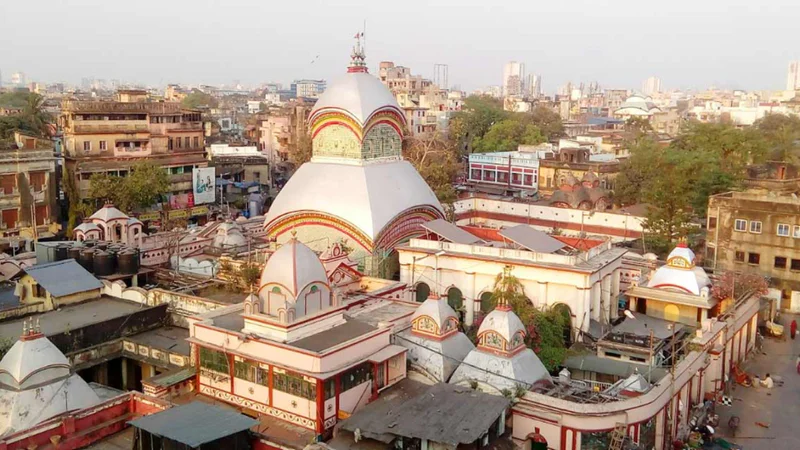
The Kalighat Kali Temple is one of the most sacred temples dedicated to Ma Kali. It is traditionally recognised as one of the 51 Shakti Peethas, where the toes of Ma Sati are believed to have fallen.
The present temple structure was built in the early nineteenth century by the Sabarna Roy Chowdhury family, though the site itself has been a centre of worship for many centuries. The idol of Goddess Kali at Kalighat is distinctive, with three eyes, a long protruding tongue, and four arms, and is worshipped in a form that reflects both fierceness and maternal protection.
Kalighat continues to be a powerful centre of devotion and holds deep religious and cultural significance in Bengal.
2. Dakshineswar Kali Temple, Kolkata

The Dakshineswar Kali Temple is located on the eastern bank of the Hooghly River near Kolkata. The temple is dedicated to Ma Kali, worshipped here as Jagadishwari, with Bhavatarini being a name by which She is affectionately known, signifying “She who carries devotees across worldly existence”.
The temple was built in 1855 by Rani Rashmoni, a philanthropist and devoted worshipper of Kali Maa. The complex follows traditional Bengali temple architecture and includes the main Kali shrine, twelve Shiva temples, and a Radha–Krishna temple.
Dakshineswar gained lasting spiritual significance through its association with Sri Ramakrishna, who served as a priest here and whose spiritual experiences deeply shaped modern Hindu thought. Today, the temple remains an important pilgrimage site and a centre of devotion and spiritual reflection.
3. Baitala Deula Temple, Bhubaneswar

The Baitala Deula Temple, also known as Vaital Deul, is an eighth-century Hindu temple located in Bhubaneswar, Odisha. It is dedicated to Ma Chamunda, a fierce form associated with Ma Kali. The temple is renowned for its detailed stone carvings and sculptural panels that adorn its outer walls.
These carvings depict various Hindu Deities, including Shiva and Parvati, along with hunting scenes and amorous couples, reflecting the symbolic and ritual vocabulary of the period. The central niche houses an eight-armed image of Ma Chamunda, seated on a corpse and adorned with a garland of skulls.
Architecturally, the temple is a prominent example of the Khakhara style of Kalinga architecture, distinguished by its semi-cylindrical roof. The vertical divisions of the structure are traditionally associated with Shakta symbolism and the powers of Mahasaraswati, Mahalakshmi, and Mahakali.
4. Kali Temple, Patna

The Patna Kali Temple is a well-known temple dedicated to Devi Kali, located on the banks of the river Ganga in Patna, Bihar. It is regarded as one of the oldest and most revered spiritual sites in the city.
The temple draws a large number of devotees who visit to seek the blessings of Ma Kali. Over time, it has remained an important centre of worship and a significant pilgrimage site for Kali devotees in the region.
5. Gad Kalika Temple, Ujjain

The Gad Kalika Temple is an important temple dedicated to Kali Mata, located in Ujjain, Madhya Pradesh. It is widely revered by both local devotees and visitors and occupies a respected place among the city’s ancient sacred sites.
According to tradition, the renowned Sanskrit poet Kalidasa performed penance to Ma Kali at this temple and received Her grace, which later blossomed into his exceptional poetic genius. Because of this association, Gad Kalika Temple holds particular significance for scholars, students, and seekers of knowledge.
The temple enshrines Ma Kali in a simple yet powerful form, and the Sri Yantra, symbolising Shakti, is also worshipped here. Gad Kalika Temple is distinct from the Harasiddhi Temple, though both are located in Ujjain and are associated with Shakta worship. While Harasiddhi Temple is often linked to Shakti Peetha traditions in some lists, Gad Kalika Temple has its own independent history and devotional significance.
The Kumbh Mela, one of the most significant religious gatherings in Hindu tradition, also holds importance for Gad Kalika Temple due to Ujjain’s central role as a Kumbh city. During the Kumbh Mela, the temple receives a large influx of devotees who visit as part of their pilgrimage to seek the blessings of Maa Kali alongside the sacred rituals performed along the Shipra River. The festival reinforces the temple’s place within Ujjain’s wider spiritual landscape and its continued relevance in living religious practice.
The temple has undergone reconstruction in later historical periods, including during the Maratha era, and continues to remain an active centre of Kali worship throughout the year.
6. Kali Bari Temple, Shimla

The Kali Bari Temple is an important spiritual site dedicated to Maa Kali. Built in 1845, the temple holds deep religious significance for devotees and is located close to the Shimla City Mall, making it easily accessible.
The temple has a layered history. It was originally established by a Bengali Brahmin on Jakhu Hill in 1823 and was later relocated to Bantony Hill during the British period. A formal temple trust was constituted in 1902, with strong roots in the Bengali community, which continues to shape the temple’s rituals and cultural character.
The sanctum houses a finely adorned Vigraha of Ma Kali, decorated with jewellery and flowers. The temple architecture reflects Bengali influences, and the atmosphere remains calm and devotional, especially during Navratri, when large numbers of devotees visit.
The temple complex also includes basic accommodation facilities and a canteen serving Bengali cuisine. It is open daily from 6:00 am to 7:00 pm, with no entry fee. The evening aarti is particularly well attended and remains a central part of the temple’s daily worship.
7. Chamunda Devi Temple, Kangra

The Chamunda Devi Temple is dedicated to Ma Chamunda, a fierce manifestation associated with Ma Kali. According to tradition narrated in the Devi Mahatmya, when the demons Chanda and Munda attacked Goddess Kaushiki, Chamunda Devi emerged from Her brows to destroy them.
The temple enshrines the sacred image of Ma Chamunda, and a small stone bearing the footprints of the Goddess is also worshipped within the temple परिसर. The site is traditionally regarded as embodying both Shiva and Shakti, which is why it is also known as Chamunda Nandikeshwar Dham.
Surrounded by the Himalayan foothills, the temple draws devotees from across India and holds special reverence among the residents of Palampur and nearby hill towns, who regard it as one of the holiest centres of worship in the region.
8. Kripamayee Kali Temple, Baranagar

The Kripamayee Kali Temple, also known as Joy Mitra Kalibari, is a historic Hindu temple dedicated to Kali Devi, worshipped here by the name Kripamayee, signifying Her compassionate aspect. The temple was built in 1848 by Jay Narayan Mitra, a prominent zamindar and devotee of Ma Kali.
Architecturally, the temple is a large navaratna structure with nine spires, accompanied by twelve Shiva shrines arranged around the main temple. The design reflects traditional Bengali temple architecture and gives the complex a distinct presence.
The temple holds historical and spiritual significance and is associated with Ramakrishna Paramahansa, who is said to have visited the shrine on multiple occasions. The idol of Ma Kripamayee is especially revered for its grace and devotional appeal.
Kali Mata Temples at a Glance
Other Notable Temples of Ma Kali
Beyond the most widely known shrines, there are many important and deeply revered temples of Goddess Kalika and Her manifestations spread across the Indian subcontinent. These sites reflect regional traditions, Shakti lineages, and distinct modes of worship, while remaining rooted in the same core understanding of the Divine Mother.
Kali Ka Tibba
A serene hilltop temple, located at the highest peak in Chail, Himachal Pradesh, offering breathtaking panoramic views of the Shivalik Range and Mount Karol.Kodungallur Sree Kurumba Bhagavathy Temple
Considered the head of the 64 Bhadrakali Kavus of Malabar, this ancient temple preserves a powerful form of Bhagavathy worship associated with protection, justice, and fierce compassion.Kalika Mata Temple, Pavagadh
Located atop the Pavagadh hill, this temple is both a major Shakti Peeth site and a historic centre of Kali worship, drawing pilgrims from across western India.Shri Kalka Ji Temple
One of the most prominent Kali temples in North India, this shrine is closely associated with the city of Delhi itself and has been revered for centuries.Ma Bhadrakali Shakti Peeth
Situated in Kurukshetra, this temple honours Maa Bhadrakali as a fierce yet protective form of Shakti, worshipped since ancient times.Kalika Mata Temple, Chittorgarh Fort
Located within the historic Chittorgarh Fort, this temple reflects the long-standing association of Kali worship with royal protection and martial courage.Shri Bhima Kali Ji Temple
A major Shakti temple in the western Himalayas, Bhima Kali is worshipped here as the presiding deity of the former Bushahr kingdom.Adya Peeth
Revered as the seat of Adya Shakti, this temple holds special importance in Bengali Shakta traditions and early Kali worship.Kankalitala Shakti Peeth
One of the recognised Shakti Peethas, this site is associated with deep Tantric significance and long-standing devotional practice.Nalhati Shakti Peeth
Another important Shakti Peeth in Birbhum, Nalhati remains a major pilgrimage centre for devotees of the Divine Mother.Kal Madhav Shakti Peeth
Located at Amarkantak, the source of the Narmada, this shrine connects Kali worship with sacred geography and pilgrimage traditions.Ma Agameshwari Temple
Associated with the Tantric master Krishnananda Agamavagisha, this shrine reflects a strong Agamic and ritual lineage of Kali worship.Guhyeshwari Temple
One of the most important Shakti temples in the Kathmandu Valley, Guhyeshwari is deeply revered in both Hindu and Tantric traditions of Nepal.
Together, these temples demonstrate the vast geographical, ritual, and theological spread of Ma Kali worship, each preserving a unique expression of the Mother while pointing to the same underlying Shakti principle.
Across India, temples of Ma Kali reflect the many ways in which Her presence has been understood, experienced, and worshipped over time. Each shrine carries its own history, legend, and ritual character, yet all point toward the same enduring truth — Ma Kali as the force that confronts chaos, protects Her devotees, and guides them through transformation. Together, these temples stand not only as places of worship but as living centres of faith that continue to shape spiritual life across generations.