# Pitru Paksha 2026: Shradh Dates, Tithis, Pind Daan, and Pitru Dosha Nivaran Puja
Published: 2026-08-27
Category: Pitru Paksh
Category URL: https://tantrasadhana.app/blog/category/pitru-paksh
Meta Title: Pitru Paksha 2026: Shradh Dates, Tithis, Pind Daan, and Pitru Dosha Nivaran Puja
Tags: Tantra, Tantra Sadhana, Das Mahavidya
Tag URLs: Tantra (https://tantrasadhana.app/blog/tag/tantra), Tantra Sadhana (https://tantrasadhana.app/blog/tag/tantra-sadhana), Das Mahavidya (https://tantrasadhana.app/blog/tag/das-mahavidya)
URL: https://tantrasadhana.app/blog/pitru-paksha-shraddh-dates-tithi
[_हिंदी में पढ़ें_](https://tantrasadhana.app/blog/pitru-paksha-shraddh-dates-tithi-hindi)
### In this article, you will read about:
- Shradh Dates of Pitru Paksha
- Spiritual Significance of Pitru Paksha and Shradh
- Rituals Including Pind Daan, Tarpan, and Pitru Dosha Nivaran Puja
- Stories About Pitru Paksha and Shradh
- Importance of Sadhana and the Tantra Sadhana App
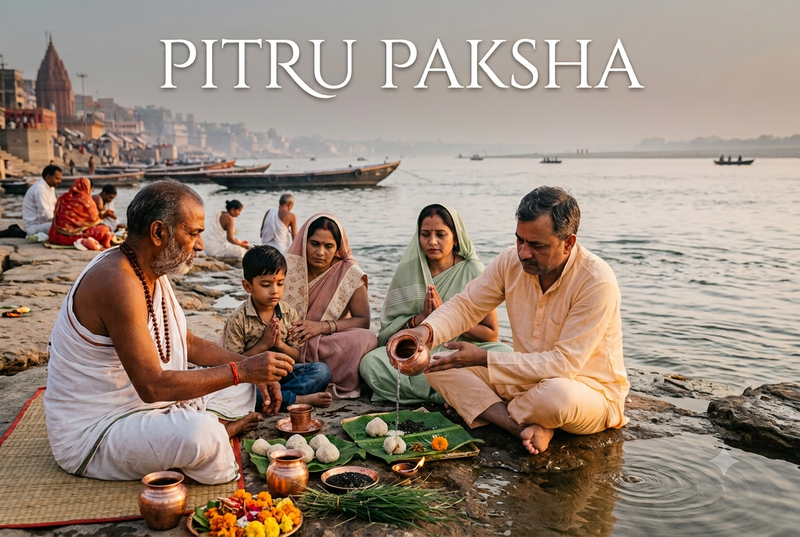
## Shradh Dates of Pitru Paksha 2026
**Pitru Paksha 2026**: **26 Sep (Sat)** **to 10 Oct (Sat)**
**Sarva Pitru Amavasya** **2026 (Mahalaya Amavasya):** **10 Oct (Sat)**
Here are the options for Shradh dates (most to least preferable) according to Hindu scriptures:
- All 15 Tithis of Pitru Paksha
- From Panchami or Ashtami to Sarva Pitru Amavasya
- Only the Tithis of ancestors’ deaths and Sarva Pitru Amavasya
- Only Sarva Pitru Amavasya (for all ancestors collectively)
## Pitru Paksh 2026 Day-wise Schedule
**Date**
**Day**
**Shradh Tithi**
**Key Significance & Special Rites**
**26 Sep**
Sat
**Purnima Shradh**
For ancestors who died on Purnima Tithi
**27 Sep**
Sun
**Pratipada Shradh**
First day of Krishna Paksha
**28 Sep**
Mon
**Dwitiya Shradh**
For ancestors who died on the 2nd lunar day
**29 Sep**
Tue
**Tritiya Shradh**
Includes **Maha Bharani Shradh** (highly auspicious)
**30 Sep**
Wed
**Chaturthi / Panchami Shradh**
Dual Tithi observance for Chaturthi and Panchami deaths
**1 Oct**
Thu
**Shashthi Shradh**
For ancestors who died on the 6th lunar day
**2 Oct**
Fri
**Saptami Shradh**
For ancestors who died on the 7th lunar day
**3 Oct**
Sat
**Ashtami Shradh**
For ancestors who died on the 8th lunar day
**4 Oct**
Sun
**Navami Shradh**
**Matru Navami**, dedicated to mothers and married women
**5 Oct**
Mon
**Dashami Shradh**
For ancestors who died on the 10th lunar day
**6 Oct**
Tue
**Ekadashi Shradh**
For ancestors who died on the 11th lunar day
**7 Oct**
Wed
**Dwadashi Shradh**
Includes **Magha Shradh**; also for those who took Sanyas
**8 Oct**
Thu
**Trayodashi Shradh**
For ancestors who died on the 13th lunar day
**9 Oct**
Fri
**Chaturdashi Shradh**
For those who died a sudden, violent, or accidental death
**10 Oct**
Sat
**Amavasya Shradh**
**Sarva Pitru Amavasya** (covers all missing or unknown Tithis)
### Important Days of Pitru Paksha 2026
- **Maha Bharani Shradh (29 Sep)**: This day aligns with the Bharani Nakshatra. Performing Tarpan or Pind Daan here yields special spiritual rewards, equivalent to performing rituals at holy sites like Gaya.
- **Matru Navami (4 Oct)**: Also known as _Avidhava Navami_. It is the specific day designated to offer food, clothes, and respect to deceased mothers, grandmothers, and other maternal figures.
- **Sarva Pitru Amavasya (10 Oct)**: This is the final and most critical day of Pitru Paksha. If a family doesn’t know the specific death Tithi of an ancestor, performing rituals on this day completely satisfies their spiritual debt.
Download Tantra Sadhana App
## Spiritual Significance of Pitru Paksha and Shradh
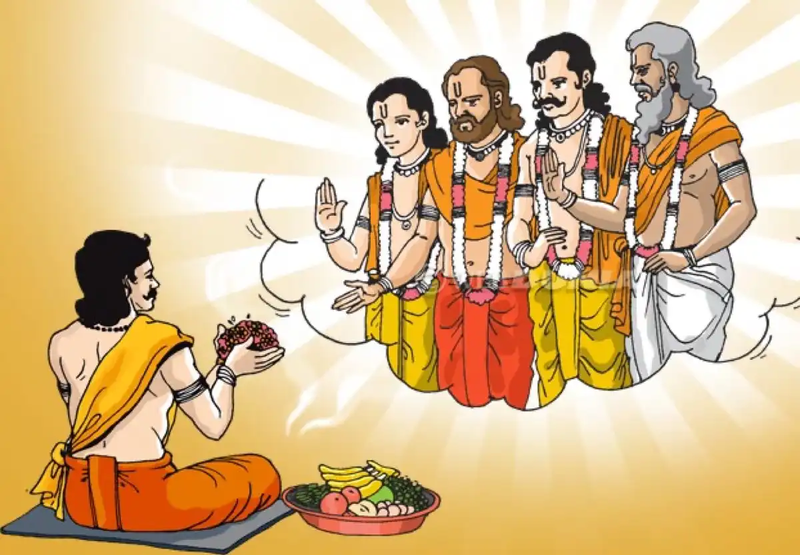
Pitru Paksha is a 16-day (15-Tithi) period of the year when Hindus honour their ancestors ( _Pitrus_). The word _Shradh_ means performing rites with deep faith and devotion.
During this time, people believe departed souls visit their families to clear ancestral debts ( _Pitru Rin_) and receive food offerings ( _Pind Daan_ and _Tarpan_).
Source: media.prayagpandits.com
Pitru Paksha is the ideal time to:
- **Express Gratitude:** Thank past generations for life, family history, and traditions.
- **Release Attachments:** Prayers help free ancestral souls from earthly ties so they can move toward peace or rebirth.
- **Receive Blessings:** Satisfied ancestors grant health, wealth, wisdom, and long life to their families.
- **Heal Karmically:** Performing these rituals heals family lines and clears old Karmic blocks.
Pitru Paksha is an important period to reflect on how we are identified and bound with our family and ancestors. Many of our default patterns and the voices in our heads can be traced back to our care providers.
Whether we aligned with them or rebelled, we are unknowingly carrying them with us, stuck in cycles of ancestral trauma. There is a simple, beautiful teaching from the Upanishads, also used in fire offering chants:
**_Idam Na Mama \|_ (Not Mine).**
It is an invitation to become aware that we have inherited many of the ideas we hold about ourselves and others. As we begin to recognise that these are not ours, we are able to become free of them by returning them to our ancestors with appreciation.
### Astrological Significance of Pitru Paksha
At the beginning of Pitru Paksha, the Sun enters Kanya Rashi (Virgo zodiac sign). This is when Pitrus (ancestors) leave Pitrulok and reside closer to the earthly realm near their descendants’ home for a month, until the Sun enters Vrischika Rashi (Scorpio zodiac sign).
Descendants honour their ancestors in the first half, during the dark fortnight (Krishna Paksh) of this month till Sarva Pitru Amavasya.
Here are the factors that make Pitru Paksha astrologically significant:
- **Sun in Virgo ( _Kanya_):** Virgo is ruled by Mercury and tied to family lineage and karma.
- **Sun and Ancestors:** In Vedic astrology, the Sun represents the soul, father, and ancestors. The 5th house in a chart shows past life deeds and family lineage.
- **Pitru Dosha Correction:** Malefic placements of the Sun, Rahu, Ketu, or Saturn can create _Pitru Dosha_ (ancestral affliction) in a birth chart, causing sudden life hurdles or family strife.
- **Calming Planetary Energy:** Doing _Shradh_ during Pitru Paksha pacifies difficult planetary energies linked to one's lineage and reduces negative karma.
## Rituals Performed in Pitru Paksha
## 1\. Pind Daan
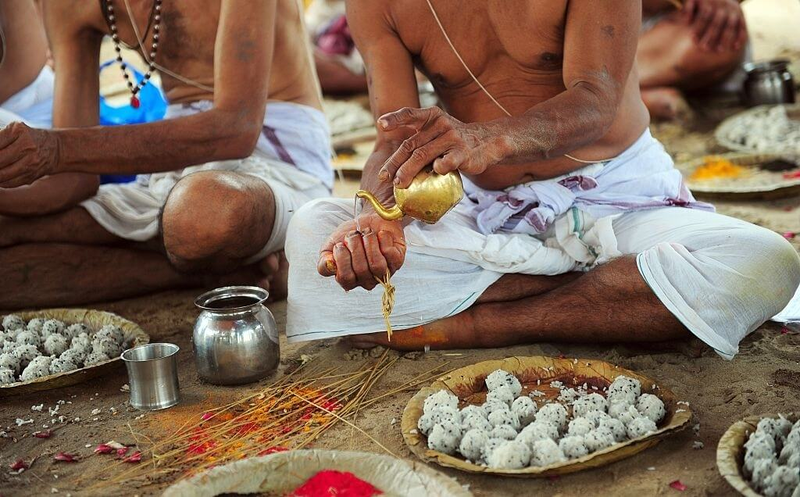
Pind Daan is a sacred Vedic ritual in which symbolic offerings of food, called _Pinds_, are dedicated to deceased ancestors to aid their spiritual journey and grant them peace.
These _Pinds_ are spherical balls made primarily from cooked rice, barley flour, milk, and black sesame seeds, bound together to represent the physical body and cosmic nourishment.
Source: ritualpuja.com
During Pitru Paksha, the performer of the ritual—typically the eldest son or a family member—offers these Pinds alongside mantras, expressing deep reverence and petitioning for the liberation ( _moksha_) of departed souls.
The practice carries profound symbolic meaning, rooted in the belief that physical attachments fade after death, leaving the soul reliant on the living descendants for sustenance in the subtle realms.
By performing Pind Daan, descendants fulfil their _Pitru Rina_ (ancestral debt) and acknowledge the lineage that gave them life.
Beyond its spiritual obligation, the ritual acts as a humbling act of gratitude, believed to bring harmony, prosperity, and protection to the living family through the ancestors' blessings.
## 2\. Tarpan
Tarpan, derived from the Sanskrit root _Trup_ (meaning "to satisfy"), is the ritualistic offering of water mixed with black sesame seeds, barley, and _Kusha_ grass to appease ancestors, sages, and deities.
Performed during Pitru Paksha by riverbanks or at home—often facing south, the direction associated with the ancestral realm—the practitioner cups water in their hands and lets it stream out while reciting specific ancestral mantras.
This continuous flow of water acts as a bridge, quenching the spiritual thirst of departed souls and assuring them that they are remembered.
While Pind Daan focuses on providing food and form to help souls transition, Tarpan is an act of purification and refreshing liquid nourishment. It serves as a daily morning practice during the 16 days of Pitru Paksha.
### Important Rules for Pitru Paksha Rituals
- **The Afternoon Rule**: Shradh rituals, Tarpan, and Pind Daan are traditionally performed during the **Aparahna Kaal** (early-to-mid afternoon, roughly between 11:30 AM and 2:30 PM) rather than early in the morning.
- **Primary Offerings**: The principal elements involve offering black sesame seeds ( _Til_), water ( _Tarpan_), and cooked rice balls ( _Pind Daan_).
- **Charity**: Serving food to Brahmins, the needy, crows, cows, and dogs is considered vital to ensure the spiritual satisfaction of ancestors.
## 3\. Pitru Dosha Nivaran Puja
### What Is Pitru Dosha?
According to Vedic astrology, **Pitru Dosha** is a karmic debt that occurs when a person's ancestors have unresolved sins, unfulfilled desires, or did not receive proper funeral rites (Shradh).
Contrary to popular belief, it is not a "curse" from angry ancestors, but rather a karmic obligation passed down through the lineage that the descendant must pay off.
Astrologically, it forms when the **Sun** (representing the father and soul) or the **Moon** (representing the mother) is afflicted by malefic planets like **Rahu, Ketu, or Saturn**, especially in the **9th house** of ancestors.
### What Is Pitru Dosha Nivaran Puja?
The **Pitru Dosha Nivaran Puja** is a specialised Vedic ritual performed to correct Pitru Dosha by satisfying the souls of departed ancestors. It converts ancestral debts into lifelong blessings, and Pitru Paksha is the ideal time to perform it.
### Step-by-Step Process of Pitru Dosha Nivaran Puja
The Puja is conducted by a Vedic Pandit and generally includes the following steps:
1. **Sankalp (Oath)**: The devotee takes a formal pledge before Lord Vishnu or Lord Shiva, promising to perform the rituals with complete devotion to satisfy known and unknown ancestors.
2. **Pind Daan**: The core ritual where balls made of rice, barley flour, and black sesame seeds (Pinds) are offered to the ancestors to help release their souls.
3. **Tarpan**: Offering sacred water mixed with sesame seeds and flowers while chanting specific ancestral prayers to invite their blessings.
4. **Havan (Fire Ritual)**: A sacred fire sacrifice where herbs and ghee are offered to purify the family's lineage karma.
5. **Brahmin Bhojan & Charity**: Feeding Brahmins, offering food to cows, crows, and dogs, and donating clothes or food to the needy to conclude the ritual.
### Code of Conduct & Rules
- **Attire**: Men must wear a new white dhoti and gamcha; women should wear traditional attire, strictly avoiding black, green, or plain white.
- **Dietary Restrictions**: Devotees must consume strict Sattvic food (no onion or garlic) during the puja days. Non-vegetarian food and alcohol must be strictly avoided for 41 days following the ritual.
- **Stay Constraints**: Once the multi-day ritual begins, the person performing it cannot leave the holy town or venue until it finishes.
### Best Places to Perform Pitru Dosha Nivaran Puja
While simple daily prayers can be done at home, powerful, permanent relief is achieved by performing the Pitru Dosha Nivaran Puja at specific, spiritually charged holy sites across India:
- **Haridwar Har Ki Pauri**
- **Trimbakeshwar Shiv Temple**: Located near Nashik, Maharashtra, this is considered one of the most auspicious locations for Pitru Dosha rituals.
- **Gaya**: Located in Bihar, performing Gaya Shradham is widely recognized as the most powerful remedy to give salvation (Moksha) to ancestors.
- **Varanasi (Kashi)**: Located in Uttar Pradesh, performing Pinda Pradhan along the holy Ganga River brings profound karmic clearance.
- **Rameshwaram**: Located in Tamil Nadu, this southern holy site is deeply revered for ancestral rites and clearing family Doshas.
Begin Tantra Sadhana
## Stories About Pitru Paksha and Shradh
### 1\. Why Daanveer Karna Was Denied Moksh
When the legendary Daanveer Karna died, his soul transcended to heaven. In heaven, anything that he touched, including food and water, turned into gold. Plagued with hunger and thirst, Karna approached Yamraj for a solution.
Yamraj informed him that though he had donated gold throughout his life, he hadn’t offered food and water to his ancestors. Not performing the Shradh Karm had resulted in his ancestors being stuck in a limbo, so he too was denied liberation.
To make amends, Karna was allowed to return to Earth for 15 lunar days and offer food and water to his ancestors. That period was Pitru Paksha.
### 2\. Moksha Dayini Maa Ganga
King Bhagirath performed intense Tapas and brought the celestial Ganga River to Earth to grant salvation to his ancestors.
Ma Ganga carried the purity of heaven from Lord Brahma’s Kamandalu and washed Lord Vishnu’s big toenail before flowing through Lord Shiva’s Sahasrar to descend on Earth.
She flowed from the Himalayan foothills at Gaumukh into the Gangetic plains to enter the sacred land of Haridwar. In the Mahabharata, Sage Dhaumya described Haridwar as the gateway to Sri Hari's abode, Vaikunth.
"Har" refers to Lord Vishnu, "Ki" means "of," and "Pauri" means "steps," denoting the staircase through which Sri Hari descended when Ma Ganga invoked Him.
The stone set in the upper wall of Har Ki Pauri carries the footprints of Sri Hari, and Ganga’s water touches it at all times.
Sri Hari blessed Ma Ganga, ensuring that the ancestors of those who perform the Antyeshti Kriya and Shradh Karm on the Ghats of Ma Ganga in Haridwar will be granted liberation and enter Pitralok.
They will ascend the same stairs that Sri Hari walked on while descending to Earth, known as Har Ki Pauri.
Sage Kapil and Sage Agastya did penance here at Brahmakund, where a few drops of Amrit accidentally fell while Garud, the celestial mount of Sri Hari, was carrying it after the Samudra Manthan.
Lord Shiv and Lord Vishnu sanctified the Brahmakund in Har Ki Pauri during the Vedic era.
### 3\. Sant Eknath’s Lesson: True Humanity is True Devotion
A highly revered historical story comes from 16th-century Maharashtra involving the great Bhakti saint, **Sant Eknath**.
Sant Eknath was preparing a grand, sacred feast at his home in Paithan for his father's annual _Shradh_. The house was filled with the aroma of delicious, traditional foods.
While Eknath was waiting for the invited Brahmin priests to arrive, a poor, hungry family from an "untouchable" caste passed by his house. Overhearing a hungry child crying for food, Eknath's heart melted. Guided by compassion, he **fed the starving family the entire meal** meant for the ritual.
When the local Brahmins found out that the ritual food had been fed to low-caste commoners first, they grew angry, deemed the house defiled, and refused to perform the ceremony.
Undeterred and filled with pure devotion, Sant Eknath sat in prayer and invoked his ancestors directly. Because his act of feeding the hungry was so pure, **the spirits of his ancestors physically manifested** at his home, sat down, and joyfully ate the food prepared by his family.
This story demonstrates that satisfying the hunger of the living and the poor is the highest form of Shradh, as God and the ancestors reside in all living beings.
### 4\. The Legend of Joge and Bhoge
This popular folklore highlights that Shradh must be done with genuine humility rather than vanity or social showing.
- **The Two Brothers**: Joge and Bhoge were two brothers who lived separately. Joge was wealthy but highly arrogant, while Bhoge was poor, deeply spiritual, and humble.
- **The Dual Rituals**: During Pitru Paksha, Bhoge wanted to honor his ancestors but had no resources. His wife went to Joge’s house to help cook a massive feast, hoping to take some leftover food home for their own rituals. Meanwhile, Joge hosted a grand, ostentatious Shradh purely to show off his wealth to his in-laws and elite friends.
- **The Ancestors' Feast**: When the spirits of the ancestors descended to Earth, they first visited the wealthy Joge's house. However, they found that Joge was feeding his affluent living relatives and friends first, completely ignoring the spiritual purpose and purity of the ritual. Disappointed, the ancestors moved to Bhoge’s humble hut. Bhoge and his wife offered simple water, wild grass, and the deepest heartfelt prayers.
- **The Blessing**: The ancestors felt profoundly satisfied by Bhoge's pure devotion ( _Shraddha_). Before returning to the ancestral realm, they blessed Bhoge with immense spiritual peace and prosperity, while Joge's wealth began to diminish due to his arrogance.
### 5\. The Divine Decree of Lord Yama
According to the Garud Puran, the realm of the ancestors ( _Pitru Loka_) is governed by **Lord Yama**, the god of death.
- **The Opened Gates**: The story dictates that at the beginning of this specific dark fortnight, Lord Yama grants a temporary "vacation" to all souls waiting in the ancestral realm.
- **The Earthly Visit**: The gates open, and souls travel back to Earth to visit their surviving bloodlines. It is believed that they take the form of invisible energies, or arrive through animals like **crows, cows, and dogs**.
- **The Final Liberation**: If the descendants offer food, sesame seeds, and water, the souls absorb the subtle essence ( _Svadha_) of these offerings, quenching a year's worth of hunger and thirst. Satisfied, they return peacefully to their realm, clearing the family's cosmic or karmic blocks.
## Importance of Sadhana to Clear Karmic Debts
Ultimately, the best way to honour your ancestors and clear all ancestral debts during Pitru Paksha is to realise that karma only applies to the person you think you are, not your True Self (Atman).
Ṛṇa, or karmic debt, can only be completely dissolved through forgiveness and detachment. That only happens through higher understanding. And Sadhana is nothing but the quest to seek it through direct experience.
## The Tantra Sadhana App
Crafted without a single ad or cost, the **Tantra Sadhana App,** conceived by the Himalayan monk Om Swami, opens the sacred gates of Tantra to any seeker drawn to the Divine Mother and the Das Mahavidyas _(10 Great Wisdom Goddesses of Tantra)_.
- **A Journey Through Sacred Realms:** Step into immersive 3D sanctuaries tailored to each Goddess, from the fierce shadows of Ma Kali to the radiant grace of Ma Kamalatmika. Guided through 1-2 months of devotion per realm, you awaken each Mahavidya through Tantric Mantra Jap, Yagna, and deep esoteric Sadhana.
- **The Path of Divine Conduct ( _Divyachar_):** Unbound by physical materials, every offering is forged within the temple of the mind. The awakened mantras and chants carry the authentic power of Om Swami’s voice, recorded after He mastered these ancient rites through intense solitary practice.
- **A Safe Haven for the Seeker:** With every ritual intricate, guided, and woven directly into the app, even those walking without a physical Guru can safely navigate the profound depths of Tantric Sadhana.
The Divine Mother no longer sits behind guarded doors—the gate to Her ancient path waits at your fingertips.
Invoke Ma With Tantra's Most Secret Practices
Chant awakened mantras, perform Tantric fire offerings, and do esoteric Sadhanas that were passed down from Guru to disciple in secret for thousands of years. Now accessible. Awaken Ma in Her 10 Tantric forms. Fall in love with the Divine. And rise in devotion.
[Invoke Ma](https://tantra-sadhana-app.onelink.me/jgcg/24u3wjsu)
## FAQs
Q: What is the significance of Pitru Paksha?
A: Pitru Paksha is a sacred 16-day period in Hinduism dedicated to honoring and offering gratitude to ancestors through rituals like Shradh, Tarpan, and Pinda Daan. Performing these rites is believed to bring peace to departed souls, resolve Pitru Dosha, and bring health, prosperity, and blessings to the family line.
Q: What should we not do in Pitru Paksha?
A: During this period, one should refrain from organizing auspicious ceremonies like weddings, housewarmings, or purchasing new assets like property and vehicles. It is also customary to avoid non-vegetarian food, alcohol, onions, garlic, and cutting hair or nails as a mark of reverence and restraint.
Q: What happens if a baby is born in Pitru Paksha?
A: A child born during Pitru Paksha is considered spiritually blessed and closely tied to ancestral karma, often believed to bring special talents or prosperity to the family. To ensure balance and ward off any minor planetary or ancestral afflictions, parents simply perform standard astrological remedies, such as a Pitru Dosh Shanti or general birth Puja.
---
This blog is powered by Superblog. Visit https://superblog.ai to know more.
---