In this article, you will read about:
Sri Ramakrishna Paramahamsa and Ramprasad Sen
Bamakhepa and Kamalakanta Bhattacharya
Krishnananda Agamavagisha and Anandamayi Ma
Awaken Goddess Kali With the Help of Tantra Sadhana App
The spiritual legacy of Goddess Kali shines most brilliantly through the lives of the saints who did not just worship Her — they lived with Her.
Across centuries, extraordinary seekers — poets, householders, mystics, and reformers — have walked Her path. Their devotion transcended ritual and transformed into living, breathing relationships with the Divine Mother.
These saints sought not just blessings, but direct communion with Maa Kali, surrendering themselves with childlike trust and fearless love.
Ramakrishna Paramahamsa, the mystic saint of Dakshineshwar, would enter divine trances in Her presence, treating Her as his playful, all-loving Mother.
Ramprasad Sen and Kamalakanta Bhattacharya, the great poets of Bengal, sang to Her with raw emotion, longing, and ecstatic surrender — their songs still echo through Kali temples today.
Krishnananda Agamavagisha, the Tantric scholar and practitioner, delved into Her mysteries through deep Sadhana, revealing the secret pathways to Her grace.
Bamakhepa, the “mad saint of Tarapith,” offered Her his wild devotion, untouched by societal norms, surrendering his very identity into Her fire.
Each of these saints walked a unique path — some through Bhakti, others through Tantra Sadhana — yet all were lifted by the same fierce love that Goddess Kali bestows upon those who dare to surrender.
Their lives remind us: Goddess Kali is not distant or abstract. She is close, personal, real — and ever-ready to guide the sincere seeker beyond fear, ego, and worldly bondage into divine freedom.
Sri Ramakrishna Paramahamsa: The Perfect Devotee
Sri Ramakrishna Paramahamsa embodies the pinnacle of Ma Kali worship, illustrating how complete surrender to the Divine Mother can transform an ordinary human into a living embodiment of divine consciousness.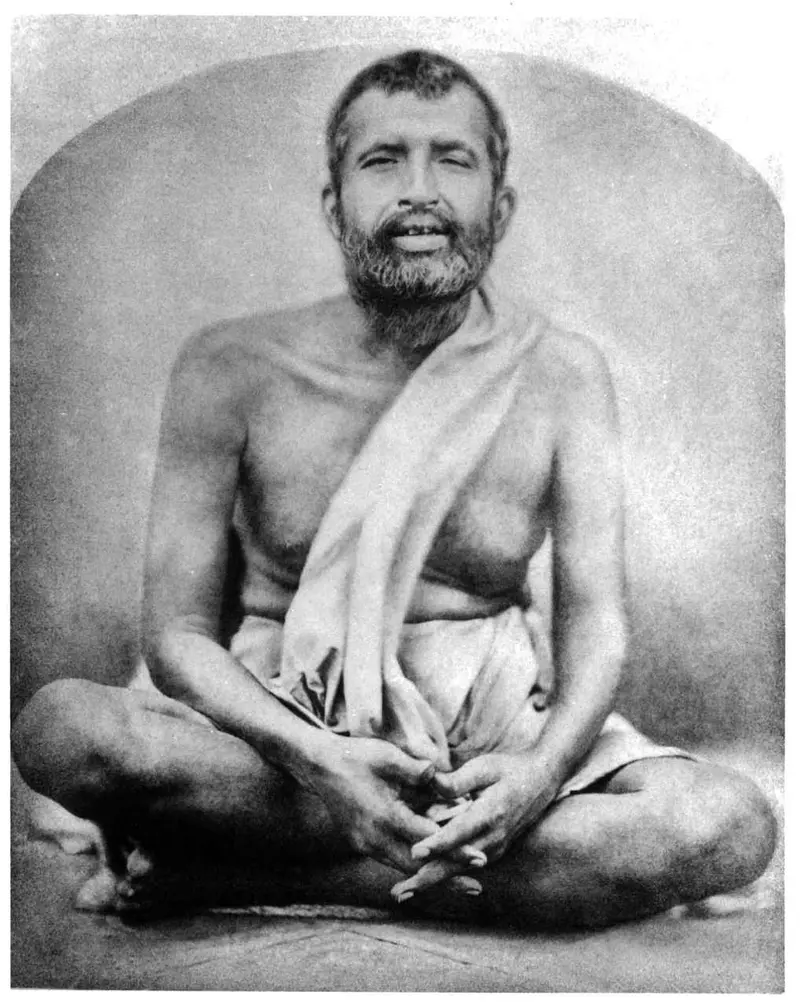
Born as Gadadhar Chattopadhyay in the village of Kamarpukur, Bengal, his life became inseparably intertwined with Ma Kali from his early twenties, when he began serving as a priest at Dakshineshwar Temple.
His approach to Kali Sadhana revolutionised traditional religious practice. He showed that the Divine Mother is not merely a philosophical idea, but a living, responding Presence — fully accessible to sincere devotees.
Unlike conventional priests who maintained formality, Ramakrishna treated Ma Kali as his actual mother, speaking to Her, arguing with Her, and sharing moments of deep intimacy. These interactions shocked many orthodox observers — but also produced extraordinary spiritual results.
His devotion expressed itself in remarkable ways:
He would refuse to eat unless Goddess Kali accepted his offering first.
Many witnessed the temple image consume food from his hands.
During worship, he entered deep Samadhi, losing all awareness of the external world. Others had to care for his physical needs during these states of divine absorption.
Ramakrishna also undertook rigorous Tantra Sadhanas under several teachers and explored multiple paths to the Divine — including Hindu, Islamic, and Christian traditions. In each, he received direct divine visions, yet his relationship with Ma Kali remained his spiritual home.
His teachings, recorded in The Gospel of Sri Ramakrishna, continue to guide and uplift millions of spiritual seekers around the world.
Perhaps the most profound aspect of his life was how he attained the highest divine realisation while remaining rooted in human relationships. His marriage to Sarada Devi, who lived at Dakshineshwar and is considered an incarnation of the Divine Mother Herself, was a union of spiritual depth, not worldly attachment.
Through his life, Sri Ramakrishna showed that the Divine and the worldly can co-exist — when approached with purity, surrender, and the unshakable love of Ma Kali.
Ramprasad Sen: The Poet-Saint of Divine Longing
Ramprasad Sen transformed Bengali spiritual literature through his extraordinarily intimate devotional songs to Goddess Kali, creating a new form of religious expression that continues to inspire devotees three centuries later.
Born in Halisahar village, approximately 35 miles north of Kolkata, into a Tantric Baidya-Brahmin family, Ramprasad showed exceptional poetic talent and a deep spiritual inclination from early childhood.
His formal introduction to Kali Sadhana came during his initiation ceremony at the age of 22, when his Guru, Madhavacharya, whispered the sacred Mantra into his ear. In that moment, Ramprasad experienced such intense longing for the Goddess that his entire life changed permanently.
He later became a disciple of Krishnananda Agamavagisha, the renowned Tantric master who introduced Kali Puja to Bengal.
A Life Given to Devotion and Poetry
The most famous story of Ramprasad's spiritual calling took place during his employment as an accountant in Kolkata. Despite his financial hardship, he spent his workdays writing poems to Ma Kali in his ledger books instead of maintaining financial accounts.
Rather than being punished, his employer was so moved by the poetry that he granted Ramprasad a monthly stipend of thirty rupees, asking him to return home and dedicate himself to spiritual practice and composition.
Back in his village, Ramprasad began a remarkable practice: standing neck-deep in the Ganges River, singing to Ma Kali with such divine fervor that boats would stop to listen and dying people requested his presence at their final moments.
His Sadhana also included meditating for hours in a Panchavati grove, on a Panchamundi Asana (an altar made of five skulls), a rare and powerful Tantric practice. Through this path, he received direct visions of Ma Kali in Her form as Adyashakti Mahamaya.
Recognition by Royalty, Revered by the Masses
Raja Krishnachandra of Nadia, a devout worshipper of Goddess Kali, heard Ramprasad's songs and appointed him as court poet. However, Ramprasad rarely appeared in court, choosing instead to immerse himself in Sadhana. In gratitude, the Raja gifted him 100 acres of tax-free land and bestowed the title “Kaviranjana” (Entertainer of Poets).
Ramprasad composed over 100,000 devotional songs. Some of his most influential collections include:
Vidyasundar
Kali-Kirtana
Shaktigiti
His style was revolutionary — addressing Goddess Kali not with distant reverence, but with raw, emotional intimacy: sometimes as a loving Mother, sometimes as a mischievous Daughter, and often as a stern or absent Parent.
These songs created a new devotional vocabulary that still echoes in Bengali spirituality today.
Final Liberation Through Devotion
Ramprasad’s spiritual culmination occurred during Kali Puja around the year 1775. After an all-night worship filled with singing and prayer, he carried the sanctified water jar to the Ganges for the final ritual.
As the clay image of Ma Kali dissolved into the holy river, Ramprasad waded deeper into the water, singing to Her. At the exact moment of immersion, he merged with the Ganges, leaving his physical body behind — a final act of surrenderin union with the Divine Mother.
Bamakhepa (1837–1911): The Mad Saint of Tarapith
Bamacharan Chattopadhyay, known to the world as Bamakhepa (the Mad Saint), stands as one of the most unconventional yet profound examples of divine communion in the Tantric tradition.
Born in Atla village near Tarapith in Birbhum district, his spiritual intensity became evident from early childhood—expressing through behaviors that society could not comprehend, but which unmistakably marked him as an extraordinary soul.
As a young boy, Bamakhepa developed a peculiar habit that revealed his deep spiritual inclination: in the dead of night, he would sneak into neighbors' homes, steal their family deity images, and carry them to a distant riverbank where he would worship them through the night.
Despite scoldings and attempts to stop him, he repeated this nightly ritual, driven by an irrepressible need for Divine communion.
Early Life and Spiritual Calling
Bamakhepa lost his father at a young age, leaving his spiritual education to his mother and widowed elder sister, who nourished him with ancient stories and basic Sadhanas.
Despite extreme poverty and limited formal schooling, he showed no interest in worldly life, earning the nickname Khepa("mad"). In Tantric vocabulary, however, this madness refers not to mental instability but to Divine intoxication.
He eventually left home and came under the guidance of Swami Makshadananda in Dakshingram, later moving to Maluti, an ancient temple village on the banks of the Dwarka River.
His most significant transformation came under the tutelage of Baba Kailashpati, who initiated him into advanced Tantric and Yogic practices. With time, Bamakhepa rose to become the spiritual head of Tarapith.
Sacred Madness and Divine Recognition
Bamakhepa's behaviour regularly clashed with orthodox temple norms.
He would often eat food offerings meant for the Deity, violating ritual protocol. On one occasion, temple priests physically assaulted him for this. But soon after, Ma Tara appeared in a dream to Rani Bhabani, the Queen of Natore, instructing her to feed the saint first, as he was Her beloved son.
From then on, the temple priests began serving Bamakhepa before the Deity Herself, acknowledging his elevated spiritual status. His Divine connection had been confirmed—not by men, but by the Goddess Herself.
Sadhana Among the Flames
Bamakhepa spent most of his spiritual life in the cremation ground beside the Tarapith temple.
This terrifying realm of ashes, bones, and burning pyres became his spiritual laboratory, where he performed intense Tantric Sadhanas.
These extreme practices culminated in a direct Darshan of Ma Tara in Her ferocious form. She then held him to Her breast, symbolising the full merger of devotee and Deity—the sacred moment of spiritual completion.
The Mad Saint’s Teachings and Legacy
Bamakhepa's teachings were as unconventional as his life.
He taught through paradox, humour, silence, and erratic gestures, which revealed deep spiritual truths to those with open hearts. His wisdom could not be decoded through logic alone; it was a path for the faithful and the fearless.
Devotees came from across India—seeking blessings, healing, or simply his presence. Some left cured. Others left transformed.
Bamakhepa’s life reminds us that Divine realisation doesn’t always wear the robes of respectability. Sometimes, it roars like madness, sleeps in cremation grounds, breaks rituals, and dances beyond reason.
He is a living embodiment of the Tantric truth: that Ma can only be found when all masks fall away.
Kamalakanta Bhattacharya: The Court Poet of Divine Love
Kamalakanta Bhattacharya exemplifies the union of aristocratic refinement and ecstatic devotion to Goddess Kali, showing how spiritual realization can flourish even amid worldly responsibilities and social status.
Born in Burdwan (present-day Bardhaman), West Bengal, Kamalakanta held the esteemed position of court poet to the Maharaja of Burdwan—a role he fulfilled while also being a deeply devoted Tantric practitioner and spiritual guide.
A Life Balanced Between World and Spirit
From early childhood, Kamalakanta displayed artistic brilliance and a spiritual temperament.
Unlike Ramprasad Sen, who struggled with poverty, Kamalakanta was raised in a family that valued both material stability and spiritual growth. This allowed him to receive a proper education while still nurturing his inner longing for the Divine.
His spiritual path deepened under Kenaram Bhattacharya, a renowned Tantric master who recognised his innate spiritual potential.
Under Kenaram’s guidance, Kamalakanta was initiated into advanced Tantric Sadhanas, while also cultivating a poetic voice capable of expressing profound mystical truths in language that resonated across all levels of society.
A Poet in the Palace, A Devotee in the Temple
Unlike many saints who renounced the world, Kamalakanta chose to weave devotion into his daily worldly life.
His role as court poet and advisor to Maharaja Tej Chandra did not hinder his spiritual growth—instead, it amplified his influence, enabling him to spread the worship of Ma Kali to aristocrats and commoners alike.
Remarkably, the Maharaja became Kamalakanta’s disciple, creating a rare dynamic where spiritual authority transcended political power.
Through his poetry, presence, and insight, Kamalakanta brought Tantric devotion into the royal court, reshaping how the elite engaged with the Divine.
Divine Longing in Human Words
Kamalakanta’s poetry radiates emotional intimacy, theological depth, and spiritual vulnerability.
His songs are love letters to Ma Kali, filled with longing, confusion, surrender, and joy. One moment he begs Her to reveal Herself, the next he rebukes Her in anguish—always trusting that She hears.
His iconic composition, “Is My Mother Really Black?”, questions Her fierce appearance with childlike innocence, ultimately concluding that Ma transcends all form—Her appearance shaped only by the devotee’s inner vision.
The poem beautifully blends metaphysical insight with raw human emotion.
A Voice That Carried Through Centuries
Kamalakanta’s songs created a new devotional genre, blending classical musical forms with folk idioms, making them accessible yet profound.
His works were later embraced by Sri Ramakrishna, who often sang Kamalakanta’s compositions during his own ecstatic communions with Ma Kali.
To this day, Kamalakanta’s songs are performed across Bengal, especially during Kali Puja and other sacred gatherings.
His legacy is a reminder that spiritual devotion doesn’t require withdrawal from the world—it can illuminate every corner of life, even a king’s court.
Krishnananda Agamavagisha: The Pioneer of Bengal Kali Worship
Krishnananda Bhattacharya, later revered as Agamavagisha for his profound mastery of Tantric scriptures, is credited with introducing organized Kali Puja to Bengal and making this powerful but esoteric form of worship accessible to householders.
His life marks a turning point in the history of Shakta Tantra, bridging the gap between mystical practice and everyday devotion.
Born in Nabadwip, Nadia district, around 1575 CE (some sources suggest 1533), Krishnananda belonged to the generation that lived in the spiritual afterglow of Sri Chaitanya Mahaprabhu.
While the dominant tide of devotion in Bengal leaned toward Vaishnavism, Krishnananda carved his path through Shakti worship, aligning himself with the Divine Mother in Her fiercest form—Ma Kali.
Scholar, Mystic, Householder
Krishnananda was born into a family steeped in scholarship and spirituality. His father, Acharya Mahesh Bhattacharya, was a respected Brahmin scholar, and he was descended from Ramatoshana Vidyalankara, the author of the critical text Pranatoshani.
His formal education was rich and rigorous, and he studied under Vasudeva Sarvabhauma, one of the most esteemed spiritual teachers of his time.
Yet Krishnananda’s unique genius lay in his ability to synthesise esoteric Tantra with everyday Hindu practice.
In an era when Tantric rituals were feared, misunderstood, and reserved for highly trained renunciates, he dared to bring this sacred knowledge into the homes of ordinary people. He empowered sincere householders to engage in Kali Sadhana without abandoning their worldly lives.
Brihat Tantrasara: The 'Tantric Encyclopedia' for the Masses
Krishnananda’s magnum opus, the Brihat Tantrasara, is one of the most practical and comprehensive treatises on Tantric worship ever composed.
Drawing from over 170 ancient texts, he created a guide in Bengali that distilled the core of Shakta rituals while removing the elements deemed dangerous or inaccessible to non-initiates.
This work became the foundation for modern Kali Puja across Bengal and served as a blueprint for spiritual seekers who sought authentic realisation within the framework of family life.
The Tantrasara preserved spiritual potency without compromising safety, making Krishnananda a true revolutionary in Tantra’s democratisation.
The Vision of Dakshinakali
Perhaps the most iconic moment in Krishnananda’s life was his divine vision of Ma Kali, which transformed the very image of the Goddess in Bengal.
As the story goes, Ma Kali appeared to him in a dream, instructing him to base Her Murti (idol) on the first person he saw upon waking.
At dawn, he encountered a village woman pressing cow dung patties onto a wall. Her right foot rested on a stone, her long hair hung loose, and her tongue extended in modest embarrassment when she noticed him.
This simple, deeply human scene became the basis for the now-iconic form of Dakshinakali — a softer, more accessible version of the fierce battlefield deity from the scriptures.
By humanising the Divine Mother, Krishnananda made Her worship emotionally resonant and spiritually safe for householders. This shift in iconography was as transformative as his textual contributions.
Lineage and Legacy
Krishnananda’s disciples included the legendary Ramprasad Sen, whose devotional poetry further embedded Kali worship into the Bengali psyche.
The Agameshwari Kali Temple he founded in Nabadwip still stands as a powerful pilgrimage site, continuing the original rituals and spirit he inaugurated over four centuries ago.
His influence stretched beyond texts and temples.
Through his integration of Tantra and Bhakti, he laid the groundwork for an entire culture of householder mystics, showing that profound spiritual realisation could bloom in the soil of everyday life.
A Practical Mystic
Though deeply rooted in scripture, Krishnananda was not a theoretician.
He insisted on direct spiritual experience over intellectual mastery. To him, real knowledge came not from debating Agamas and Tantras, but from personal communion with the Divine.
This practicality made him an accessible and respected teacher. He believed the Divine Mother could be reached not just through complex rituals, but through sincere intention, purified conduct, and heartfelt devotion.
The Female Saint Who Worshipped Goddess Kali
Sri Anandamayi Ma stands as a radiant example of a modern-day saint who not only attained but also embodied the bliss of Ma Kali.
From an early age, she was immersed in spontaneous states of divine ecstasy, often described by her devotees as the very presence of the Mother herself.
Without formal initiation or a guru, she entered deep Samadhi and radiated a joy that felt both fierce and compassionate, much like Ma Kali’s own paradoxical nature.
Her life was a testament to the possibility of dissolving the ego and living in constant union with the Divine Mother, inspiring seekers to experience that same grace and transformative bliss today.
Awaken Goddess Kali With the Help of Tantra Sadhana App
Himalayan monk Om Swami created the Tantra Sadhana app to make the worship of the Das Mahavidyas (10 Wisdom Goddesses of Tantra) accessible to all devotees of the Divine Mother, including beginners and adepts.
The app contains a separate virtual 3D world for each of the Das Mahavidyas, where Sadhaks can worship them sequentially through their Tantric Mantra Japa, Yagna, and Sadhana.
All the worship in the app is in accordance with the Tantric path of Divyachar, where all the offerings to deities are made mentally without any physical apparatus. The 3D graphics and awakened chants recorded in Swamiji’s voice only make this process more immersive and effective.
The app is not only free but also ad-free, with an option to offer voluntary Dakshinas. As all the rituals have been curated and mastered by Swamiji himself before being coded into the app, no personal Guru is required to complete the entire app journey.
The journey begins with the worship of Ma Kali Herself, awakening Her presence in your life irreversibly. If you’ve been wondering how to attain Her blessings the Tantric way, you don’t have to look any further.