# Sharad Navratri 2026: Dates, Rituals, and More
Published: 2026-08-05
Category: Tantra
Category URL: https://tantrasadhana.app/blog/category/tantra
Meta Title: Sharad Navratri 2026: Dates, Rituals, and More
Tags: Navratri, Tantra, Tantra Sadhana, Das Mahavidya
Tag URLs: Navratri (https://tantrasadhana.app/blog/tag/navratri), Tantra (https://tantrasadhana.app/blog/tag/tantra), Tantra Sadhana (https://tantrasadhana.app/blog/tag/tantra-sadhana), Das Mahavidya (https://tantrasadhana.app/blog/tag/das-mahavidya)
URL: https://tantrasadhana.app/blog/sharad-navratri-dates-significance-rituals
[_हिंदी में पढ़ें_](https://tantrasadhana.app/blog/sharad-navratri-dates-significance-rituals-hindi)
### In this article, you will read about:
- Important Tithis, Meaning, and Spiritual Significance of Sharad Navratri
- Rituals, Puranic Origin Story of Sharad Navratri
- Why Sharad Navratri Ends with Dussehra or Vijayadashami
- Durga Puja Vidhi and Durga Saptashati Paath Vidhi with Schedule
- Fasting Rules, Foods List, and Das Mahavidya Journey
- Das Mahavidya Worship Through Tantra Sadhana App
**Sharad Navratri** is the Navratri that occurs in the season of autumn (Sharad) and ends with the festival of Vijayadashami or Dussehra.
In this most auspicious period for Devi worship, the **Tantra Sadhana App** offers all users an opportunity to worship each of the Das Mahavidyas—the 10 Powerful Forms of the Mother Goddess—in Their **Secret Shrine**.
## Important Tithis of Sharad Navratri 2026
**Sharad Navratri 2026 Start and End Dates: 11 Oct (Sun) to 20 Oct (Tue)**
Ghatasthapan Muhurt: 6:19 AM to 10:12 AM on 11 Oct (Sun)
Ghatasthapan Muhurt falls on Pratipada Tithi.
Pratipada Tithi: 9:19 PM on 10 Oct (Sun) to 9:30 PM on 11 Oct (Mon)
## Sharad Navratri 2026 Calendar with Navdurgas and Colours
**Day**
**Date**
**Goddess**
**Colour**
1 – Pratipada
11 Oct (Sun)
Ma Shailaputri
Yellow
2 – Dwitiya
12 Oct (Mon)
Ma Brahmacharini
Green
3 – Tritiya
13 Oct (Tue)
Ma Chandraghanta
Grey
4 – Chaturthi
14 Oct (Wed)
Ma Kushmanda
Orange
5 – Panchami
15 Oct (Thu)
Ma Skandamata
White
6 – Shashthi
16 Oct (Fri)
Ma Katyayani
Red
7 – Saptami
17 Oct (Sat)
Ma Kalaratri
Royal Blue
8 – Ashtami
18 Oct (Sun)
Ma Mahagauri
Pink
9 – Navami
19 Oct (Mon)
Ma Siddhidatri
Purple
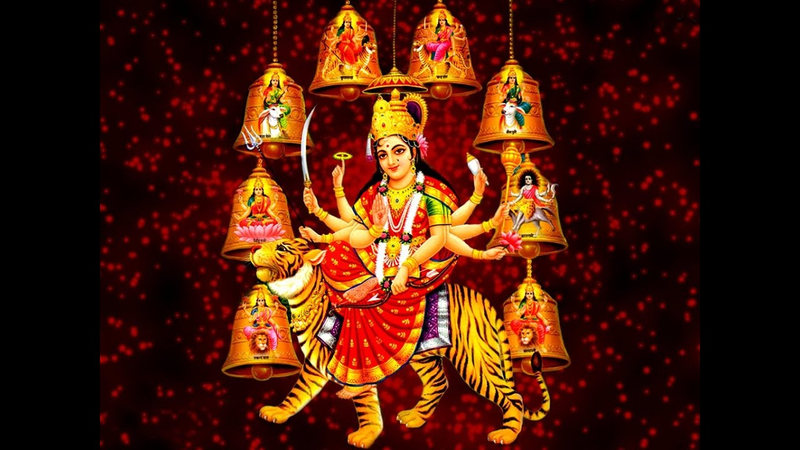
The **Navdurgas** are the 9 distinct forms of Goddess Durga in Hinduism, each representing a unique facet of Supreme Cosmic Energy (Adishakti). Revered individually across the 9 nights of Navratri, these Avatars—ranging from the peaceful Ma Shailaputri to the fierce Ma Kalaratri—embody different divine qualities. Together, they symbolise the full spectrum of existence, offering believers protection from evil, spiritual wisdom, and ultimate liberation.
Each of the **9 colours of Navratri** visually expresses a particular aspect of the Divine Mother and reminds the devotee to cultivate corresponding spiritual qualities. By wearing these specific hues on their respective days, devotees physically align themselves with the Goddess's divine qualities while celebrating spirituality and tradition.
The festival ends with **Dussehra (Vijay Dashami)** on 20 Sep (Tue).
Source: ghspreston.co.uk
## Meaning and Spiritual Significance of Sharad Navratri
Navratri, in Sanskrit, means **9 Nights.** In Sanatan Dharm, they are 9-night-long festivals dedicated to the **Divine Feminine.**
Although Hindu tradition recognises **4 Navratris** each year— **Chaitra**, **Sharad**, **Magh (Gupt)** and **Ashadh (Gupt)**—it is **Sharad Navratri** that has, over centuries, become the principal annual celebration of the Divine Mother throughout the Indian subcontinent.
It celebrates the victory of Goddess Durga over the demon Mahishasur, recalls Lord Ram's worship of the Divine Mother before His conquest of the demon king Ravan, honours the eternal power of Adishakti, and invites every seeker to undertake an inner pilgrimage from ignorance to wisdom, from fear to courage, and from bondage to freedom.
The scriptures describe these 9 nights as a time of extraordinary spiritual opportunity. During this annual autumnal worship, the Divine Mother Herself assures devotees that She accepts sincere offerings even when the worshipper is unfamiliar with every ritual detail.
All they need is faith and devotion.
> **jānatājānatā vāpi balipūjāṁ yathā kṛtām \|**
>
> **pratīkṣiṣyāmy ahaṁ prītyā vahnihomaṁ tathākṛtam \|\|12.11\|\|**
>
> _"Whether the Bali (offerings), worship or sacred fire oblations are performed with complete knowledge of the prescribed rites or without such knowledge, I shall lovingly accept them all."_
>
> — Devī Māhātmya (Durga Saptashati), Chapter 12
This compassionate assurance reveals the heart of Navratri: **it is not ritual perfection but devotion that draws the Grace of Ma**.
Download Tantra Sadhana App
## Navratri Rituals to Perform at Home
The central theme of Sharad Navratri is the manifestation of the Divine Mother. Every year, devotees celebrate Her arrival, welcome Her into their homes, sing hymns in Her praise, and finally bid Her farewell on Vijayadashami (the 10th day when victory was attained).
Different traditions perform various rituals during this period.
### Kalash Sthapan or Ghatasthapan
> **kalaśasya mukhe viṣṇuḥ kaṇṭhe rudraḥ samāśritaḥ \|**
>
> **mūle tatra sthito brahmā madhye mātṛgaṇāḥ smṛtāḥ \|\|**
>
> **kukṣau tu sāgarāḥ sarve saptadvīpā vasundharā \|**
>
> **ṛgvedo'tha yajurvedaḥ sāmavedo'tharvaṇaḥ \|\|**
>
> _"At the mouth of the Kalasha abides Vishnu; in its neck resides Rudra; at its base is Brahma. Within it dwell the Divine Mothers. Its interior contains all the oceans, the seven continents and the whole earth, together with the four Vedas."_
>
> — Traditional **Kalasha Avahana Mantra** used in Smarta, Shakta and Agamic worship
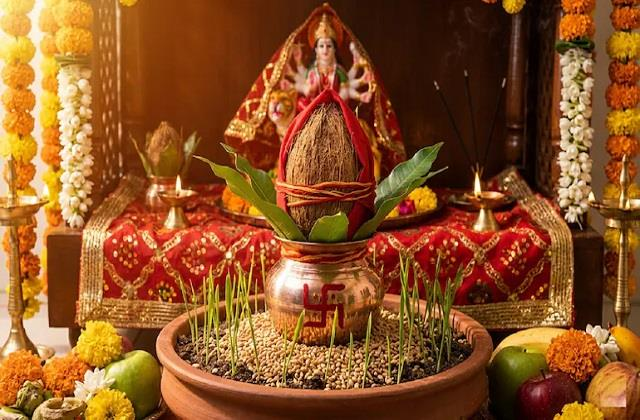
Every authentic Sharad Navratri worship begins with **Kalash Sthapan**, also known as **Ghatasthapan**. It is the declaration that an ordinary home has now become a sacred space.
Source: nari.punjabkesari.in
The Kalash represents **life itself**. It holds water—the visible source of life. Within it are placed leaves, grains and often a coconut, each symbolising fertility, abundance and the continuity of creation.
Just as the womb nurtures life unseen, the Kalasha becomes a visible symbol of the cosmic womb from which the Universe emerges. For this reason, many Shakta traditions identify the Kalasha with the **Hiraṇyagarbha**, the Cosmic Embryo described in Vedic literature.
The Divine Mother is worshipped through the Kalash because She is the source from whom all existence arises.
### Sandhi Puja
In Sharad Navratri, **Sandhi Puja** is performed during the sacred junction between the Tithis of **Mahāṣṭamī** and **Mahānavamī**.
According to the traditional Panchang (Hindu calendar), this sacred period lasts **48 minutes**, comprising:
- the last **24 minutes** of Mahāṣṭamī
- the first **24 minutes** of Mahānavamī
This brief interval is regarded as one of the most spiritually charged moments of the entire festival, because it is when **Goddess Chamunda**, one of the fiercest forms of the Divine Mother, appeared to end the battle with the demons Chand and Mund.
Chanting the Navarna Mantra, which includes the name **Chamunda**, is considered especially potent during this period.
### Kanya Pujan or Kumari Puja
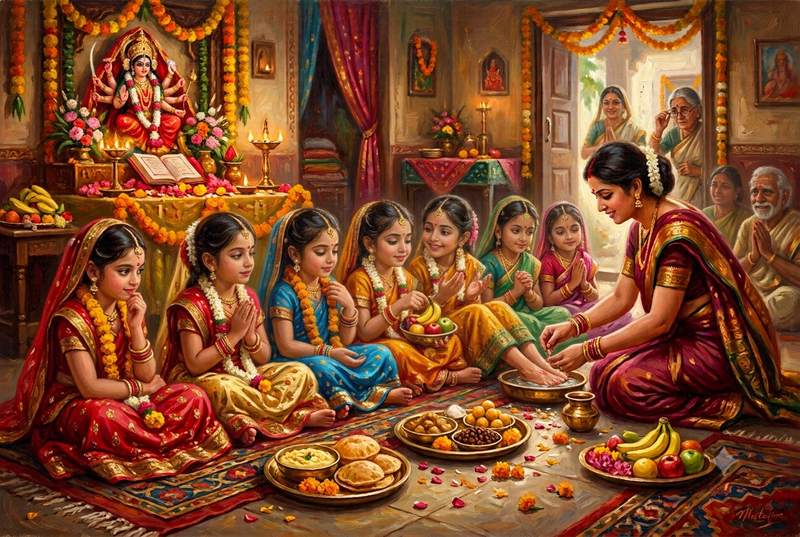
As Sharad Navratri approaches its conclusion, devotees throughout India observe one of its most touching and spiritually profound rituals— **Kanya Pujan**, also known as **Kumari Puja**.
Young girls are welcomed into the home or temple with reverence. Their feet are washed. They are offered flowers, sandal paste and sacred food. New clothes or gifts may be presented.
Finally, devotees bow before them, recognising them as manifestations of the Divine Mother. To someone unfamiliar with the Shakta tradition, this may appear symbolic or ceremonial, but scriptures like Devi Bhagavat Puran and Kalika Puran reveal something far deeper.
Before worldly identity, ambition, social distinction, and ego begin to shape the personality, childhood reflects qualities that the scriptures repeatedly associate with the Divine: **purity, innocence, simplicity, fearlessness, and spontaneity.**
The Kumari is therefore honoured not because of age alone but because she reminds the devotee of the untouched, luminous purity that belongs to the Divine Mother. The worship is directed to the Goddess who manifests through the child, not to the child’s personality.
Generated by AI
Tantric manuals further develop this practice, explaining that the Kumari represents the ever-pure and ever-awakened Shakti who remains untouched by the limitations of worldly existence.
Although the ritual details differ among lineages, the theological principle remains the same:
**The Living Presence of the Goddess is to be honoured wherever it is recognised.**
### Visarjan
Visarjan is not only a farewell but a prayer that the external worship now blossom into lifelong remembrance.
After the final Aarti on Vijayadaśamī, devotees:
1. Offer flowers and prostrations.
2. Recite a prayer of gratitude.
3. Offer _Kṣamā-Prārthanā_ (a prayer seeking forgiveness for mistakes).
4. Mentally request the Divine Mother to continue guiding their life.
5. If a Kalash was established, they respectfully conclude its worship.
6. Sprinkle the sanctified Kalash water around the home or garden.
7. Receive the coconut and other offerings as **Prasād**.
If an image has been installed temporarily, it is immersed in a water body according to local custom or respectfully retained for future worship.
## Puranic Origin Story of Sharad Navratri
Sharad Navratri is neither centred upon a single historical event, nor merely the remembrance of a single divine incarnation. Rather, Sharad Navratri represents the **eternal victory of Divine Shakti whenever Dharma is threatened**.
### 3 Charits from Devi Mahatmya
The Devī Māhātmya from Mārkaṇḍeya Purāṇa is divided into three principal sections, traditionally known as the **3 Charitas**. They reveal three dimensions of the Divine Mother's cosmic activity.
**Pratham Charit**
The first Charita narrates how **Goddess** **Mahākālī** emerges from the Yoga-Nidrā (yogic sleep) of Lord Vishnu, and enables Him to destroy the demons **Madhu** and **Kaiṭabha**. Without Her, even Lord Vishnu remains absorbed in Yoga-Nidrā.
**Madhyam Charit**
The second Charita contains the celebrated account of **Mahishasur Mardini**. Unable to defeat Mahishasur individually, the Gods combined their Divine energies. From that unified radiance emerged Goddess Durga.
The battle that followed symbolises the restoration of cosmic order. It is this section that has become the most widely known through temple worship, devotional hymns and artistic depictions throughout India.
**Uttam Charit**
The final Charita narrates how the Goddess destroys **Śumbha**, **Niśumbha**, **Raktabīja**, **Caṇḍa**, and **Muṇḍa**, along with several other formidable demons.
She repeatedly reveals that all the countless forms appearing in battle are manifestations of Her own infinite power.
### Story from Devi Bhagavat Puran
Perhaps the most celebrated narrative associated with Navratri is the story of **King Surath** and the merchant **Samadhi**.
Although many readers first encounter this account in the _Devī Māhātmya_, the _Devī Bhāgavata Purāṇa_ also preserves and elaborates the tradition of the Navarātra Vrata inspired by their example.
King Surath had lost his kingdom. Though deprived of power, he remained inwardly attached to the kingdom he no longer possessed. The merchant Samadhi was abandoned by his own family, yet his mind remained filled with concern for those who had rejected him.
Unable to understand the source of their attachment, both approached the sage **Medhas**. The sage explained that this mysterious power was **Mahāmāyā**, the Divine Mother Herself, through whom the universe functions.
At his instruction, Surath and Samadhi undertook the worship of the Goddess with deep faith and austerity. They performed Jap, meditated upon the Divine Mother, offered flowers and worship, maintained self-restraint, and persevered with unwavering devotion.
Pleased with their worship, the Divine Mother appeared before them. Surath prayed for the restoration of his kingdom and the wisdom to rule righteously. Samadhi sought liberating knowledge.
The Goddess granted both according to their aspirations. This narrative beautifully illustrates that the Divine Mother responds to each devotee according to the sincerity of their heart and the maturity of their aspiration.
One receives righteous **worldly fulfilment**. Another receives **liberation**. Both receive **Her Grace**.
### Story of Lord Ram’s Akal Bodhan
The **Krittivasi Ramayan**, composed in Bengal, has the beautiful narrative that shaped the Durga Puja tradition for centuries. The story tells that before confronting the demon king Ravan, Sri Ram resolved to worship the Divine Mother during the autumn season.
Ordinarily, the great worship of the Goddess was associated with the **Vasant Navaratri** of spring. Because Lord Ram invoked Her in **Sharad Ritu**(autumn season), this worship came to be known as **Akāla Bodhana**—the awakening of the Goddess at a time considered outside the older seasonal pattern in Chaitra, when the traditional New Year or Nav Samvat begins in the Hindu calendar.
One of the most moving episodes in the Akāla Bodhana tradition concerns Lord Ram's offering of **108 blue lotuses** ( _nīlotpala_) to the Goddess. The number 108 has long been regarded in Hindu tradition as a symbol of completeness.
Having gathered the flowers with great devotion, Lord Ram began His worship. The Goddess, wishing to test the depth of His devotion, caused one lotus to disappear. When Lord Ram discovered that only 107 remained, He remembered that He Himself was often praised as **Kamala-Nayana**, the Lotus-Eyed One.
Without hesitation, He resolved to offer one of His own eyes in place of the missing lotus. As He prepared to make the offering, the Divine Mother appeared before Him, stopping His hand and blessing Him for His unwavering devotion.
## Why Sharad Navratri Ends with Dussehra or Vijayadashami
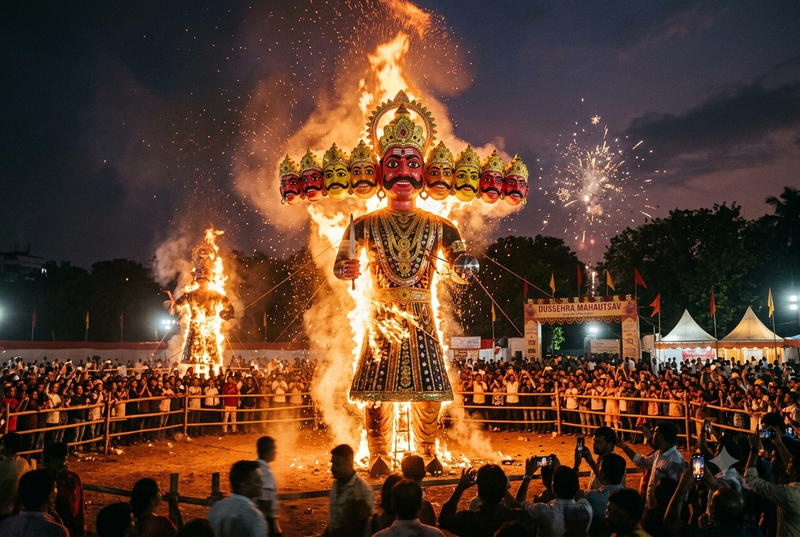
**Vijayadashami or Dussehra** is the day on which the scriptures remind humanity that **Dharm can never be permanently defeated**, because the Divine always manifests whenever righteousness declines.
It is the day Goddess Durga and Lord Ram attained victory over Mahishasur and Ravan respectively.
Generated by AI
The Hindu tradition remembers several great victories of Dharm, all of which reveal the same eternal principle: Whenever arrogance, injustice, and Adharm appear to dominate, Divine Grace restores harmony.
For this reason, it occupies a unique place in Hindu spirituality and ends the festival of Navratri.
The 9 days of Sharad Navratri represent preparation that includes purification, discipline, prayer, meditation, self-restraint, and inner transformation. The tenth day represents the flowering of all these efforts, when the spiritual practice bears fruit.
The journey begins with invocation. It ends with victory. The number 10 has long symbolised Completeness in Sanatan Dharm. After the single digits culminate in 9, the appearance of 10 marks the beginning of a higher cycle.
Thus, Vijayadashami signifies not merely an ending, but the beginning of a transformed life.
Awaken Her Grace
## Sharad Navratri Durga Puja Vidhi
### Preparing the Sacred Space
The first step is preparing the place of worship. The altar should be clean, quiet, and where possible, reserved exclusively for sacred purposes during the 9 days.
Many traditions recommend facing **East**, **North** or **Northeast**, directions traditionally associated with spiritual illumination. A clean cloth may be spread upon the altar.
Upon it may be placed:
- an image or Murti of Goddess Durga, Ma Lalita Tripurasundari or the family deity according to one's lineage,
- the Kalash,
- a lamp,
- incense,
- flowers,
- water for worship,
- sacred texts such as the **Devī Māhātmya**,
- and offerings to be presented during the Puja.
The altar should not become cluttered. Simplicity promotes concentration. The external order of the altar quietly encourages the inner order of the mind.
### Diya
Before the formal worship begins, the lamp is lit. Many families maintain an **Akhand Jyoti**, an uninterrupted flame, throughout the 9 days of Navratri. Whether or not one maintains it, the lamp should always be treated with reverence as a visible reminder of the inner light.
### Bell
The ringing of the bell ( _ghaṇṭā_) before worship is often misunderstood as merely announcing the beginning of the ritual. But it serves several purposes, such as gathering the wandering mind, creating an atmosphere of sanctity, and signifying the transition from ordinary activity to sacred awareness.
### Sankalp
A **Sankalp** is a sacred resolve. It is not just a wish but a conscious declaration that the coming worship is being undertaken with sincerity, humility, and dedication.
One may pray for purification, devotion, the welfare of one's family, peace in the world, removal of obstacles, or ultimately, liberation.
### Daily Shodashopchar Puja
Every step of the Puja mirrors the respectful reception of an honoured guest. The Divine Mother is invited. She is offered a seat. Her feet are ceremonially washed. She is offered water to drink, fragrant substances, garments, ornaments, food and light.
Although different Paddhatis enumerate them with minor variations, the traditional sequence generally includes:
01. Āvāhana – Invocation
02. Āsana – Offering a seat
03. Pādya – Water for washing the feet
04. Arghya – Water of respectful welcome
05. Ācamanīya – Water for sipping
06. Snāna or Abhiṣeka – Ritual bathing
07. Vastra – Offering garments
08. Ābharaṇa – Offering ornaments
09. Gandha – Sandal paste
10. Puṣpa – Flowers
11. Dhūpa – Incense
12. Dīpa – Lamp
13. Naivedya – Food offering
14. Tāmbūla – Betel leaves and areca nut (or symbolic substitute)
15. Nīrājana (Ārati)
16. Namaskāra and Prārthanā – Prostration and concluding prayer
The 16 Upchars can be offered to the Divine Mother using the 16 verses of the Sri Suktam.
## Durga Saptashati Paath Vidhi and Schedule
### Preparations Before Recitation
Before beginning the recitation:
- Bathe and wear clean clothes; red is auspicious and recommended.
- Sit before the altar or Kalasha.
- Light a lamp and incense.
- Offer flowers to the Divine Mother.
- Mentally pray for purity and guidance.
External purity prepares the body; devotion prepares the heart.
### Traditional Order of Recitation
According to the traditional Chandi Paddhatis, the order is:
01. Achaman and Sankalp
02. Ganesh Smaran
03. Guru Smaran
04. Devi Kavach
05. Argala Stotram
06. Kilak Stotram
07. Shap Vimochan Mantra
08. Siddh Kunjika Stotram
09. Devi Mahatmya (All 13 Chapters)
10. Siddh Kunjika Stotram once again
11. Kshama Prarthana
This sequence has been preserved in traditional recitation manuals for centuries.
### Durga Saptashati Reading Schedule
A traditional 9-day division is based on Devi Charitras and not just successive chapters if one is not chanting all 13 chapters in one go every day:
**Day**
**Chapters**
1
Preliminary chants, Pratham Charitra - Chapter 1, Kshama Prarthna
2
Preliminary chants, Madhyam Charitra - Chapter 2,3 and 4, Kshama Prarthna
3
Preliminary chants, Uttar Charitra - Chapter 5 to 13, Kshama Prarthna
4
Preliminary chants, Pratham Charitra - Chapter 1, Kshama Prarthna
5
Preliminary chants, Madhyam Charitra - Chapter 2,3 and 4, Kshama Prarthna
6
Preliminary chants, Uttar Charitra - Chapter 5 to 13, Kshama Prarthna
7
Preliminary chants, Pratham Charitra - Chapter 1, Kshama Prarthna
8
Preliminary chants, Madhyam Charitra - Chapter 2,3 and 4, Kshama Prarthna
9
Preliminary chants, Uttar Charitra - Chapter 5 to 13, Kshama Prarthna
This is in accordance with the method approved by the scripture itself as it preserves the integrity of the three Charitas while distributing the reading comfortably across Navratri. In this way, a devotee completes 3 full chants of the entire Saptshati in 9 days.
### Rahasya Tray
Many traditional editions include 3 supplementary texts known as:
- Pradhānika Rahasya
- Vaikṛtika Rahasya
- Mūrti Rahasya
These explain the deeper symbolism of the Divine Mother's forms and are traditionally recited after the main text. While highly revered, they are supplementary and not part of the original thirteen chapters of the Devī Māhātmya.
### Navarna Mantra or Sri Vidya Mool Mantra Jap
The sacred **Navarna Mantra** occupies a central place in the Chandi tradition. In many lineages it is chanted after the Saptashati chant.
**Sri Vidya Mool Panchdashi Mantra** is chanted by those who undertake the Tantric Sadhana of Devi.
Saptashati Parayan is always to be done aloud, not in the mind. Mantra Jap can be done mentally.
## Sharad Navratri Fasting Rules and Foods List
### Foods Traditionally Allowed
Commonly accepted foods include:
- Fresh fruits
- Milk and yoghurt
- Buttermilk
- Paneer (cottage cheese)
- Rock salt (Sendha Namak)
- Buckwheat flour (Kuttu)
- Water chestnut flour (Singhar)
- Amaranth (Rajgira)
- Sama rice (barnyard millet)
- Tapioca (Sabudana)
- Potatoes
- Sweet potatoes
- Pumpkin
- Bottle gourd
- Coconut
- Peanuts (where traditionally accepted)
- Dry fruits and nuts
- Ghee
Different regions maintain different culinary traditions, and family customs should be respected where they do not conflict with health or basic principles of the Vrat.
### Foods Commonly Avoided
Most traditions avoid:
- Rice and wheat
- Ordinary table salt
- Lentils and pulses
- Most grains
- Onion and garlic
- Meat, fish and eggs
- Alcohol and intoxicants
Some communities observe additional restrictions according to family tradition or lineage.
## Sharad Navratri as the Journey of the Das Mahavidyas
For most devotees, Sharad Navratri is associated with the worship of Goddess Durga in Her various forms. The Tantric tradition, however, reveals a deeper esoteric vision.
The Tantras describe Ma Adishakti as revealing 10 supreme aspects of Her infinite nature, known collectively as the **Daśa Mahāvidyās**—the Ten Great Revelations of Divine Wisdom.
They are 10 diverse gateways through which the aspirant comes to know the Supreme Reality.
Although the public observance of Sharad Navratri centres upon Goddess Durga, Tantric lineages contemplate these nine nights as a progressive inward movement through the wisdom of the Mahāvidyās.
Each night strips away another layer of ignorance. Each Mantra removes another veil. Each meditation reveals another aspect of the Mother's infinite nature.
The 10th day symbolises not merely victory over external evil, but the complete recognition that all 10 Mahāvidyās are expressions of the one indivisible Adishakti.
The seeker no longer worships ten Goddesses. The seeker beholds **One Mother appearing as 10 infinite revelations**.
## Das Mahavidya Worship Through Tantra Sadhana App
**This year, turn inward and invoke Shakti through Tantra with the Tantra Sadhana App.**
The free and ad-free app offers guided mantra chanting, fire offerings, and the esoteric Sadhanas of each of the **Das Mahavidyas**, sequentially from Ma Kali to Ma Kamalatmika.
All the rituals, mastered by the app’s creator **Om Swami**, take place in the Mahavidyas’ immersive 3D worlds and follow the principles of Divyachar—the highest path of Divine conduct and mental worship in Tantra.
### Secret Shrine for Sharad Navratri 2026
During every potent spiritual period, including the 4 Navratris, a special world called the Secret Shrine appears in the Mahavidya realm (home screen) of the Tantra Sadhana App.
During the Navratris, it is a golden opportunity for every seeker to worship the Das Mahavidyas with Their Dhyan Shloks over 10 days, even if they have just downloaded the app and are yet to begin their main journey.
Dhyan Shloks are meditative verses in Sanskrit that describe a deity's form, qualities, and attributes, serving to focus the seeker’s mind on the deity, cultivate devotion, and align with the deity's energy to obtain their blessings.
They help a seeker visualise the Divine as seen and described in the scriptures by seers who saw the deity in deep meditative absorption.
Choose the number of times you wish to chant the Dhyan Shlok and repeat it for the day’s Mahavidya any number of times within a 24-hour window from 12 AM to 12 AM the next day.
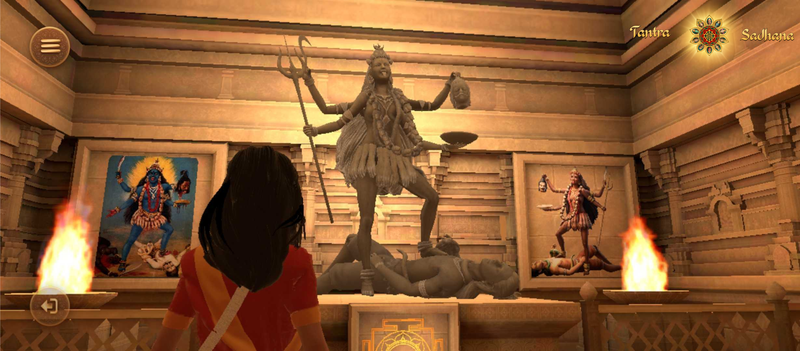
Ma Kali’s Shrine opens a day before every Navratri, as it is always an Amavasya—the best Tithi for Her worship.
**Secret Shrine Dates for Sharad Navratri 2026**
**Opens: 10 Oct (Sat) at 12:00 AM**
**Closes: 20 Oct (Tue) at 12:00 AM**
Seize this potent window to connect with the diverse and powerful Energies of each Mahavidya, and awaken Their Shakti within you.
Awaken Her Grace. Fall in love with the Divine.
Ma only calls those who are ready for Her worship. If you are here, you are ready. Awaken the Das Mahavidyas. And rise in devotion.
[Awaken Ma's Grace](https://tantra-sadhana-app.onelink.me/jgcg/24u3wjsu)
## FAQs
Q: How does Sharad Navratri begin?
A: Sharad Navratri traditionally begins with Ghatasthapana, the ritual invocation of Goddess Durga through the installation of a sacred kalash (water pot) during an auspicious morning window. Devotees also sow barley seeds and light an Akhand Jyoti on this first day to symbolize spiritual awakening and incoming prosperity.
Q: What are the 9 days colours of Sharad Navratri?
A: The nine colors of Sharad Navratri change every year based on the weekday each day falls on, honoring the distinct forms and qualities of Goddess Durga. For 2026, the nine daily colors in sequence are yellow, green, grey, orange, white, red, royal blue, pink, and purple.
Q: What is the difference between Chaitra Navratri and Sharad Navratri?
A: Chaitra Navratri occurs in early spring (March–April) to mark the Hindu Lunar New Year and culminates in Rama Navami, focusing heavily on quiet household rituals and fasting. In contrast, Sharad Navratri takes place in autumn (September–October) and leads into Dussehra and Diwali, featuring grand public celebrations like Garba, Dandiya, and massive Durga Puja pandals.
---
This blog is powered by Superblog. Visit https://superblog.ai to know more.
---