In this article, you will read about:
Key Dates of Shravan Maas 2026 for North and South India
Spiritual and Cultural Significance of Shravan Month
Shravan Somvar Vrat and Solah Somvar Vrat
Shravan Fasting Rules and Step-by-Step Puja Vidhi for Home
Shravan Rituals and Rules for Women and Girls
Shakti Worship Through the Tantra Sadhana App
Shravan Maas or Sawan Maah is the Hindu month of Shravan, which spans July, August, and September according to the Panchangs (calendars) followed in North and South India.
Key Dates of Shravan Maas 2026 (Sawan) for North and South India
North India (Purnimata Panchang)
South India (Amanta Panchang)
For Andhra Pradesh, Telangana, Goa, Maharashtra, Gujarat, Karnataka, and Tamil Nadu…
Spiritual and Cultural Significance: Why Shravan Month Is So Special
The arrival of Shravan Maas marks far more than the beginning of another month in the Hindu calendar.
It announces the commencement of one of the most sacred periods of spiritual discipline — a season in which nature itself appears to join humanity in worshipping Lord Shiv, the Supreme Being in the Shaiva tradition of Sanatan Dharma.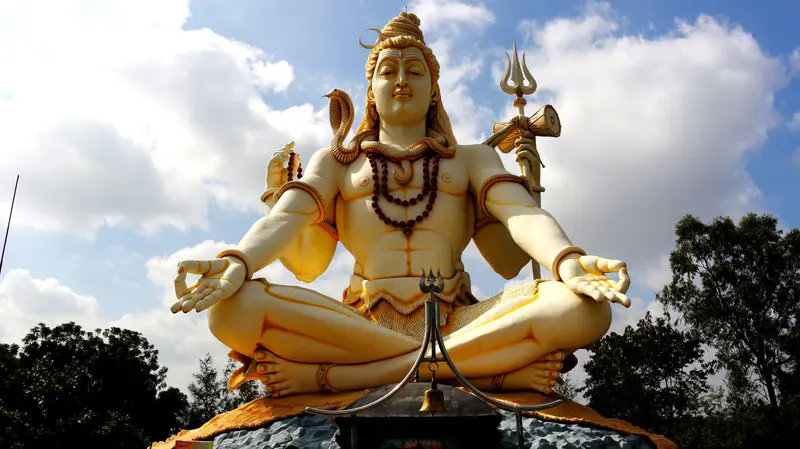
Its Connection with Monsoon
In India, the scorching heat of summer gives way to cooling rains. Rivers swell with renewed life, forests become clothed in emerald green, and the earth itself seems to undergo purification.
The ancient Rishis did not regard these changes as merely seasonal; they recognised them as outward reflections of an inner spiritual truth: just as rain cleanses the dust from the world, sincere devotion washes away the impurities of the human heart.
Therefore, Shravan has been revered as a month dedicated to austerity, worship, charity and self-transformation.
Shravan Mahatmya of Skand Puran
In the Skand Puran, Lord Shiv reveals the Supreme Glory of the sacred month:
"Among all months, there are some that are praised for pilgrimage, some for charity, and others for sacrifice. Yet Shravan stands apart because it unites all these paths into a single season of devotion. In this month, the simplest act performed with sincerity becomes an offering to the Supreme."
Shravan Mahatmyameans the inherent greatness of Shravan. It is a section of the Skand Puran devoted entirely to explaining the greatness of the month of Shravan.
Unlike later manuals that concentrate only on the Shravan Somvar Vrat (Monday vow or fast), the Shravan Mahatmya presents the entire month as a sacred discipline of worship, fasting, charity, pilgrimage, scriptural study, and righteous conduct.
The work is traditionally presented as a dialogue in which Lord Shiv instructs Sanatkumar, one of the eternally youthful mind-born sons of Lord Brahma.
Lord Shiv does not praise the month of Shravan merely because it is associated with Him. Instead, He describes the month as a divinely ordained opportunity during which ordinary acts of devotion acquire extraordinary spiritual potency.
It does not isolate worship from daily life but integrates every aspect of spiritual discipline.
The month becomes a sacred opportunity to cultivate:
Bhakti (devotion) through worship and prayer.
Tapas (austerity) through fasting and self-restraint.
Dan (charity) through acts of generosity.
Jap (chanting) through constant repetition of the Divine Name.
Svadhyay (self-study) through reading sacred texts.
Seva (social service) through serving guests, teachers, and those in need.
In this way, Shravan becomes a practical embodiment of Sanatan Dharma itself.
What Is Shravan Somvar Vrat and How Is It Observed?
The Sanskrit word Somvar literally means the day of Som or the day of the Moon.
Lord Shiv bears the crescent moon upon His matted locks. In the Shiv Puran, He is therefore known as Someshwar and Somnath, which mean Lord of the Moon. Therefore, Somvar is the most auspicious day of the week to worship Him.
In Shravan, Mondays become exceptionally potent for spiritual practices dedicated to Lord Shiv. The Shravan Somvar Vrat (Monday vow or fast in Shravan) is the most popular of them all.
Some undertake it to seek marriage, prosperity, or good health. Others view it as an act of gratitude to the Lord. Yet the scriptures reveal a far deeper purpose.
The Sanskrit word Vrat is often translated simply as “fast”, which is incomplete. It is derived from the verbal root vṛ, which means"to choose" or "to undertake with determination". So, a Vrat is fundamentally a sacred resolve.
Shravan Somvar Vrat is fundamentally a discipline of inner purification, using the outer forms of fasting and worship to cultivate humility, self-restraint, compassion, and unwavering devotion.
Fasting may be one expression of that resolve, but the essence of a Vrat lies in disciplined living. Shravan Mahatmya portrays Vrat as consisting of 3 inseparable dimensions:
Physical discipline, including moderation in food and conduct.
Mental discipline, expressed through remembrance of God and control of the senses.
Moral discipline, manifested through truthfulness, compassion, and generosity.
The Shravan Mahatmya, together with the Shiv Purana, Ling Purana, and traditional Shaiva practices, presents the Somvar Vrat not as an isolated ritual but as part of a complete spiritual life centred on Lord Shiv.
The scriptures consistently portray the vrata as a means of refining the individual rather than persuading the Divine.
The observance encourages the devotee to cultivate:
Self-control and purification through fasting
Surrender through Abhishekam
Concentration through Mantra Jap
Humility through prayer
Compassion through charity and service
These disciplines gradually transform the devotee's inner life. A devotee unable to fast for reasons of health, age, or circumstances may still observe the essence of the Vrat through sincere worship, simplicity of diet, remembrance of Lord Shiv, and acts of kindness.
The outward observances of Shravan Somvar are simple. One fasts. One offers water. One chants Mantras. One visits a temple. One offers Bilva leaves. Yet beneath these simple acts lies a profound spiritual teaching.
The fast disciplines desire. The water cools the passions of the mind. The Bilva leaf symbolises the integration of thought, word and deed. The Shri Rudram sanctifies speech. The Shiv Lingam reminds the devotee of the infinite, formless reality that transcends all names and forms.
Ultimately, the purpose of Shravan Somvar is not merely to worship Lord Shiv but to become more like Him—calm amidst turmoil, compassionate amidst suffering, detached amidst worldly success, and unwavering in the pursuit of Truth.
What Is Shravan Solah Somvar Vrat? How to Do It?
Among all the Vrats dedicated to Lord Shiv, few are as widely observed as the Solah Somvar Vrat — the sixteen Monday fast or vow.
Every year, thousands of devotees begin this sacred observance with prayers for health, peace, righteous marriage, family harmony, removal of obstacles, and spiritual progress.
Why 16 Mondays? Because the number 16 occupies a sacred place throughout Hindu tradition. It appears in many contexts, most notably the 16 phases (Kalas) of the Moon.
As Monday is governed by Som (the Moon), the observance of 16 Mondays symbolically seeks the complete purification and fulfilment of the mind.
How to Observe the Solah Somvar Vrat?
The procedure is intentionally simple. On each Monday, usually starting from the first one in Shravan, the devotee:
Bathes early and wears clean clothes
Makes a Sankalpa
Worships Lord Shiv
Performs Abhishekam with water (and other offerings according to tradition)
Offers Bilva leaves
Chants Shiv Panchakshari Mantra, Mahamrityunjay Mantra, or Shri Rudram
Reads or listens to the Solah Somvar Vrat Katha (optional but customary)
Observes a fast according to their capacity
Performs charity or service where possible
Concludes the fast peacefully after worship
This sequence is repeated for 16 consecutive Mondays.
Types of Fasts for Solah Somvar Vrat
The Shravan Mahatmya and Dharmashastra literature recognise different forms of Vrat, which include:
Nirjal – without food or water (appropriate only for specific observances and physically capable individuals)
Phalahar – fruits and milk.
Ekabhukt – one meal during the day.
Nakt – one meal after sunset.
Ayachit – accepting only what is received without asking.
The choice depends upon health, age, family tradition, and capacity.
Udyapan (Completion Ceremony)
After the 16th Monday, families perform an Udyapan, formally concluding the Vrat.
This may include Rudrabhishekam, feeding Brahmins or guests, charity, distribution of Prasad, and prayers of gratitude.
Shravan Upvas (Fasting) Rules: What to Eat and Avoid Eating
The 3 Dimensions of Shravan Fast
The scriptures implicitly describe 3 levels of observance:
1. Physical Upvas, limiting food intake
2. Mental Upvas, avoiding anger, jealousy, gossip, excessive speech, greed, resentment, harsh judgement, and unnecessary distractions.
3. Spiritual Upvas, the highest form where the devotee seeks to remain inwardly close to Lord Shiv throughout the day through Mantra, meditation, remembrance, scriptural reading, and surrender.
Foods Traditionally Permitted
While customs differ by region and family tradition, the following are widely accepted:
Fruits
Milk and milk products
Nuts and dry fruits
Fasting flours
In many regions, devotees prepare foods using ingredients such as:
Water chestnut flour (Singhara Atta)
Amaranth flour (Rajgira)
Buckwheat flour (Kuttu)
Tapioca pearls (Sabudana)
Rock salt (Sendha Namak)
Foods Traditionally Avoided
While practices vary, the following are commonly avoided during Shravan fasts:
Meat, fish, and eggs
Alcohol and intoxicants
Onion and garlic
Excessively spicy and rich foods
Those who are pregnant, elderly, seriously ill, taking essential medication, recovering from surgery, or engaged in strenuous physical labour should modify the fast according to their circumstances.
Shravan Somvar Step-by-Step Puja Vidhi for Home
Lord Shiv, who is pleased with a leaf, a flower, a little water, and a heart full of devotion, does not measure the grandeur of the offering, but the sincerity of the worshipper.
Here are the steps of a basic Puja Vidhi to worship Him at home:
Sacred Sankalp (Resolve): Sit in your shrine and make a solemn, conscious declaration of your intent, stating your name, Gotra (use Narayan Gotra if unknown), and your spiritual or personal goal, dedicating the fruits of the fast to Mahadev.
Altar Setup: Clean the altar area and arrange a Shiv Lingam made of stone, metal, crystal, or clay, or a portrait of Shiva-Parvati, along with Nandi facing the Lingam, a water vessel, a bell, a lamp, incense, and your ritual offerings.
Invocation & Ganesh Puja: Light the lamp and incense, sit in silent meditation for a few moments, and chant Lord Ganesh’s Naam Mantra to invoke Him and remove all obstacles, followed by prayers to your Guru and lineage.
Continuous Abhishekam: Pour the gathered holy materials (pure water, Ganga water, milk, curd, honey, ghee, sugarcane juice, or coconut water) slowly and without interruption over the Shiv Lingam while chanting the Shiv Panchakshari Mantra or reciting the Shri Rudram.
Sandalwood & Vibhuti Consecration: Gently dry the Lingam; then apply cooling sandalwood paste to invite inner peace and sacred ash (Vibhuti).
Bilva Leaf & Flower Offerings: Place Bilva leaves gently upon the Lingam with the smooth side facing down (upwards in scriptural text, but facing the deity) and stalks pointing away from you, chanting the Shiv Panchakshari Mantra with each leaf, followed by fresh flowers.
Naivedyam Presentation: Offer cleanly prepared vegetarian, Sattvic food or fresh fruits to Lord Shiv as an expression of gratitude, which will later be distributed to family members as consecrated Prasad.
Inward Meditation & Jap: Conclude the external offerings by sitting in complete stillness to practice Panchakshari Japa and Mahamrityunjaya Mantra, or by reciting hymns such as the Lingashtakam or Bilvashtakam.
Shravan Rituals and Rules for Women and Girls
Why Women Observe Shravan Vrats
The Vrat observed by women during Shravan is sometimes misunderstood as a ritual performed solely for obtaining or protecting a husband. The scriptures present a much richer understanding.
The observances undertaken by women during Shravan are prayers for:
Steadfastness in Dharma
Harmony within the household
Wisdom in relationships
Protection of loved ones
Prosperity guided by righteousness
Above all, spiritual growth
Can Women Worship Lord Shiv During Menstruation?
The answer to this frequently asked question requires careful distinction between scripture, ritual practice, and regional custom.
The major Purans do not contain a universal prohibition stating that women are spiritually unfit to remember or pray to Lord Shiv during menstruation.
What remains beyond dispute across all traditions is that the Divine is never inaccessible through sincere, sweet remembrance and mental worship.
Even when external rituals are postponed according to family custom, one may continue chanting the Shiv Panchakshari Mantra, meditating upon Lord Shiv, reading the Shiv Puran, listening to the Shri Rudram, and offering heartfelt prayers.
Role of Young Girls During Shravan
Young girls have traditionally been encouraged to participate in Shravan observances from an early age.
Simple practices include offering flowers to Shiva, learning short Stotras or Shlokas, listening to stories of Lord Shiv, helping prepare the Puja, feeding birds and animals, and participating in acts of charity.
Such practices cultivate compassion, discipline and reverence rather than fear or superstition. Parents should present Shravan to them not as a season of rigid prohibitions but as an opportunity to develop lifelong habits of kindness and devotion.
Penance of Goddess Parvati
Where devotion blossoms in the heart, there the Divine Mother is already present.
Shravan honours not only Lord Shiv but also the unwavering devotion of Goddess Parvati, whose Tapas became the ideal for seekers across the ages.
The scriptures do not portray women merely as participants in Shravan rituals. Rather, they present Goddess Parvati Herself as the supreme exemplar of Shravan Sadhana.
Thus, to understand the role of women during Shravan, one must first understand the life and spiritual journey of the Divine Mother as Devi Parvati.
Every woman who observes Shravan with sincerity walks, in some measure, the path first illuminated by the Divine Mother Herself.
Mangala Gauri Vrat
One of the most cherished observances during Shravan is the Mangala Gauri Vrat, observed on Tuesdays in many regions, particularly in Maharashtra, Karnataka, Andhra Pradesh and parts of North India.
The word Mangala means auspiciousness, while Gauri refers to the radiant and benevolent form of Goddess Parvati.
The ritual generally includes:
Decorating the image of Gauri
Offering flowers, fruits, and sweets
Lighting Deepaks
Reciting hymns
Listening to the Mangala Gauri Vrat Katha according to local tradition
While regional customs vary, the underlying principle remains constant: invoking the Divine Mother's blessings for an auspicious and Dharmic life.
Shakti Worship Through the Tantra Sadhana App
The free and ad-free Tantra Sadhana app is a revolutionary digital platform for aspiring and practising Tantric Shakti Upasaks worldwide to worship and awaken the Das Mahavidyas (10 Wisdom Goddesses of Tantra) from the comfort of their homes.
Created by the Himalayan monk Om Swami, the app follows the principles of Divyachar — the Tantric path in which no physical apparatus is required and all the offerings are mental.
The app’s journey takes the user through 10 immersive 3D worlds dedicated to the 10 Mahavidyas, from Ma Kali to Ma Kamalatmika.
Their energies are awakened sequentially through Tantric Mantra Japs, Yagnas, and esoteric Sadhanas mastered by Om Swami himself before creating the app.
This Shravan, enhance your worship of Lord Shiv by beginning the invocation of His inseparable Shakti in 10 powerful, all-encompassing forms.