# Yoga and Tantra: How the Practice of Yogasana Aids Tantric Worship
Published: 2025-10-09
Category: Tantra
Category URL: https://tantrasadhana.app/blog/category/tantra
Meta Title: Yoga and Tantra: How the Practice of Yogasana Aids Tantric Worship
Meta Description: Explore Yoga and Tantra, their differences, Kundalini awakening, Tantra Yoga vs Hatha Yoga, and how Yogasana supports Tantric worship.
Tags: Tantra, yoga, tantra yoga
Tag URLs: Tantra (https://tantrasadhana.app/blog/tag/tantra), yoga (https://tantrasadhana.app/blog/tag/yoga), tantra yoga (https://tantrasadhana.app/blog/tag/tantra-yoga)
URL: https://tantrasadhana.app/blog/yoga-tantra-how-practice-of-yogasana-aids-tantric-worship
[_हिंदी में पढ़ें_](https://tantrasadhana.app/blog/yoga-tantra-how-yogasana-aids-tantric-worship-hindi)
### **In this blog, you’ll discover:**
- [The true meaning and purpose of Tantra Yoga within the spiritual tradition](#h_1476077222629676)
- [How Tantra Yoga differs from other yogic paths like Haṭha and Rāja Yoga](#h_8870814310001089)
- [The role of the body, energy, and consciousness in Tantric practice](#h_8089198374728684)
- [Why Tantra Yoga is a path of integration, not indulgence](#h_841977190796969)
- [How Tantra and Yoga intersect, and how this union shapes spiritual evolution](#h_5366540660497834)
- [Where to begin your journey through authentic Tantra Sadhana](#h_5945336127852614)
## What Is Yoga?
Today, the word _Yoga_ immediately conjures up images of Asanas (postures) and Pranayama (breathwork). In the modern wellness industry, Yoga has largely been reduced to a tool for fitness, stress relief, and relaxation.
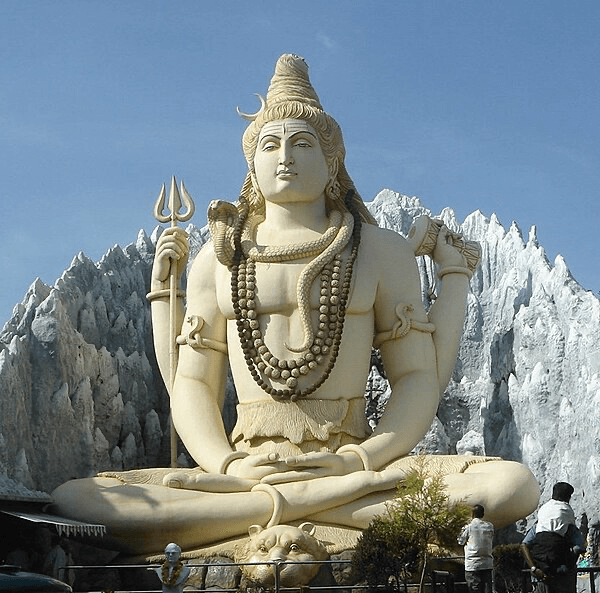
But in Vedic philosophy, **Yoga is far more than a physical practice**. It is a sacred discipline of mental stillness and inner union.
The Sanskrit word _Yoga_ (योग) comes from the root _Yuj_ (युज्), which means “to yoke, join, or unite.” It refers to the union of the individual self (J _ivatma_) with the Supreme ( _Paramatma_).
The earliest known reference to Yoga is in the Rig Veda (5.81.1):
> _“yuñjate mana uta yuñjate dhiyo viprā viprasya bṛhato vipaścitaḥ...”_ _— Rigveda 5.81.1_
>
> **Translation:** _The wise apply their minds and thoughts in unison. They perform sacred rites in honor of the vast, all-knowing Savitā, directing the cosmic order._
Yoga, then, is the harnessing of the mind—a means to align thought, energy, and action with higher consciousness.
### **Yoga as Inner Equanimity: Bhagavad Gita Reference**
In the Bhagavad Gita (2.48), Lord Krishna defines Yoga as equanimity:
> _“yoga-sthaḥ kuru karmāṇi saṅgaṁ tyaktvā dhanañjaya_
>
> _siddhy-asiddhyoḥ samo bhūtvā samatvaṁ yoga uchyate”_
>
> **Translation:** _Be in a sustained state of continuous equipoise while performing all your daily duties, O Arjuna, abandoning attachment to success and failure. This balance—Samatva—is Yoga._
### **Yoga as Explained in Patanjali’s Yoga Sutras**
Maharshi Patanjali has codified his knowledge of yoga, its practices and benefits by encapsulating them in the form of aphorisms. They are called as yoga-sutras. He has given the clear definitions of yoga and its eight branches very precisely and scientifically in his treatise Patanjali Yogasutra in four different padas or sections, such as Samadhi Pada, Sadhana Pada, Vibhuti Pada, and Kaivalya Pada.
> “yogah cittavrtti nirodhah.”
>
> \- Patanjali Yoga Sutra I/2
>
> **Translation:**
>
> _Yoga is the arrest of the activities of the chitta._
**He specified the eight limbs of Yoga as:**
> _“yama niyama asana pranayama pratyahara_
>
> _dharana dhyana samadhayah astau angani.”_
>
> \- Patanjali Yogasutra II/29
>
> **Translation:**
>
> _Self-discipline (yama), observances (niyama), posture (asana), breath control (pranayama), withdrawal of the mind from sense objects (pratyahara), concentration (dharana), meditation (dhyana) and absorption in the self (samadhi) are the eight limbs of yoga._
## Forms of Yoga: A Journey Through Time
Yoga is not a single system, but a family of approaches. Ancient Indian scriptures describe several distinct yet interconnected forms of Yoga, each offering a different path to the Divine.
### **Mantra Yoga**
The most ancient form of Yoga, Mantra Yoga uses sacred **sound vibrations** ( _mantras_) to elevate consciousness. Found in the Rig Veda and Atharva Veda, it focuses on invoking divine energy through sonic resonance.
### **Jnana Yoga**
The **path of wisdom and self-inquiry**, Jnana Yoga is rooted in the **Upanishads** and elaborated in the **Bhagavad Gita**.
> _“na hi jñānena sadṛiśhaṁ pavitramiha vidyate...”_ _(BG 4.38)_ _There is nothing more purifying than knowledge._
This Yoga leads seekers beyond illusion through discriminative insight ( _Viveka_).
### **Karma Yoga**
Karma Yoga is the **path of selfless action** without attachment to outcomes.
> _“jñāna-yogena sāṅkhyānāṁ karma-yogena yoginām...”_ _(BG 3.3)_ _Some follow the path of knowledge; others walk the path of action._
It purifies the heart and prepares one for inner awakening.
### **Bhakti Yoga**
The **Yoga of devotion**, Bhakti Yoga centers on unconditional love for the Divine.
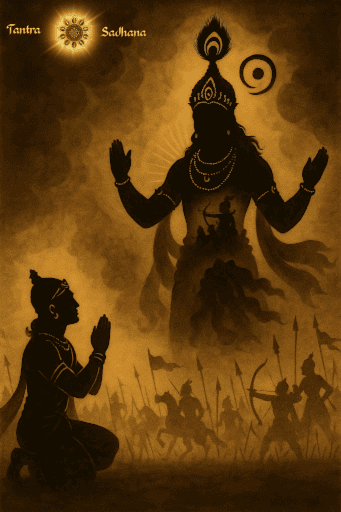
> _“ye tu sarvāṇi karmāṇi mayi sannyasya mat-paraḥ...”_ _(BG 12.6–7)_ _Those who surrender all actions to Me, with unwavering devotion, I swiftly deliver them from the ocean of birth and death._
Download Tantra Sadhana App
### **Ashtanga Yoga**
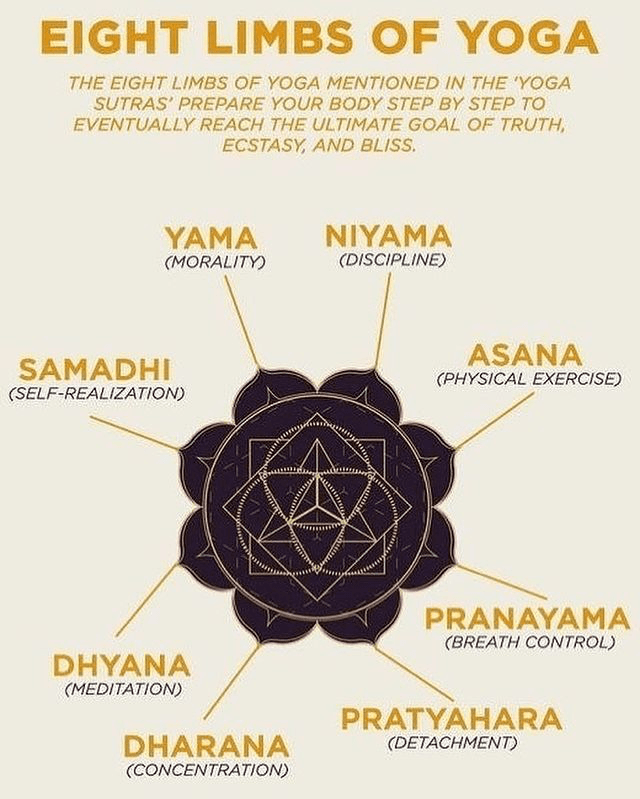
Also known as the **Yoga of meditation**, Ashtanga Yoga was codified in **Patanjali’s Yoga Sutras** as an **eight-limbed path**:
1. Yama (ethical restraints)
2. Niyama (observances)
3. Asana (posture)
4. Pranayama (breath control)
5. Pratyahara (withdrawal of senses)
6. Dharana (concentration)
7. Dhyana (meditation)
8. Samadhi (absorption)
> _“Yogaścittavṛttinirodhaḥ”_
>
> _— Yoga is the cessation of the fluctuations of the mind._ _(Yoga Sutra 1.2)_
### **Kundalini Yoga**
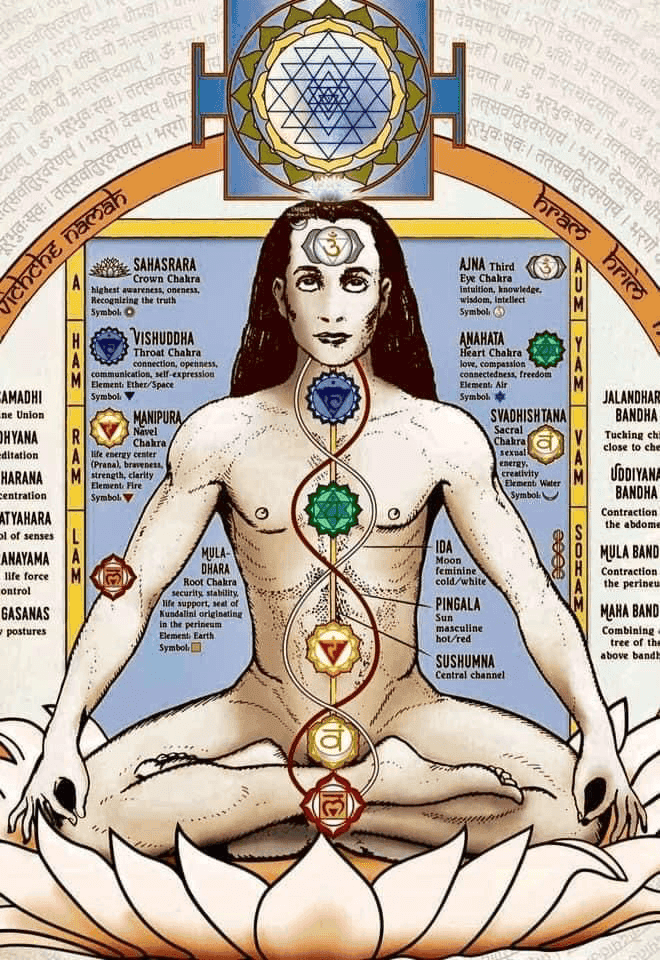
Focused on awakening the dormant **Kundalini Shakti**, this Yoga stimulates the Chakras (energy centers) and elevates consciousness.
### Haṭha Yoga
Haṭha Yoga emerged between the 10th–15th centuries CE and focuses on **purification of the body and breath** to prepare for higher meditative states.
‘Haṭha Yoga’ is derived from ‘ha’ and ‘ṭha’ yoga, a combination of 2 beeja mantras (seed syllables). ‘Ha’ represents prana, the vital force, and ‘ṭha’ represents mind, the mental energy. So, Haṭha Yoga means the union of the pranic and mental forces. When it takes place, a great event occurs in the seeker — the awakening of higher consciousness.
Of the many authorities on Haṭha Yoga, one outstanding personality is Swatmarama, who compiled the Hatha Yoga Pradipika (Light on Haṭha Yoga) as the science of purification. Pradipika means ‘self-illuminating’ or ‘that which illumines.’ Here it highlights that the text illumines a multitude of physical, mental and spiritual problems for aspirants.
Textual sources like the _Haṭha Yoga Pradipika_ describe practices such as:
- **Asanas**
- **Pranayama**
- **Mudras**
- **Bandhas**
- **Shatkarmas** (cleansing techniques)
Today’s Yoga studios primarily teach Hatha Yoga postures, though few emphasise its energetic depth.
The Shaiva Yoga text, Amanaska, dated from the 12th century, is a dialogue between Vamadeva and Lord Shiva. In the second chapter, the text mentions Raja Yoga. It states that it is so named because it enables the yogin to reach the illustrious king within oneself, the supreme self. Raja Yoga is declared as the goal where one experiences nothing but the bliss of the undisturbed, the natural state of calm, serenity, peace, communion within and contentment.
The Raja Yoga goal and state are synonymous with various terms, such as Amanaska, Unmani and Sahaj.
> rājayogaḥ samādhiś ca unmanī ca manonmanī \|
>
> amaratvaṃ layas tattvaṃ śūnyāśūnyaṃ paraṃ padam \|\| 3 \|\|
>
> amanaskaṃ tathādvaitaṃ nirālambaṃ nirañjanam \|
>
> jīvanmuktiś ca sahajā turyā cety eka-vācakāḥ \|\| 4 \|\|
>
> salile saindhavaṃ yadvat sāmyam bhajati yogataḥ \|
>
> tathātma-manasor aikyaṃ samādhir abhidhīyate \|\| 5 \|\|
>
> yadā saṃkṣīyate prāṇo mānasaṃ ca pralīyate \|
>
> tadā samarasatvaṃ ca samādhir abhidhīyate \|\| 6 \|\|
>
> tat-samaṃ ca dvayor aikyaṃ jīvātma-paramātmanoḥ \|
>
> praṇaṣṭa-sarva-saṅkalpaḥ samādhiḥ so’bhidhīyate \|\| 7 \|\|
>
> —Hath Yoga Pradipika, 4.3
>
> **Translation:**
>
> Just as with salt dissolved in water becomes one with it, so the union of Atman and Manas (mind) is denominated Samadhi,
>
> When the breath becomes exhausted, and mind becomes Praliyate (still, reabsorbed), they fuse into union called Samadhi.
>
> This equality, this oneness of the two, the living self and the absolute self, when all Sankalpa (desire, cravings) ends, is called Samadhi.
In the Hatha Yoga Pradipika, Swatmarama does not worry at all about self-control and self-discipline in the form of Yama and Niyama. The order here is very different. He begins by saying that you should first purify your whole body — the stomach, intestines, nervous system and other systems. Therefore, Shatkarma comes first, i.e. Neti, Dhauti, Basti, Kapalbhati, Trataka, and Nauli. Hatha Yoga begins with these practices.
However, Shatkarma alone does not constitute the whole of Hathayoga. It says that after Shatkarma, you should practice Asana and Pranayama. Self-control and self-discipline should start with the body, which is much easier. Asana is discipline; Pranayama is discipline; Kumbhaka (retention of breath) is self-control. After this you should go on to practice Mudras like Vajroli, Sahajoli, Khechari, Shambhavi, Vipareeta Karani, and others. This way, it becomes possible to get into deep meditation. These practices induce Pratyahara and lead into Dharana, Dhyana, and Samadhi.
### **Tantra Yoga**
Similar to all other forms of Yoga mentioned above which pave a path to the Divine, Tantra Yoga—albeit the most misunderstood form of Yoga in Western countries—is actually a path of integration.
It brings together the body, breath, mantra, ritual, and kundalini awakening into one complete system of spiritual elevation.
References to Tantra Yoga can be found in the _Amritasiddhi_ and in scriptures of the Nath traditions, dating back to the 10th–12th century CE.
Unlike other Yogic paths that may emphasize renunciation, contemplation, or devotion, Tantra Yoga views the body and material world not as obstacles, but as essential parts of the spiritual journey.
Its practices are crafted to harmonize physical vitality with subtle energies, ultimately leading to the expansion of consciousness.
Tantra Yoga is also referred to as Kaula Yoga. As a system that unites Tantra and Yoga, it is rooted in an eternal formula based on Prana (Chi, or life-force energy) and the physical body.
This integration helps achieve a profound balance between these two forces—supporting the seeker in transcending the illusions of duality and accessing higher states of union.
In Yoga, life and consciousness are known as Prakriti and Purusha; in Tantra they are known as Shakti and Shiva. In Hatha Yoga, they are called Ida and Pingala, and in Taoism, Yin and Yang. They have their own names at different times, in different philosophies. This physical body as it is seen is the gross manifestation of the subtle, which is comprised of thoughts and emotions. The substratum and source of it all is pure consciousness, which is what we consider divine.
This means that the basis of the physical body is divine, and therefore, through the practices of Yoga, a process of transmutation of the physical elements of the body into non-physical elements can take place. Matter is convertible into energy, and vice versa. Similarly, this body is convertible into spirit and spirit is convertible into matter. This is the eternal play of Maya (power of illusion) and creation. As this is eternal, there is no reason why anyone should think that their body is impure or unholy, and choose not to focus on it. Tantra Yoga doesn’t recommend that approach.
There are examples of great saints in history who are said to have transmuted their body into light particles and then completely disappeared when they wanted to leave this earthly existence. There was nothing left of their gross physical body. According to Tantra Yoga, the body is not just flesh and bone, nor just marrow and myriads of secretions — it is a gross manifestation of the very subtle Shakti, polarised into Prana and Manas Shakti.
Begin Tantra Sadhana
## Yoga and Tantra or Tantra Yoga?
**Tantra** is a spiritual science — a sacred path to divine union.
The word **Tantra** comes from _Tan_ (sensory or psychical) and _Tra_ (expansion or protection).
Thus, Tantra is a method of expanding consciousness through the **body** — not to indulge, but to **transcend**.
**Tantra Yoga**, as mentioned above, is the path to achieving stillness of **Mind, Body,** and **Soul** through the integration of **rituals, breath, mantra chanting,** and **Kundalini awakening**.
Similar to **Haṭha Yoga**, it includes a series of **Asanas** (postures) and **Pranayama**(breath control techniques), but it places deeper emphasis on the **energetic** and **ritualistic** components of spiritual practice.
The energetic essence of **Tantra Yoga** stems from the worship of **Shakti** (dynamic, creative, feminine energy) and **Shiva** (static, destructive, masculine energy) — i.e., the balance of the dynamic and static principles of the cosmos, or the **duality of nature and existence**.
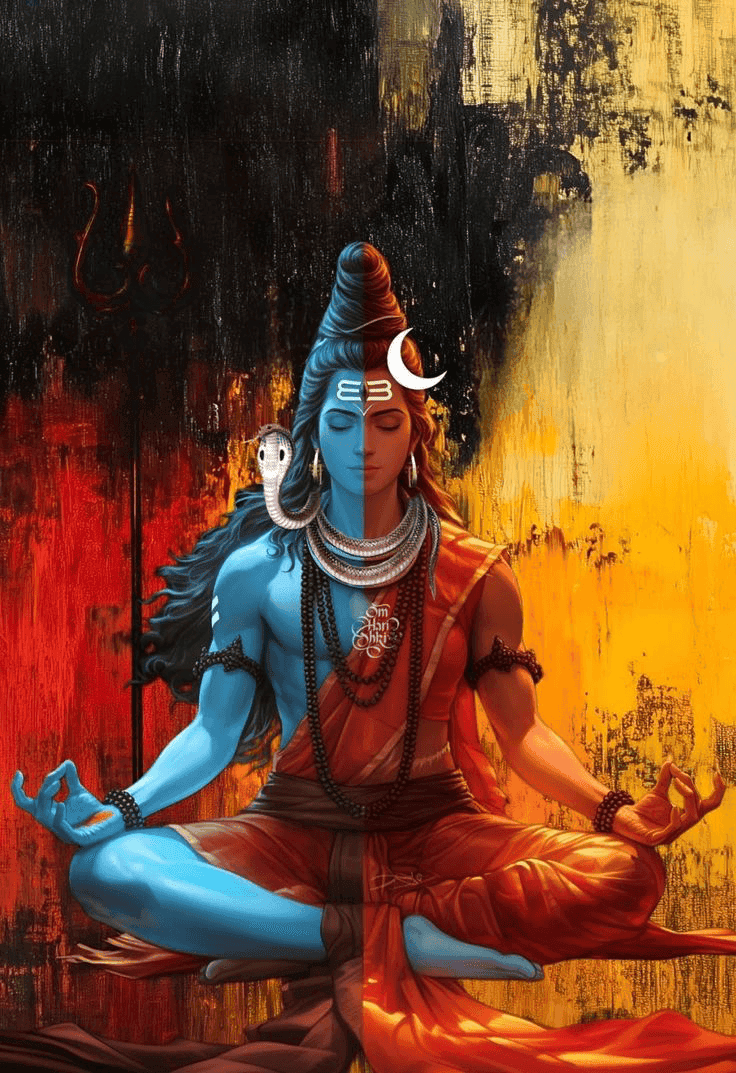
In this premise, the **body is seen as a tool** to awaken energy through four main practices:
- **Āsana** – postures
- **Prāṇāyāma** – breath control
- **Mudrā** – gestures and energy locks
- **Śatkarmā** – cleansing techniques
**Mudrās** can be as simple as hand gestures or more advanced combinations involving posture, breath, and muscular locks.
**Śatkarmā**, often referred to as _Kriyā_, includes **purification practices** that cleanse the body and open energy pathways.
Yogis or Yoginis practicing **Tantra Yoga** were the ones who shaped many of the postures and breathing methods that later became foundational to **Haṭha Yoga**.
It is fair to say that **Tantra Yoga and Haṭha Yoga are not very different** — they are deeply interwoven, both in philosophy and in practice.
## Difference Between Tantra Yoga and Haṭha Yoga
In the _Haṭha Yoga Pradīpikā_, Swami Svātmārāma of the Nath tradition compiled older knowledge of Haṭha Yoga, drawing from scriptures like _Amritasiddhi_ and teachings of _Gorakṣanātha_.
The _Haṭha Yoga Pradīpikā_ went on to become one of the most influential scriptures on Haṭha Yoga, outlining four key aspects of the practice:
- **Āsanas** (postures)
- **Prāṇāyāma** (breath control)
- **Mudrās** (seals or gestures)
- **Samādhi** (meditative absorption)
Haṭha Yoga is also closely linked with _Rāja Yoga_, the primary meditative path described in _Patanjali’s Yoga Sutras_. This connection reveals that **Haṭha Yoga serves as a preparatory stage** for achieving the higher states of consciousness that Rāja Yoga aspires toward.
### **Key Differences in Practice**
**Tantra Yoga** and **Haṭha Yoga** are similar in many ways, but they diverge slightly in **intention and emphasis**.
In Tantra Yoga, the **āsanas are directed toward activating the Chakras** — the body’s energy centers — to stimulate the flow of _Kundalini_ energy. This practice is typically integrated with **breathwork, meditation, and Yoga Nidra**, emphasizing the **expansion of awareness** and the liberation of the mind from limitation.
In contrast, Haṭha Yoga places more emphasis on **Asanas as a physical discipline** and the Shatkarmas for physical purification. Even though the final goal is to transcend the body, it considers physical purification an essential stepping stone to it—because when we sit in meditation, our awareness shifts to our body and its discomforts inevitably. To eliminate such distractions, six kriyas (Neti, Dhauti, Basti, Nauli, Kapalbhati and Trataka) are necessary for spiritual aspirants practising Haṭha Yoga.
Its focus is not on being body-minded alone, but on building steadiness and strength through postures that prepare the body to sit comfortably for long periods of Prāṇāyāma and meditation.
The focus is on **building steadiness and strength** through postures that prepare the body to sit comfortably for long periods of **Prāṇāyāma and meditation**.
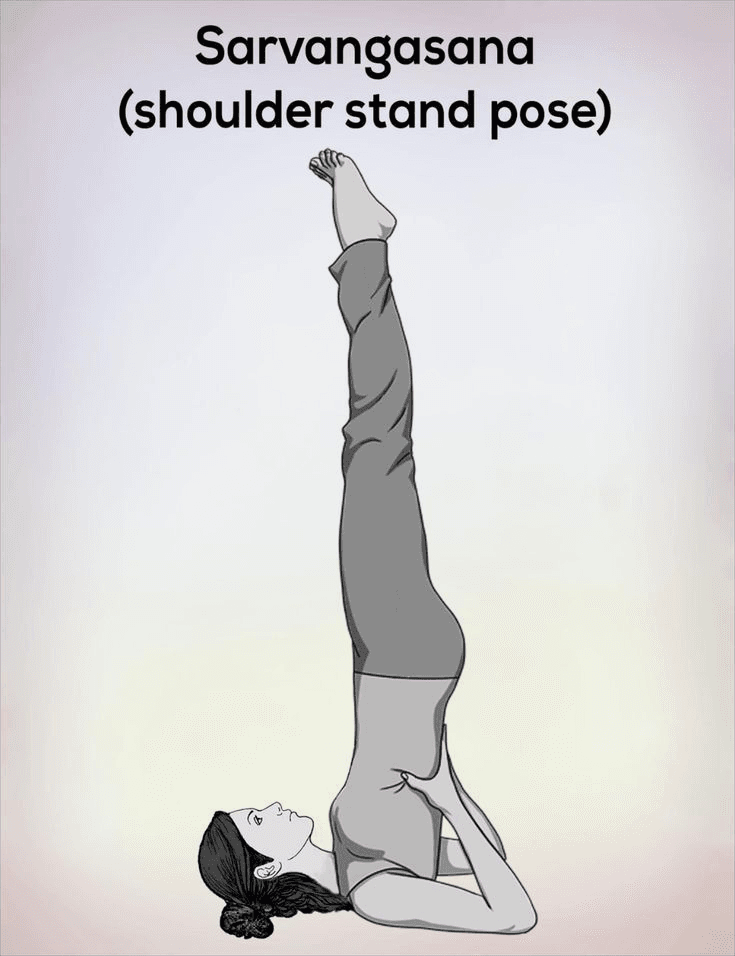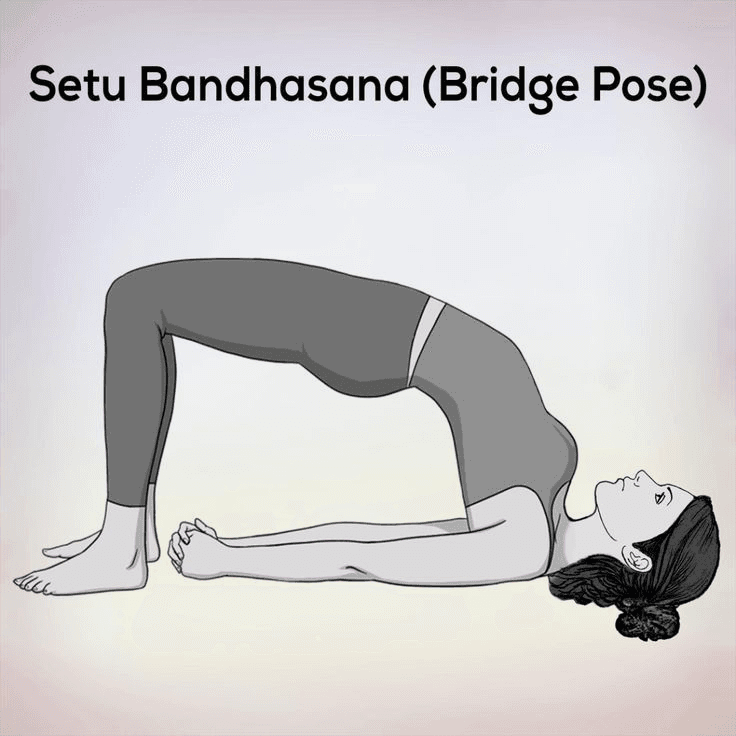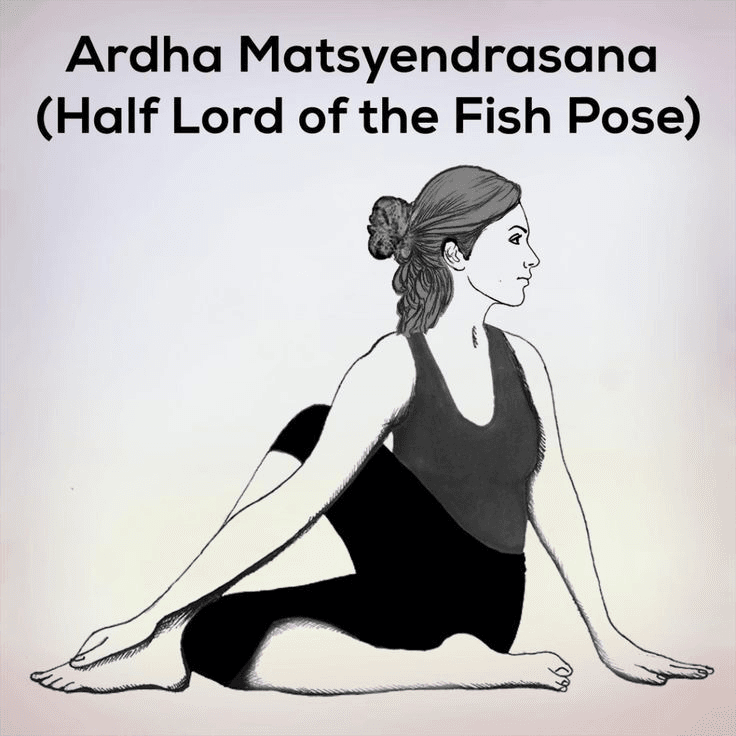
Without this preparation, the body may become restless or uncomfortable, making it difficult to maintain meditative focus.
In summary:
- **Tantra Yoga** is more energetically focused, working with rituals, chakras, and Kundalini awakening.
- **Haṭha Yoga** is more physically preparatory, building the foundation for deeper stillness through posture and breath.
Both are paths to the Divine — just approached from slightly different starting points.
## Yoga and Tantra in a Nutshell
In essence, whether it is **Yoga Sadhana** or **Tantra Sadhana**, both practices point to the same truth:
**The union of body, mind, and spirit leads us back to the wholeness already within us.**
Whether one begins with a simple āsana, as in Yoga Sadhana, or with a mantra, as in Tantra Sadhana, the **end goal is the same**—to cultivate balance, awaken inner energy, and live with deeper awareness.
### **Different Paths, Same Destination**
Yoga, especially in the form of āsanas and the 8-limbed path, is widely popular today. It can be accessed through many mediums—yoga classes, online tutorials, books, or workshops.
**Tantra Sadhana**, on the other hand, is **not an easy path for beginners**. It requires deeper commitment, initiation, and often guidance, as the practices are subtle, intense, and sacred.
### **Begin Your Sadhana Journey**
To truly learn and experience the power of **Tantra Sadhana**, you can download the **Tantra Sadhana App**—a revolutionary spiritual tool created by the Himalayan Siddha, **Om Swami**.
This app is all the **Guru** a devotee needs to perform various Sadhanas safely and effectively. Through it, you can experience a divine connection with the Superconsciousness right at your fingertips—and begin to unlock the **secrets of cosmic balance and harmony**.
**Are you ready to connect to the Highest and Supreme version of your consciousness?**
Awaken Her Grace. Fall in love with the Divine.
Ma only calls those who are ready for Her worship. If you are here, you are ready. Awaken the Das Mahavidyas. And rise in devotion.
[Awaken Ma's Grace](https://tantra-sadhana-app.onelink.me/jgcg/24u3wjsu)
## FAQs
Q: What is Tantra in Yoga?
A: Tantra in Yoga is the philosophy that the body, mind, and life-force are sacred tools for realizing the Divine. Instead of rejecting the world, Tantra uses energy, breath, mantra, and awareness to expand consciousness. It treats everyday experience as a pathway to transcendence.
Q: What is the relationship between Yoga and Tantra?
A: Yoga and Tantra are closely interwoven streams of the same spiritual river. Yoga disciplines and purifies the body–mind, while Tantra energizes and expands it through subtle practices. Together, they create a complete system of inner transformation.
Q: What is Tantra Yoga?
A: Tantra Yoga is a path that uses Pranayama, Mantra, Mudra, visualization, and energy-based techniques to awaken higher states of consciousness. It emphasizes the movement of Prana through Chakras and Nadis. Its purpose is to unify the individual self with the universal Shakti.
Q: What are the benefits of Tantric Yoga?
A: Tantric Yoga increases vitality, deepens meditation, and awakens intuitive awareness. It balances the Chakras, stabilizes the mind, and strengthens the nervous system. Over time, it leads to inner clarity, emotional healing, and spiritual expansion.
---
This blog is powered by Superblog. Visit https://superblog.ai to know more.
---