The Guiding Force of Shakti
In this article, you will read about:
The Significance of Daily Navratri Worship
The Nine Forms of Shakti in Navratri
The Three Phases of Navratri
The Mahavidya Cycle of Shakti Awakening
Ma Tara — The Divine Guide
Worship Ma Tara This Chaitra Navratri
Chaitra Navratri unfolds as a structured journey through nine expressions of Shakti. Each day represents a distinct stage in the awakening of divine energy within the seeker.
On Day 1, Ma Kali initiates transformation by dissolving inertia and ego.
On Day 2, the journey continues with Ma Tara, the compassionate guide who stabilises and directs the awakened energy.
Ma Tara represents guidance, protection, and the sustaining Grace that allows spiritual progress to continue.
The Significance of Daily Navratri Worship
Navratri is traditionally observed as nine uninterrupted days of disciplined spiritual practice (Sadhana).
Maintaining continuity in practice is considered essential because:
Each day invokes a specific form of Shakti
The energies unfold sequentially
The seeker gradually aligns with the unity of Shakti and Shiv
Tantric teachings state that when the Mother Goddess’ energies are invoked without interruption, the practitioner moves toward realising the complete cosmic expression of Shakti (Vishva Swarup).
Traditional teachings also state that 60 Navratris (approximately 5 years) of disciplined observance can lead to spiritual attainment (Siddhi).
Surath and Samadhi in Durga Saptashati performed the Navarna Mantra Sadhana for a continuous period of 3 years before gaining Devi's Darshan.
This reflects the principle that consistent practice over time transforms the consciousness.
Why Navratri Is a Powerful Time for Sadhana
In Tantric understanding, Navratri is a period when subtle spiritual forces become more accessible.
During this time:
The boundary between gross and subtle realities becomes thinner
Mantra Jap becomes more effective
Rituals and meditation yield amplified results
Inner obstacles surface quickly for purification
Because of this, serious practitioners often increase their spiritual discipline during Navratri.
The Nine Forms of Shakti in Navratri
Navratri celebrates the Navadurga, nine forms of the Goddess that represent different dimensions of divine feminine power.
They represent nine stages through which the seeker travels, from purification to realisation.
The Navadurgas
Devi Shailaputri — purity and grounding
Devi Brahmacharini — discipline and austerity
Devi Chandraghanta — courage and mental balance
Devi Kushmanda — creative cosmic energy
Devi Skandamata — nurturing protection
Devi Katyayani — strength to overcome obstacles
Devi Kalaratri — destruction of ignorance
Devi Mahagauri — purity and wisdom
Devi Siddhidatri — spiritual fulfilment
Each form has a specific Bij mantra, because in mantra science, the mantra itself is considered the deity.
And behind all nine forms exists Mool Durga, the source of Shakti.
The Three Phases of Navratri
The nine nights are traditionally divided into three groups, representing the three primary aspects of Shakti.
Days 1–3: Mahakali
The seeker moves through:
Destruction of impurities
Removal of inertia
overcoming Tamas (ignorance)
Days 4–6: Mahalakshmi
The seeker progresses to:
Strength and willpower
Prosperity and balance
refinement of Rajas (activity)
Days 7–9: Mahasaraswati
The seeker gains:
Knowledge
Clarity
The experience of Sattva (purity)
The tenth day (Dashami) symbolises the victory of the higher consciousness over lower tendencies.
Navratri and the Tantric Path
Tantra interprets Navratri as a process of inner alchemy. Tantric teachings explain that:
The demons in our scriptures represent ego and ignorance.
Devi represents the awakening of consciousness.
Through mantra, meditation, and discipline, the seeker moves toward the union of Shiv (consciousness) and Shakti (energy).
The Mahavidya Cycle of Shakti Awakening
Tantric traditions often map the Navratri journey through the Das Mahavidyas, the ten wisdom forms of the Goddess.
These forms represent stages in the awakening of Shakti:
Ma Kali — dissolution of ego
Ma Tara — guidance and protection
Ma Tripura Sundari — harmony and balance
Ma Bhuvaneshwari — expansion of awareness
Ma Chinnamasta — severing of ego identity
Ma Bhairavi — intense inner purification
Ma Dhumavati — void and detachment
Ma Bagalamukhi — stillness and restraint
Ma Matangi — divine expression
Ma Kamalatmika — perfected embodiment
Together, they represent the complete arc of spiritual evolution.
Ma Tara — The Divine Guide
After the transformative force of Ma Kali, the next stage is Ma Tara, the guiding and protective form of the Divine Mother.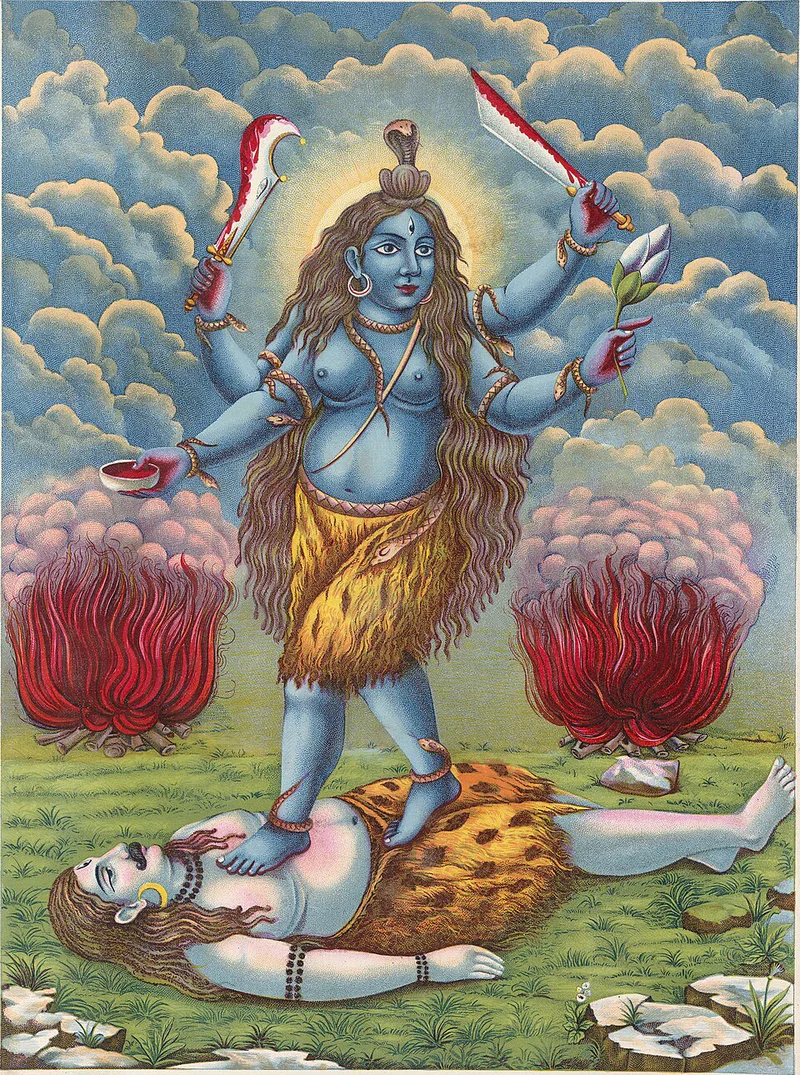
Ma Tara represents:
Guidance
Compassion
Protection during spiritual transformation
Tantric texts such as the Rudra Yamala Tantra describe Tara as the power hidden within Shabda Brahman (cosmic sound).
She is known as Tarini, the one who ferries the seeker across the ocean of Samsar.
She appears when:
The intensity of transformation creates instability
The seeker requires guidance and support
She represents the assurance that spiritual awakening is guided and protected.
Ma Tara’s Connection with Navadurga, Devi Brahmacharini
On the second day of Navratri, the form of the Navadurga worshipped is Devi Brahmacharini.
She represents:
Austerity (tapas)
Perseverance
Spiritual discipline
Tantric traditions associate this stage with Ma Tara.
Both forms represent:
Sustaining grace
The ability to endure spiritual challenges
Guidance through uncertainty
Just as Brahmacharini perseveres through hardship with her Tapas for Lord Shiv, Ma Tara carries the seeker through fear and instability.
Ma Tara’s Bij Mantra
The primary Bij mantra of Ma Tara is:
त्रीं (Treeng)
This mantra appears in several Tara Tantras, including the Rudra Yamala Tantra.
The Sanskrit Bhashya of Tara Tantra states:
trīṁ bījaṁ tāriṇī devyā mokṣadaṁ parikīrtitam ।
Meaning:
The Bij ‘Treeng’ of Goddess Tara is said to grant liberation.
The sound Treeng represents the energy that:
Guides consciousness
Stabilises spiritual awakening
Carries the seeker beyond fear and confusion
Worship Ma Tara This Chaitra Navratri
Day 2 of Chaitra Navratri represents the stabilization of spiritual awakening.
After the dissolving force of Ma Kali, the practitioner receives the guidance and protection of Ma Tara.
She represents the assurance that the path of transformation is supported by divine intelligence.
Through disciplined sadhana, mantra, and meditation, the seeker continues the Navratri journey — moving gradually toward the full realization of Shakti.
This Chaitra Navratri, the Tantra Sadhana App by Himalayan monk, Om Swami, offers Shakti Sadhaks access to its Secret Shrine.
Each day of Navratri, the Shrine allows seekers to recite the Dhyan Shlok and Mool Bij Mantra of a Mahavidya. The Shloks and mantras, awakened and consecrated by Om Swami, make the worship potent, safe and in accordance with the scriptures.
Once your Chaitra Navratri Sadhana is done on 15 April 2027, you can also begin your worship of the Das Mahavidyas, awakening each Mahavidya with their Tantric Bij mantra and esoteric Sadhana, one at a time - starting from Ma Kali to Ma Kamalatmika.
The app is free and ad-free, with an entirely optional Dakshina.
The Chaitra Navratri of the Das Mahavidyas begins on Amavasya, 6 April 2027.
Enter the Secret Shrine to worship Ma Tara with Her Dhyan Shlok and Mool Bij Mantra, which includes Her powerful seed syllable ‘Treeng’ along with others.
May the blessings of the Das Mahavidyas make this Chaitra Navratri a transformative period in your life.