In this article, you will read about:
A Question of Fit
The Three Inner States
The Three Schools
The Safest Tantra for Beginners
The Tantra Sadhana App
“No other path is there to salvation and happiness in this life or in that to come like unto that shown by the Tantras.”
— Mahanirvan Tantra 2.20 (translated by Sir John Woodroffe, writing as Arthur Avalon)
A Question of Fit
Over the last few years, Tantra has entered mainstream discourse, appearing in podcasts, wellness columns, and on bookstore shelves once dominated by self-help, yoga, or meditation. As curiosity around the path grows, so do the reactions. For the most part, it leaves people puzzled.
While some lean in with reverence, others see the controversial pieces, such as the Panchmakar (rituals involving substances and acts that orthodoxy forbids), and step back in caution. Others come, driven by the promise of power and secret techniques (Siddhis, Krityas), approaching it with hunger rather than a wish to understand. Still others assume it to be a modern yoga or wellness practice.
The truth is that each is holding a fragment of the picture and mistaking the fragment for the whole.
Tantra, though, is none of these caricatures, not even the sum of them. Tantra is the spiritual science of Sanatan Dharm, a constructive path given through divine revelation to carry the seeker through the conditions of Kali Yug.
Where the Vedas give us structure on how to live, how to worship, and how the world holds together, Tantra gives the seeker the instruments to experience it.
Tan means to expand, weave, or stretch; Tra means instrument or apparatus. Together, the word means an instrument to expand consciousness. This wider meaning rarely reaches the public conversation. The pieces that capture the popular imagination, the rituals, the powers, the specific practices, are all real, but as individual pieces they mislead.
True Tantra emerges through a process of inner transformation undertaken with a Guru who has walked the same path, bringing the pieces together.
Within Tantra, there are many paths, called Acharas. Some involve external worship through Yantra (the Divine in sacred form) and ritual; some turn worship completely inward; others walk a path between the two. Paths are chosen and walked under a Guru’s guidance because they differ greatly. Some are gentle and meet the seeker where they are; others are intense and meet only the seeker prepared by years of practice. A few have earned a reputation for being dangerous and are taken up only under a Guru’s direct guidance. So, it is no wonder a seeker asks which of these Tantra paths is safest for a beginner.
While a name can certainly be offered as an answer, the truth is that the texts give no single recommendation that is applicable for every seeker. What they do offer is a fit between the seeker (the Sadhak) and an appropriate practice, recognised by the Guru who knows how to bring them together.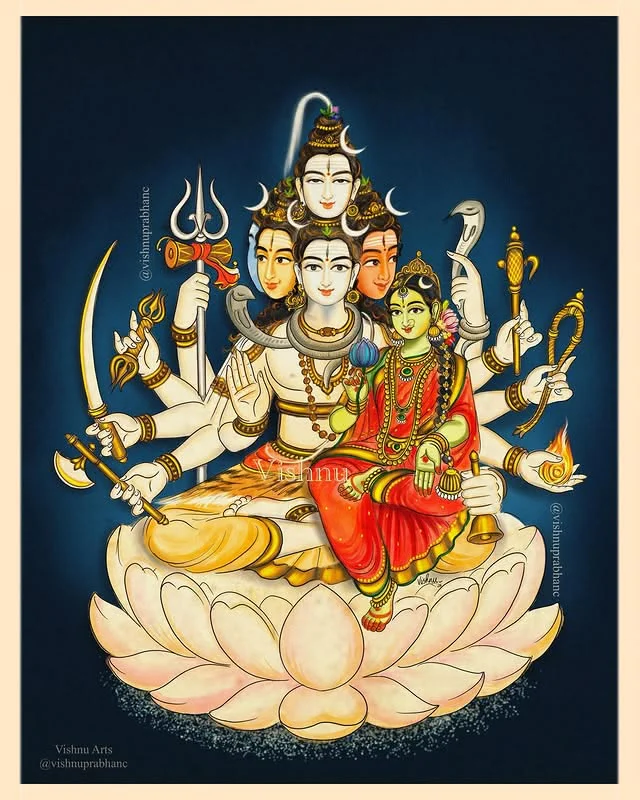
Lord Sadashiv Himself, in the Mahanirvan Tantra, addressed the Devi on this point:
“According to the differences in place, time, and capacity of the worshippers I have, O Devi!, in some of the Tantras spoken of secret worship suited to their respective customs and dispositions. Where men perform that worship which they are privileged to perform, there they participate in the fruits of worship, and being freed from sin will with safety cross the Ocean of Being.”
— Mahanirvan Tantra 4.36-37
So, place, time, and capacity, these are the three conditions Sadashiv names for safe practice.
Place is the seeker’s lineage, customs, and the tradition they belong to; time is Kali Yug, the age for which the Tantras themselves were given (Mahanirvan Tantra 2.20); capacity is what the texts call the seeker’s Bhav, the inner state from which they approach the practice. Where the practice meets all three, the seeker crosses the Ocean of Being (the cycle of worldly existence) safely.
Where it is not met, the same practice that may ripen one Sadhak could harm another. This is not because Tantra is fickle, but because each practice asks something specific of the inner state of the Sadhak. It is also a reason Tantra has been perceived negatively. When the practitioner and the practice are misaligned, the outcomes are adverse. This is why certain practices carry warnings or seem controversial. They are not wrong in themselves. They are mismatched.
To ask which path is the safest is in reality asking two questions: what Bhav the seeker is operating from, and what Achara meets that Bhav.
What follows are the three Bhavs: Pashu, Vir, and Divya. Then the three schools of worship of the Divine Mother in Her form as Lalita Tripura Sundari: Kaulachar, Mishrachar, and Samayachar. And finally, the answer to the question that brought you here.
The Three Inner States
Before any practice can start, the Sadhak must understand the Bhav from which they operate. The Sadhak does not pick a Bhav the way they might pick a Mantra or a deity. They arrive at the door of Tantra carrying one already, shaped by the Samskar of this lifetime and those before it.
The Kularnav Tantra recognises three Bhavs:
Pashu, the bound seeker
Vir, the heroic seeker
Divya, the godly seeker
Bhav comes first. Practice follows.
Pashu Bhav
The Sanskrit word Pashu is commonly translated as animal, but it is closer in meaning to bound. The bound one. Bound by what? By Pashas, the Sanskrit word for the bonds that hold a person to the conditions of ordinary life. The Pashu, then, is the seeker who still identifies with the body and ego, pulled by the senses. The Kularnav names some of these bonds: pity, ignorance, shame, family, custom, caste, and others. This is a realistic starting point for most of us. The Pashu is not someone to look down upon. It is the state most of us are in, most of the time.
A Sadhak in Pashu Bhav needs structure to steady the unsteady mind. This structured practice includes:
Mantra Jap (disciplined repetition), which gives the mind a single point to return to
Bhakti (devotion), which opens the heart
Dhyan (meditation) and Puja (worship), simple practices under the guidance of a Guru
Yantra Puja, the reverent worship of a sacred geometric diagram
Yam-Niyam (restraint and observance), ethical conduct held in every interaction, until the mind begins to settle
These practices may look ordinary. They are anything but. They are the patient work of purification that leads to inner steadying, without which no further stage can open.
Vir Bhav
The Vir is the heroic seeker. The word is often misread as physical or martial heroism. It is not. The texts define the Vir as one who has controlled the senses and seeks the Truth. He is the inward hero, with the capacity to confront forces that would unsettle an unprepared mind without being unsettled by them.
The Vir can take up practices that the Pashu cannot. This is the Bhav from which the more demanding Tantric methods become available, including the school the broader tradition calls Vamachar, which involves the ritual use of the Panchmakar: Madya (wine), Mamsa (meat), Matsya (fish), Mudra (parched grain), and Maithun (sexual union). These are not casual aids. The tradition treats them as the very poisons that bind a person: wine dulls the mind, sensual indulgence feeds the ego. Under a Guru’s guidance, the same elements become the medicine that frees the seeker from those bonds.
What turns the Panchmakar from poison to medicine? Not the substances themselves, but who is wielding them. A scalpel in a surgeon’s hands saves a life. The same scalpel in untrained hands wounds. The Panchmakar, in the hands of a Vir whom the Guru has prepared, liberates. In any other hands, it remains what it is: indulgence dressed as worship.
The rituals can be learned from any text. What the Guru teaches is something else: how to hold attention, how to notice the moment it slips into ordinary desire, and how to bring it back. The Guru is not simply a teacher. The Guru is the one who can see the Sadhak’s Bhav from the inside, who knows what readiness looks like and what slippage looks like. Because the Guru has walked the same path, only the Guru decides when, or whether, to impart the practice. Once it is imparted, the Guru continues to watch; if the Sadhak begins to slip, the practice is pulled back, modified, or withdrawn.
For the seeker who came searching with Vamachar in mind, this is the answer: it exists, it is real, it is only for the prepared, and it is certainly not the safest path for beginners.
Divya Bhav
Divya is the godly seeker. This is a Bhav of inner stillness and equanimity, where the mind turns naturally to the Mother. The seeker is of Satvik disposition, the mind clear and at rest, no longer driven by the urges of Pashu Bhav or the heroic struggle of the Vir. The inner sky, the Daharakash, the cave of the heart where the Mother is found, is already real to them. This is the state of mind that has ripened through long practice and come to rest of its own accord.
This state is rare. It is the fruit of years, and often lifetimes, of Pashu and Vir practice, not a starting point. For most, the ripening unfolds across many births. Sri Ramakrishna Paramahamsa is a modern example of one who walked the Bhavs in a single lifetime, through years of intense Sadhana under his teachers. For a rare few, the preparation is nearly complete before they arrive. Adi Shankaracharya, whom tradition holds to have been born with the inner work done, is an example. It is the state in which the innermost school of worshipping the Divine as Mother, Samayachar, becomes possible.
In Samayachar, the Mother is worshipped where She has always lived: within the seeker. The body itself becomes the temple, and the worship unfolds entirely within. There are no external instruments. The Mantra is held in silence. The Yantra, the Sri Chakra (the Mother’s form in geometry), is composed in the Daharakash. Puja is offered without flowers, lamps, or incense. The only instruments are attention, breath, and the realisation that the seeker and the Mother are not two. This is not a beginner’s practice. It opens only to those whom Pashu and Vir Bhav have ripened.
The Movement Between Them
These three Bhavs are stages of ripening. The few who arrive in Divya in this lifetime are the rare exception, as we have seen. For most Sadhaks, the path is the movement from Pashu to Vir to Divya, and the practices appropriate to each stage are how the ripening happens. Pashu becomes Vir through purification. Vir becomes Divya by dissolving the heroic struggle into stillness.
This is why the question of which path is safest cannot be answered without first asking which Bhav the seeker is in. For the Sadhak in Pashu Bhav, the safest path is the structured practice that meets them where they are. Here, the real danger is not the practice but impatience, the temptation to reach beyond the Bhav. For the Vir Bhav, safety lies in the Guru’s eye. For the Divya Bhav, Samayachar opens the innermost mode of worship of the Mother, in which offerings are made through attention and breath. This depth is available only to the seeker whose Bhav has fully ripened, whether through years in this lifetime or the work of births before.
A practice that is too advanced will not transform the seeker, and a practice the seeker has outgrown will not hold them.
Almost every seeker who arrives at Tantra arrives in Pashu Bhav. The safest beginning, for almost everyone, is the practice that meets them where they are.
The Bhavs tell us much about the seeker. But the seeker is only half the picture (Mahanirvan Tantra 4.36–37). Practices have their own nature: some gentle, some demanding, some that include elements the seeker is not ready for.
To answer the question that brought you here, we also need to look at the practices themselves. The worship of the Divine as Mother in Her form as Lalita Tripura Sundari unfolds through three schools, three Acharas, each a different method of approaching Her.
The Three Schools

Kaulachar gives external ritual a central role. The body is engaged, the senses are involved, and worship takes visible form. But this outer ritual is not an end in itself. In Kaula practice, the external rite becomes a vessel for inner transformation, where body, mantra, yantra, and the presence of the Goddess are gradually understood as one continuous field of worship.
Mishrachar brings together outer ritual and inner attention. Mishra means mixed, and this path keeps the visible forms of worship in place. But the worship is no longer only about what is done outside. More of it begins to happen within the seeker, through attention, breath, and quiet contemplation. The ritual remains, but its weight slowly shifts inward.
Samayachar is the innermost way of worship. Worship is offered through attention, breath, and inner recognition. The body itself becomes the temple. The seeker begins to understand that the Mother was never far away. She was always present within.
The Safest Tantra for Beginners
Now we return to the question that brought you here.
The answer the texts give is larger than the question implied. They do not name a single Achara as safest; instead, they teach us how to recognise safe practice in any path. Each path carries its own challenges, met or mishandled depending on the Bhav of the seeker. What the texts give us is the eye to see what is safe, drawn from many voices that point in the same direction.
As we read earlier, Lord Sadashiv gave the definition when He spoke of place, time, and capacity as the conditions of fit between the seeker and the practice (Mahanirvan Tantra 4.36–37). Safety in Tantric practice, therefore, is not a property of the path. It is what emerges when the practice meets the seeker as they are: their inner state, their preparation, their place on the path, all under a realised Guru’s blessings.
The texts also tell us something else:
The Tripura Rahasya says that worship does not mean external or ritual worship: real worship is to be fixed, unshakeably, in the understanding ‘I am Brahman.’
The Kularnav Tantra speaks of those dedicated to the inner sacrifice as beloved of the Gods.
The Mahanirvan Tantra says that when external offerings cannot be made, meditation upon the Mother’s lotus feet may be offered.
These voices point in the same direction: the worship of the Mother takes place within.
What makes the worship within safer is that it requires nothing external. No substances to procure, no rituals to perform, no instruments that can be mishandled. With nothing external, there is nothing to fail or be misused. The inner worship rests on attention, breath, and the seeker’s own Bhav, held in the heart with sincerity.
But the seeker reading this article is asking: where to begin? What does safe practice look like, starting today? For that, we have an answer.
Krityas and Prayogas are categories of Tantric ritual aimed at producing specific outcomes: protection from harm, healing, the resolution of conflicts, and, at the other end, controlling another’s will or causing harm. The texts know these methods and treat them with great seriousness. They are taught only for legitimate purposes, within a lineage, and only to those whom the Guru recognises as ready. They are misused when their power is taken outside this structure, when the seeker, untrained and unsupervised, attempts to wield them for personal gain or to act on others. This is why much of what has earned Tantra a difficult reputation has been the misuse of practices that were never meant for the unprepared seeker. Tantric practice is safe when it excludes these.
The marks of safe practice are:
Manasik offerings, made mentally, through awareness, in the cave of the heart.
Sincerity of inner Bhav.
Guidance from a realised Guru.
So how does one know whether a practice they encounter, or the one they are on, is safe?
When these four signs are present, the practice is safe:
An increase in clarity, peace, and compassion.
A reduction of ego and restlessness.
The seeker grounded in Dharm.
Practice under proper guidance.
Where any is absent, the seeker should pause and reconsider.
A Sadhak in Pashu Bhav, which is where almost every seeker arrives, can practise within these signs from day one. This is the beginner Tantra path that the tradition prescribes for almost every seeker: daily Mantra Jap addressed to the Divine Mother; Bhakti, the sustained devotional practice; Yantra Puja offered with reverence; the disciplines of Yam-Niyam observed in every interaction; and Manasik offerings made from the heart, in the small daily moments when the seeker remembers Her.
These are also the practices through which the seeker ripens. With patience, Pashu may become Vir; with grace, Vir may become Divya. Whether and when the inner depths open is for the Mother and the Guru to decide.
This is what safe practice looks like.
The Tantra Sadhana App
The Tantra Sadhana App has been built to provide exactly this: a safe practice for the seeker who arrives seeking Her. It is a platform for performing Tantric Sadhanas of the Das Mahavidyas, the ten manifestations of the Divine Mother. Lalita Tripura Sundari, in whose worship this series walks, is the third of these ten.
The practices in the App consist of Mantra Jap, Yantra Puja, and Devi Sadhanas, with Mantras and protective Kavachams for each of the ten Mahavidyas. The Mantras have been awakened by Om Swami, the Himalayan Siddha, who founded the platform. Each practice has been walked and mastered by him.
The App contains no Krityas and no Prayogas. It is based entirely on inner Bhav and Manasik offerings, and rests on the four signs of safe practice named above: increasing clarity, peace, and compassion; reducing ego and restlessness; keeping the seeker grounded in Dharm; and keeping the practice under proper guidance.
The App offers self-Initiation guided by Om Swami himself, in the voice of Master Ved Vyas, seated as the spiritual preceptor within the App. The seeker who walks the practice walks under his guidance.
The Mother awaits, and the practice is ready. The seeker has only to begin.