In this article, you will read about:
🌑 The deeper truth behind Ma Kali’s fierce yet compassionate form
🏡 How Ma Kali can be worshipped by householders to balance their spiritual and material paths
📜 What sacred scriptures reveal about the blessings of Devi worship for those living in family life
🕊️ Inspiring householder saints like Ramprasad Sen and Sri Ramakrishna, who lived in devotion while fulfilling worldly duties
📲 How modern seekers can use the Tantra Sadhana app to build authentic, consistent practice amidst daily life
Understanding Ma Kali’s True Nature
At first glance, Maa Kali appears fierce — with Her dark complexion, wild hair, lolling tongue, and a garland of severed skulls. Yet, She is far more than the terrifying image She seems.
She embodies a truth that defies narrow definitions of beauty, modesty, and decorum — especially those imposed on women and mothers.
For a householder whose world often revolves around social expectations, it is natural to find Ma Kali’s form startling, even unsettling.
But this fearsome form conceals Her deepest essence. Behind Her widened eyes is a compassionate gaze; within Her lolling tongue hides a loving smile. She is the Divine Mother — the Mother of all creation.
One of Ma Kali’s many names is Krishna — often translated as “the dark-complexioned one,” but also meaning “the one who attracts.” Ma Kali is the Supreme Akarshani Shakti, the magnetic force whose grace draws devotees beyond the veils of Maya (illusion) into the heart of truth.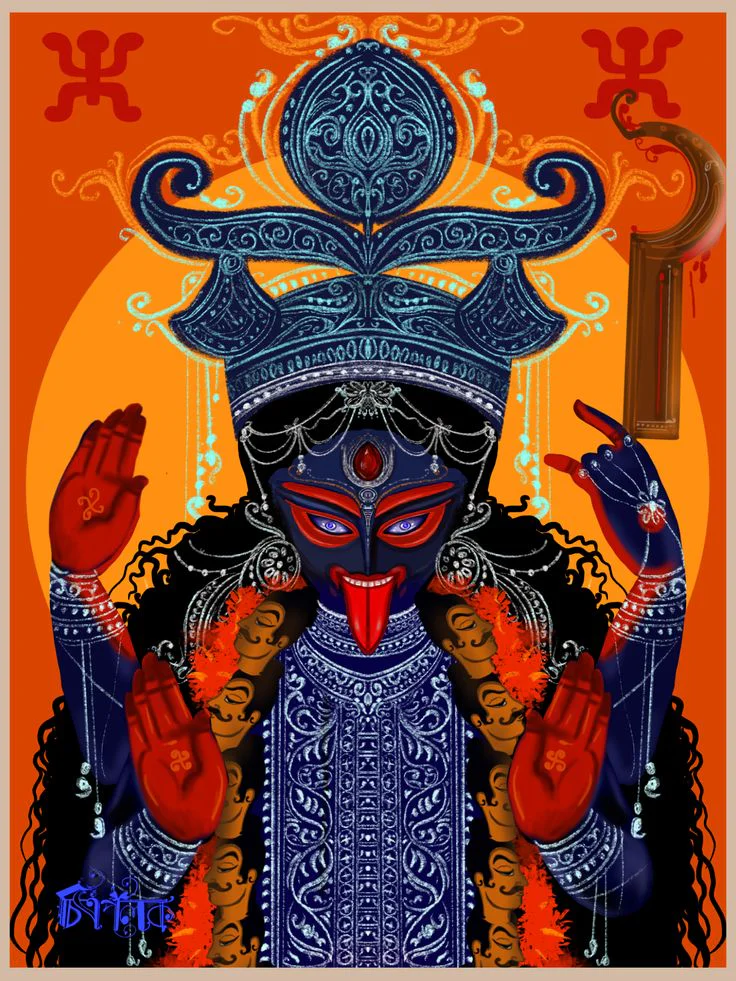
Misconceptions About Ma Kali Worship
While many are instinctively drawn to Ma Kali worship, some householders hesitate—fearing that Her Sadhana may invite misfortune or disruption in family life.
But this fear arises from misunderstanding. Performing the Sadhana of the Mother Divine, in any of Her forms, never brings harm. What Mother would ever punish Her child for seeking Her love?
In truth, Ma Kali’s grace purifies, protects, and uplifts. Her energy is not destructive for the devoted—it is transformative.
Scriptural Support for Householder Sadhana
Our scriptures actively encourage householders to perform Devi Sadhanas, including that of Ma Kali, as a means to balance the material and the spiritual paths. These practices nurture both outer wellbeing and inner evolution.
Below are some sacred examples that affirm this truth.
From the Devi-Yamala, Kali-Paddhati Section
gṛhasthāś caiva ye jñāninaḥ śucayas tathā |
Kālī-pūjāṁ samārabhya muktiṁ yānti na saṁśayaḥ ||
Translation:
Householders who are wise and pure,having begun the worship of Kālī,
attain liberation without doubt.
From the Devi Bhagavata Purana
gṛhe’pi yo’rcayed bhaktyā mama mūrtiṁ samāhitaḥ |
tasya kule na bhaviṣyanti durbhikṣādyāḥ kadācana ||
- Devi Bhagavatam 7.35.27
Translation:
Even a householder who worships My form with devotion and composure
will never suffer calamity, scarcity, or misfortune in his family.
gṛhasthasyāpi yo bhaktyā sevate parameśvarīm |
sa eva mokṣamāpnoti nānyathā karmakoṭibhiḥ ||
- Devi Bhagavatam 7.35.29
Translation:
A householder who worships the Supreme Devī with devotion
attains liberation—not by millions of other rites.
In the Shakta tradition, the Devi embodies both Bhakti (devotion) and Jnana (ultimate knowledge).
Even those immersed in worldly responsibilities can reach Moksha through consistent and heartfelt worship.
When a householder performs Devi Puja with sincerity, daily actions become sanctified. The mind is purified, and worldly life itself becomes a vehicle for liberation.
The Goddess, compassionate and accessible, bestows both worldly joy and spiritual freedom.
From the Kalika Purana
gṛhasthasyāpi devyāśca pūjā kāryā viśeṣataḥ |
- Kalika Purana 47.102
Translation:
"Even for a householder, worship of the Devī is to be performed—indeed, especially so."
yaḥ pūjayati kālīṃ tu sa naśyati kadācana |
gṛhastho vā yatī vā syāt sarvatra rakṣatīśvari ||- Kalika Purana 52.16
Translation:
"One who worships Kālī is never destroyed.
Whether a householder or a renunciate, the Goddess protects them everywhere."
For householders, this shows that the Divine Mother is not distant or abstract. She is a living, guiding presence—one who blesses the home, removes obstacles, and inspires harmony and growth.
Through Her worship, even daily life becomes a sacred act.
From the Mahanirvana Tantra
gṛhasthair eva karaṇīyaṃ śaktipūjanam uttamam |
- Mahanirvana Tantra 1.20
Translation:
"The supreme worship of Śakti is to be performed specifically by householders.
Householders are indeed the rightful practitioners of Śakti worship."
From the Mahakali Tantra
gṛhe gṛhe mahākālī pūjyā sarvārthasiddhidā |
- Mahakali Tantra 2.11
Translation:
"In every home, Mahākālī is to be worshipped;
She grants success in all endeavours."

Ma Kali’s Gestures of Reassurance
In most traditional depictions, Ma Kali stands with 2 of Her hands displaying two powerful mudras — Abhaya and Varada — symbols of divine protection and blessings. Her hands display:
Abhaya Mudra (Gesture of Fearlessness):
Her upper right hand is raised, palm facing outward, fingers pointing upward. It represents protection and assurance of safety. Through this mudra, Ma Kali tells Her devotees: “Fear not, I am here to protect you.”Varada Mudra (Gesture of Granting Boons):
Her lower right hand is extended downward, palm open and facing out. This gesture signifies compassion, blessing, and the granting of wishes. It assures devotees that their sincere prayers will be heard and that Ma Kali will bestow both spiritual and material boons.Khadga (Sword) and Decapitated Head
Ma Kali uses Her curved sword (Khadga) to decapitate the head of a demon like Raktabija, which She holds in Her other 2 hands. For a Sadhak, even these fearsome objects symbolise Her nature of taking hold of their overthinking mind and draining its Asuric and egoistic thoughts, so that it can remain still and calm.
Fruits and Benefits of Ma Kali Worship
Ma Kali worship is a path of balance—offering both material and spiritual fulfilment. Far from inviting misfortune, Her worship brings courage, clarity, and prosperity into daily life.
Her Sadhana builds inner strength and fearlessness. Devotees learn to face life’s challenges with composure and determination, turning adversity into spiritual growth. Through Her energy, the mind becomes steady, and emotions find balance and humility.
Divine Protection, Abundance, and Liberation
Divine Protection and Abundance
Ma Kali is the fierce protector of Her devotees. Her Sadhana creates a shield of divine energy, guarding the practitioner against negative forces and unseen influences.
At the same time, Her grace helps manifest both material and spiritual prosperity without bondage. As the destroyer of scarcity and poverty, She removes financial obstacles and ensures the steady flow of resources needed for a dignified household.
Her blessings bring not only abundance, but also contentment—teaching devotees the wise and sacred use of wealth.
The Giver of Liberation
Above all, Ma Kali is the bestower of Moksha. She cuts through Maya (illusion), guiding devotees toward self-realization—without the need for renunciation.
Her path does not reject the world; it sanctifies it. The kitchen, the workspace, the home—all become extensions of the sacred altar when approached in remembrance of Her.
The True Way to Receive Her Grace
Ma’s blessings are never transactional. They cannot be earned through ritual alone or bargained for through offerings. Her grace flows only to those who walk the path of Sadhana with sincerity, devotion, and a quiet longing for truth.
True seekers approach Ma Kali not with a list of desires, but with hearts yearning for Her presence above all else.
For the householder, this means living with integrity, maintaining heartfelt prayer, and remembering Her divine presence amid daily duties. Every act—done with awareness and devotion—becomes worship.
To worship Ma Kali is to embrace life fearlessly.
Her energy transforms every task, from tending the home to facing the world, into an act of sacred service. Through Her Sadhana, the householder learns the deepest truth:
the divine and the domestic are not separate—they are one.
Householders Who Walked Ma's Path
History reminds us that the greatest saints who adored Ma Kali were often householders themselves.
Ramprasad Sen, the revered Bengali saint, poet, and mystic, was a householder—married with children—whose devotional songs, Ramprasadi, remain timeless hymns of surrender to the Divine Mother. His life beautifully harmonized family responsibilities with profound inner worship.
Another towering figure, Sri Ramakrishna Paramahamsa, known for his ecstatic devotion to Ma Kali, was also a householder. The Dakshineshwar Temple, where he worshipped and had Her direct darshan, was part of a residential estate owned by Rani Rashmoni.
These examples affirm that Ma Kali does not only dwell in Smashanas (cremation grounds). She is ever ready to enter your home and heart—if welcomed with love and devotion.
Wisdom from Sri Ramakrishna
Sri Ramakrishna once said:
“Do your duties in the world with one hand, and with the other hold on to the feet of the Divine Mother.
After completing your work, hold Her feet with both hands.”
In these simple words lies the essence of Tantra Sadhana for householders—to remain grounded in duty while anchored in devotion. The Divine Mother does not measure worthiness by ritual, caste, or lifestyle. She looks only for sincerity, a yearning heart, and the courage to surrender.
A Modern Path for Householders
For those new to Ma Kali’s worship, or those seeking structured guidance amidst busy lives, the Tantra Sadhana app offers an excellent starting point.
This platform provides seekers with:
Authentic Mantras and guided chanting practices.
Step-by-step instructions and self-initiation into daily Kali Sadhana, simplified for householders.
Teachings that blend Bhakti (devotion) and Dhyana (meditation), suitable for both beginners and advanced practitioners.
Support to build a consistent Sadhana habit, even amidst worldly responsibilities—reminding that Ma Kali’s grace is never bound by time or place.
By using these sacred tools with a sincere heart, devotees can deepen their connection with Ma Kali and experience Her living presence in daily life.
The Living Presence of the Divine Mother
For those who dare to love Ma Kali, even amidst worldly responsibilities, She reveals Herself—not as a distant deity, but as the nearest, dearest Mother.
Her presence transforms daily life into sacred practice. Every chore becomes a Yagna, every word a Mantra, every act of love an offering at Her feet.
For the modern seeker—especially the householder—the Tantra Sadhana app serves as an accessible entry point into this timeless path.
Let the journey inward begin.
The path awaits.