हिंदी में पढ़ें

In this article, you will read about:
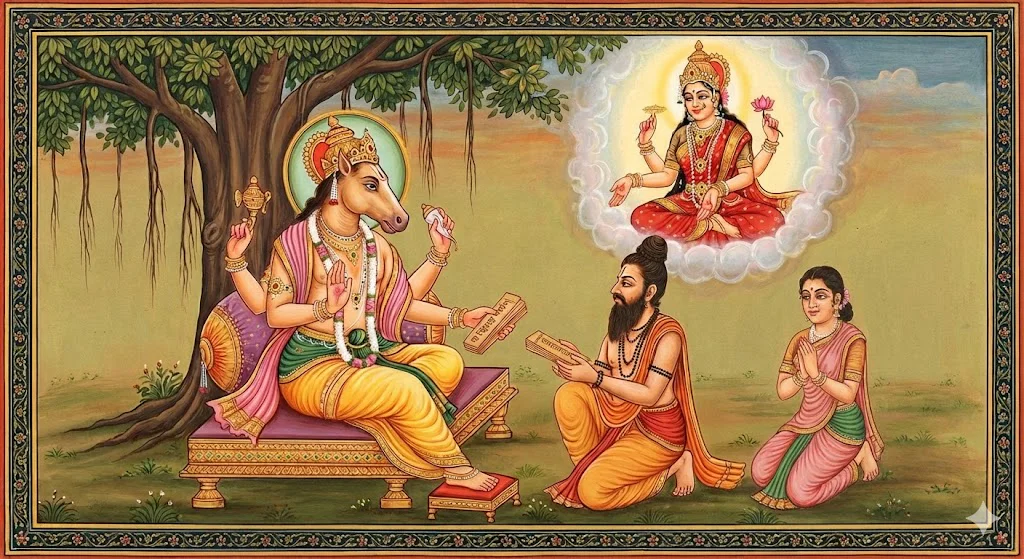

An illustration of Lord Hayagriva interacting with Sage Agastya and his wife Lopamudra, while the Divine Mother watches them.

In the vast, sacred ocean of scriptures dedicated to the Divine Mother, few texts shine as brightly—or are guarded as closely—as the Lalita Trishati.

While many devotees worldwide find joy and solace in chanting the magnificent Lalita Sahasranama (the thousand names), the Trishati (the three hundred names) holds a unique, esoteric position within the tradition of Tripura Sundari Worship.

The Origin of Lalita Trishati

The origin story of the Lalita Trishati is a fascinating tale of a seeker’s divine dissatisfaction. The great Sage Agastya had already received instruction on the thousand names of the Devi from Lord Hayagriva, the horse-headed avatar of Vishnu and the repository of all knowledge.

Yet, Sage Agastya’s heart felt dry.

He felt a lingering incompleteness, as if there were a more complete and deeper way to worship the Divine Mother that Lord Hayagriva was withholding. When questioned, Lord Hayagriva remained silent, bound by a divine restriction to guard the ultimate secret of Sri Vidya.

Seeing Agastya’s genuine yearning, the Divine Mother Lalita Tripura Sundari herself appeared and commanded Hayagriva to reveal the Lalita Trishati, declaring that Agastya and his wife Lopamudra were worthy recipients of this supreme wisdom.

Worshipping Ma Lalita Tripura Sundari using the Lalita Trishati is unique because its 300 names are not random; they are structured directly upon her fifteen-syllable Panchadashakshari Mantra, making the hymn the living sound-body of the Goddess herself. ​​The Lalita Trishati uses these 15 syllables to generate 20 names for each syllable.

In the Sri Vidya tradition, the Lalita Sahasranama is often compared to the fragrance of a flower, while the Trishati is compared to the flower itself. The Trishati is also closely associated with the Sri Yantra. The 15 letters correspond to different parts of the geometry of the Sri Chakra.

The Empress of the Three Worlds: Ma Lalita Tripura Sundari

Ma Lalita Tripura Sundari, the Red Goddess, is the Empress seated at the centre of the supreme Sri Chakra Yantra.

Her name itself is a profound meditation. ‘Lalita’ means the playful one, the deity for whom the creation, sustenance, and dissolution of universes is merely a divine game (leela).

She is revered in the Sri Vidya tradition as the radiant heart of the Divine Mother, embodying beauty, wisdom, and supreme consciousness in one compassionate presence. She is also worshipped as the ultimate form of Adi Parashakti, the primordial Shakti who creates, sustains, and dissolves the universe as a spontaneous play of love.

In iconography, Ma Lalita Tripurasundari is portrayed as a youthful, resplendent goddess seated on a lotus throne, signifying the purity and spiritual awakening that blossom amid worldly life.

She is often depicted seated on the Sri Chakra or on a throne supported by the gods, indicating that all deities, energies, and elements arise from and rest within her. Her four arms hold a noose, a goad, a sugarcane bow, and five flower arrows: the bow is the mind, the arrows are the five senses, the noose is her binding love, and the goad is her gentle prod that turns the seeker back toward truth when distracted.

‘Tripura Sundari’ means the Beauty of the Three Cities or Worlds. She is the consciousness that pervades the three states of our existence: waking, dreaming, and deep sleep, and manifests in forms ranging from the delightful child goddess, Bala Tripura Sundari, to the supreme sovereign, Queen.

The Promise of Fulfilment: Benefits of Chanting the Trishati

Why do Sri Vidya practitioners hold this particular hymn in such awe? The answer lies in its Phala Shruti—the verses within the text that detail the fruits of chanting it.

The Goddess explicitly stated that this hymn is Sarvapoortikara—the fulfiller of all desires.

The Phala Shruti makes immense promises to the sincere practitioner. It is said that the Trishati uniquely bridges the gap between Bhoga (worldly enjoyment and material stability) and Moksha (spiritual liberation).

It does not ask the devotee to choose between a prosperous life and a spiritual one; it grants sovereignty over both.

The text places an extraordinary emphasis on Friday worship. It states that chanting the Lalita Trishati on a Friday renders the veil between the devotee and Ma Tripura Sundari almost non-existent, thereby amplifying the practice's merits by millions.

For those who seek total transformation, clarity of intellect, and the immediate presence of the Divine Mother, the Lalita Trishati remains the ultimate golden key.

An illustration of the standard iconography of Ma Tripura Sundari, seated on a throne.

The Lalita Trishati - 300 Divine Names of the Divine Mother

1

Kakara Rupa

The Syllable Ka, representing Light, and the 1st letter of the Pancha Dashakshari Mantra

2

Kalyani

She who makes good things happen

3

Kalyanagunashalini

The personification of good qualities

4

Kalyana Shaila Nilaya

She who resides at the peak of the Mountain of Good

5

Kamaniya

The Attractive One

6

Kalavathi

She in whom the fine arts reside

7

Kamalakshi

The Lotus-Eyed One

8

Kalmashaghni

The Destroyer of Sin

9

Karunamritha Sagara

The Sea of the Nectar of Mercy

10

Kadambha Kanana Vasa

She who resides in the Kadamba forest

11

Kadamba Kusuma Priya

She who likes the Kadamba flower

12

Kandharpa Vidhya

The holy knowledge worshipped by the God of Love

13

Kandharpa Janakapanga Vikshana

She who created the God of Love with just Her sight

14

Karpura Vidi Kallolitha Kakupthada

She who, with the holy scent of a chewed betel leaf, fills the world with fragrant spices like cardamom, camphor, saffron, and more

15

Kali Dosha Hara

She who destroys the bad effects of Kali Yuga.

She who destroys the bad effects of communal discord.

16

Kanja Lochana

The Lotus-Eyed One, with eyes like nilotpala flowers

17

Kamra Vigraha

The Stealer of Minds

18

Karmadhi Sakshini

The Witness of All Action

19

Karayathri

She who makes one perform actions

20

Karma Phala Pradha

The Giver of the Fruit of Actions

21

Eakara Rupa

The Syllable, Ea, representing the absolute truth and the 2nd letter of the Pancha Dashakshari mantra

22

Eaka Ksharya

The holy letter, Om

23

Eka Aneka Akshra Krithi

The personification of each alphabet and all the alphabets

24

Ethath-Thathithya Nirdesya

She who cannot be known as This or That

25

Ekananda-Chidakrithi

The Personification of Ultimate Joy and Knowledge

26

Evamithyagama Bodhya

She who is not described by the scriptures

27

Eka Bhakthi Madarchida

She who is worshipped by single-minded devotion

28

Ekagra Chitha Nirdyatha

She who can only be meditated upon with a one-pointed mind

29

Eshana Rahi Dathrudha

She who is supported by those without attachment

30

Ela Sugandhi Chikura

She whose hair is fragrant like cardamom

31

Enah Kuta Vinasini

The Destroyer of Bundles of Sin

32

Eka Bhoga

The Enjoyer of All Pleasures

33

Eka Rasa

The Essence of Love

34

Ekaiswarya Pradayini

She who gives the only real asset - Salvation

35

Ekatha Pathra Samrajya Pradha

She who gives a seeker the power of the emperor of the world

36

Ekantha Pujitha

She who is worshipped in absolute solitude

37

Edhamana Prabha

The Foremost Lustre

38

Ejadeneka Jagadiswari

The Goddess of the Moving World

39

Eka Viradhi Samsevya

She who is first worshipped by brave warriors

40

Eka Prabhava Salinya

She who possesses all the supreme powers in abundance

41

Eekara Rupa

The Syllable, Ee, representing Shakti and the 3rd letter of the Pancha Dashakshari Mantra

42

Eesithri

The Motivating Force

43

Eepsithartha-Pradayini

The Giver of that which is asked for

44

Eedrigithya Vi Nirdesya

The Indescribable One

45

Eeswaratwa Vidhayini

She who gives a seeker the feeling of God

46

Eesanadhi Brahma Mayi

The form of the five Gods - Brahma, Vishnu, Rudra, Ishvara, and Sadashiva

47

Eesithwadh Ashta Siddhidha

The Granter of the 8 Powers

48

Eekshithri

The Witness, who exists because of Her Will alone

49

Eekshana Srushtanda Kotya

She who creates billions of beings out of Her Will

50

Eeswara Vallabha

The Consort of Ishvara

51

Eeditha

She who is praised by the holy scriptures

52

Eeswarardhanga Sarira

One-half of the body of Ishvara

53

Eesaadhi Devatha

The Goddess to Lord Shiva

54

Eeswara Prerana Kari

She who makes suggestions to Lord Shiva

55

Eesa Thandava Sakshini

The witness of Lord Shiva's cosmic dance

56

Eeswaroth Sanga Nilaya

She who sits on the lap of Lord Shiva

57

Eedhi Badhaa Vinasini

The Destroyer of Unexpected Calamities

58

Eeha Virahitha

She who does not desire to attain the unattainable

59

Eesha Shakthi

The power within Ishavara

60

Eeshath Smithanana

The Smiling-Faced One

61

Lakara Rupa

The Syllable La, representing the wave of wisdom and the 4th letter of the Pancha Dashakshari Mantra

62

Lalitha

She who is simplicity personified and very playful

63

Lakshmi Vani Nishevitha

She who is served by Ma Lakshmi, the Goddess of Wealth, and Ma Saraswati, the Goddess of Knowledge

64

Lakhini

The Easily Approachable One

65

Lalana Rupa

The Goddess in All Women

66

Lasadh Dharadima Patala

The hue of a blooming pomegranate flower

67

Lalanthika–Lasath Phala

She with the shining forehead and Bindu in the centre

68

Lalada Nayanarchidha

She who is worshipped by the awakened Yogis.

She who is worshipped by Lord Rudra with the third eye.

69

Lakshanojwala Divyangi

The Resplendently Perfect one

70

Laksha Kodyanda Nayika

The Ruler of Billions of Universes

71

Lakshyartha

The Essence of a Goal

72

Lakshanagamya

She who cannot be understood with explanations

73

Labdhakama

She whose desires have been fulfilled

74

Lathathanu

She who has the soft body of a tendril

75

Lalamara Jadhalika

She who wears a Tilak or mark made of musk on her forehead

76

Lambi Muktha Lathanchitha

She who beautifies herself with long pearl chains

77

Lambodhara Prasa

The mother of Lord Ganapati

78

Labhya

The Attainable One

79

Lajjadhya

The Shy One, who hides from a non-devotee

80

Laya Varjitha

The Undying One, during dissolution

81

Hreengkara Rupa

The syllable, Hreeng, the fifth letter of the Pancha Dashakshari Mantra

82

Hreengkara Nilaya

She who resides in Hreeng

83

Hreeng Pada Priya

She who likes the Mantra, Hreeng

84

Hreeng Kara Bijha

She who hides in Hreeng

85

Hreeng Kara Manthra

She one of whose Mantras is Hreeng

86

Hreeng Kara Lakshana

She one of whose properties is Hreeng

87

Hreengkara Japa Supritha

She who is pleased by the recitation of Hreeng

88

Hreengmathi

She who holds Hreeng within Her

89

Hreengvibhushana

She who wears Hreeng as an ornament

90

Hreeng Shila

She who holds all the good qualities of Hreeng

91

Hreeng Padaradhya

She who can be worshipped with Hreeng

92

Hreeng Garbha

She who holds Hreeng in Her womb

93

Hreeng Padhabidha

She who takes the name of Hreeng

94

Hreengkara Vachya

She who is the meaning of Hreeng

95

Hreengkara Pujya

She who is worshipped with Hreeng

96

Hreeng Kara Pidiga

She who is the basis of Hreeng

97

Hreengkara Vedhya

She who can be realised by Hreeng

98

Hreengkara Chinthya

She who can be meditated upon with Hreeng

99

Hreeng

She who gives Salvation

100

Hreeng Saririni

She whose body is Hreeng

101

Hakara Rupa

The Syllable Ha, representing the valour that kills enemies and the 6th letter of the Pancha Dashakshari Mantra

102

Hala Drith Pujitha

She who is worshipped by the one with the plough

103

Harinekshana

The Doe-Eyed One

104

Harapriya

The Beloved of Lord Shiva

105

Hararadhya

She who is worshipped by Lord Shiva

106

Haribrahmendra Vandhitha

She who is worshipped by Lord Brahma, Lord Vishnu and Lord Indra

107

Haya Ruda Sevithangri

She who is worshipped by the olden cavalry

108

Hayamedha Samarchidha

She who is worshipped during the Ashwamedha Yagna, the Horse Sacrifice

109

Haryaksha Vahana

She who rides a lion - Ma Durga

110

Hamsa Vahana

She who rides a swan - Ma Saraswati

111

Hatha Dhanava

The Destroyer of Asuras

112

Hathyadi Papa Samani

She who reduces the effect of sins like murder

113

Harid Aswadhi Sewitha

She who is worshipped by He who rides a green horse - Lord Indra

114

Hasthi Kumbhothunga Kucha

She whose bosom is as high as the forehead of an elephant

115

Hasthi Krithi Priyangana

The beloved of He who wears elephant skin - Lord Shiva

116

Haridhra Kumkuma Digdha

She whose body is covered in turmeric and vermilion

117

Haryaswadhya Amara Architha

She who is worshipped by Lord Indra, who rides a green horse, and other Devas

118

Harikesa Sakhi

The Friend of Paramashiva, who has golden-green hair

119

Hadhi Vidhya

The Pancha Dashakshari Mantra beginning with Ha and propagated by Lopamudra, one of the 12 foremost Acharyas of Sri Vidya

120

Halaa Madhalasa

She who is drunk with wine created from the ocean of milk

121

Sakara Rupa

The Syllable Sa, representing material wealth and the 7th letter of the Pancha Dashakshari Mantra

122

Sar Vagna

The Knower of All

123

Sarvesi

The Ruler of All

124

Sarva Mangala

The Personification of Auspiciousness

125

Sarva Karthri

The Doer of all Actions

126

Sarva Bharthri

She who takes care of everything

127

Sarva Hanthri

The Destroyer of All

128

Sanathana

The Eternal One

129

Sarva Navadhya

The Spotless, Ever-New One

130

Sarvanga Sundari

She whose every limb is beautiful

131

Sarva Sakshini

The Witness of All

132

Sarvathmika

The Soul of Everything

133

Sarvathmika

The Giver of All Good Things

134

Sarva Vimohini

The Bewitcher of All

135

Sarvadhara

The Basis of All

136

Sarva Gatha

She who is everywhere

137

Sarva Avaguna Varjitha

She who has eliminated all bad qualities in herself

138

Sarvaruna

The Dawn of Everything

139

Sarva Matha

The Mother of All

140

Sarva Bhushana Bhushitha

She who is made up with every ornament

141

Kakara Artha

The Syllable, Ka, representing Light and the 8th letter of the Pancha Dashakshari Mantra

142

Kala Hanthri

The Destroyer of Time.

The Destroyer of the God of Death.

143

Kameshi

The Ruler of Desires

144

Kamithartha Da

The Fulfiller of All Desires

145

Kama Sanjivini

She who brought Kamadeva, the God of Love, to life

146

Kalya

She who is an expert in the fine arts.

She who is fit to be meditated upon.

147

Kadina Sthana Mandala

She with the firm bosom

148

Kara Bhoru

She with thighs like an elephant trunk

149

Kala Nadha Mukhya

She with a face like a full moon

150

Kacha Jitambudha

She whose hair resembles dark clouds

151

Kadakshyandhi-Karuna

She who has a merciful gaze

152

Kapali-Prana-Nayiga

The Wife of Lord Shiva

153

Karunya Vigraha

The Personification of Mercy

154

Kantha

The Stealer of Minds

155

Kanthi Dhutha Japavali

She whose lustre is greater than flowers

156

Kalalapa

She whose melodious voice is Art itself

157

Kambhu Kanti

She with a conch-like neck

158

Kara Nirjitha Pallava

She whose hands are softer than tender leaf buds

159

Kalpa Valli Sama Bhuja

She whose arms are as beautiful as the Kalpaga creeper

160

Kasthuri Thilakanchitha

She who wears a Tilak or mark with musk

161

Hakarartha

The Syllable, Ha, representing wealth and valour, and the 9th letter of the Pancha Dashakshari Mantra

162

Hamsa Gathi

She whose gait is like a swan.

She who is attainable only by the realised souls.

163

Haataka Abharnojjwala

She who shines in gold ornaments

164

Hara Hari Kucha Bhoga

She whose bosom is decorated with ornaments.

She whose bosom attracts Lord Shiva.

165

Hakini

The Slayer of All Bonds

166

Halya Varjitha

She who keeps bad thoughts away

167

Harithpathi Samaradhya

She who is worshipped by the deities who guard the 8 directions

168

Hatahthkara Hathasura

She who swiftly slays Asuras with Her valour

169

Harsha Pradha

The Giver of Joy

170

Havirbhokthri

She who partakes of offerings given to Devas in a fire offering

171

Hardha Santhama Sapaha

The Remover of Darkness From the Mind

172

Hallisa Lasya Santhushta

She who delights in watching women sing and dance, accompanied by musical instruments

173

Hamsa Manthrartha Rupini

She who understands the essence of the Hansa Mantra

174

Hanopadhana Nirmuktha

She who is beyond wants

175

Harshini

She who blesses a seeker with joy

176

Hari Sodhari

The Sister of Lord Vishnu

177

Haha Huhu Mukha Sthutya

She who is praised by the Gandharvas, Haha and Huhu

178

Hani Vriddhi Vivarjitha

She who is beyond growth and decay

179

Hayyangavina Hridhaya

She who has a heart like butter

180

Harikoparunam Shuka

The Red-Hued One

181

Lakarakhya

The Syllable, La, representing the 10th letter of the Pancha Dashakshari Mantra

182

Latha Pujya

She who is worshipped by chaste women

183

Laya Sthith Udbaveswari

The Supreme Goddess Now and During Dissolution

184

Lasya Darshana Santhushta

She who is pleased when women dance

185

Labha Labha Vivarjitha

She who is beyond receiving and loss

186

Langye Tharagna

She who does not obey orders.

She who gives orders that cannot be disobeyed.

187

Lavanya Shalini

She who is unmatched in beauty and grace

188

Laghu Siddhita

She who grants powers easily

189

Laksha Rasa Savarnabha

She who is as resplendent as the colour of the juice of sealing wax

190

Lakshmanagraja Pujitha

She who was worshipped by Lord Rama, Sri Lakshmana's older brother

191

Labhyethara

She who is different from the results of actions

192

Labdha Bhakthi Sulabha

She who is attained through devotion

193

Langalayudha

She who has a plough as a weapon

194

Lagna-Chamara-Hastha-Sri-Saradha-Parivijitha

She who is fanned by Ma Lakshmi and Ma Saraswati

195

Lajjapada Samaradhya

She who is fit to be worshipped by those who renounce the world

196

Lampata

She who hides from earthly principles

197

Lakuleshwari

She in whom all communities of the world merge

198

Labdha-Maana

She who is praised by all

199

Labdha-Rasa

She who has attained the ultimate happiness

200

Labdha Sampath Samunnadhi

She who attained the apex of wealth

201

Hreengarini

The Syllable Hreeng, representing the 11th letter of the Pancha Dashakshari Mantra

202

Hreengkaradhya

She from whom originates Hreeng and Om

203

Hreeng Madhya

She who exists in the middle of Hreeng.

She because of whom life exists in the middle of Earth.

204

Hreeng Shikhamani

She who wears Hreeng on Her head

205

Hreeng Kara Kundagni Shikha

She who is the flame of the fire pit called Hreeng

206

Hreeng Kara Sasi Chandrika

She who is the nectar-like rays of the moonlight called Hreeng

207

Hreengkara Bhaskara Ruchi

She who is the fierce and powerful rays of the sun called Hreeng

208

Hreengkarambodha Chanchala

She who is the streak of lightning of the dark clouds called Hreeng

209

Hreengkara Kandham Kurika

She who is the germinating tendril of the tuber called Hreeng

210

Hreengkaraiga Parayana

She who completely relies on Hreeng

211

Hreeng Kara Dirgiga Hamsi

She who is the swan playing in the canal called Hreeng

212

Hreengkarodhyana Kekini

She who is the peahen playing in the garden of Hreeng

213

Hreengkararanya Harini

She who is the doe playing in the forest of Hreeng

214

Hreengkaravala Vallari

She who is the ornamental climber in the flower bed of Hreeng

215

Hreeng Kara Panchara Sukhi

She who is the green parrot in the cage called Hreeng

216

Hreengkarangana Deepika

She who is the light in the courtyard called Hreeng

217

Hreengkara Kandhara Simhi

She who is the lioness living in the cave called Hreeng

218

Hreengkarambhoja Bringika

She who is the female insect playing in the lotus called Hreeng

219

Hreengkara Sumano Maadhvi

She who is the honey in the flower called Hreeng

220

Hreengkara Tharu Manjari

She who is the flower bunch in the tree called Hreeng

221

Sakarakhya

The Syllable, Sa, representing the 12th letter of the Pancha Dashakshari Mantra

222

Samarasa

She who is uniformly spread over the universe

223

Sakalagama Samsthitha

She who is praised by all holy books

224

Sarva Vedantha Thatparya Bhumi

She who is the place where the ultimate meaning of the Vedantas are found

225

Sad Asada Asraya

She who is the place where the formless and the forms live

226

Sakhala

The Complete One.

She who has all the rays.

227

Satchidananda

The Ultimate True Happiness

228

Saadhya

The Reachable One

229

Sadgathi Dhayini

The Giver of Liberation

230

Sanakathi Muni Dhyeya

She who is meditated upon by sages like Sanaka

231

Sada Shiva Kudumbini

The Wife of Lord Sadashiva

232

Sakaladhishtana Rupa

The common point of all the different methods of worship

233

Sathya Rupa

The Form of Truth

234

Sama Krithi

She who treats everybody equally

235

Sarva Prapancha Nirmathri

The Maker of the Universe

236

Samanadhika Varjitha

The Incomparable One

237

Sarvothunga

The Greatest of All

238

Sanga Hina

The Detached One

239

Saguna

She with all the good qualities

240

Sakaleshtada

She who gives all that is desired

241

Kakarini

The Syllable Ka, representing the 13th letter of the Pancha Dashakshari Mantra

242

Kavya Lola

The Form of Supreme Happiness, as mentioned in the scriptures

243

Kameshwara Manohara

She who steals the mind of the God of Love, Kameshvara

244

Kameswara Prana Nadi

The Indicator of the Soul of Kameshvara

245

Kamesoth Sanga Vasini

She who sits on the left lap of Kameshvara

246

Kameshawara Alingathangi

She who is embraced by Kameshvara

247

Kameshwara Sukha Pradha

She who gives joy to Kameshvara

248

Kameshwara Pranayini

The Beloved of Kameshvara

249

Kameshwara Vilasini

She who makes a devotee understand Kameshvara

250

Kameshwara Thapa Siddhi

She who is the result of penance performed by Kameshvara

251

Kameshwara Mana Priya

She who is most dear to the mind of Kameshvara

252

Kameshwara Prana Nadha

She who rules the mind of Kameshvara

253

Kameshwara Vimohini

She who steals the mind of Kameshvara

254

Kameshwara Brahma Vidhya

She who is the ultimate science of liberation, as revealed by Kameshvara

255

Kameshwara Graheswari

She who is the ruler of the house of Kameshvara

256

Kameshwara Ahladhakaree

She who brings supreme joy to Kameshvara

257

Kameshwara Maheswari

The Supreme Goddess of Kameshvara

258

Kameshwari

She who is worshipped by Kameshvara

259

Kama Koti Nilaya

She who presides over the Kama Koti seat in Kanchipuram - the seat which houses a billion times the energy of Kameshvara's love

260

Kamakshitharthada

The Fulfiller of Desires

261

Lakarini

The Syllable La, representing the 14th letter of the Pancha Dashakshari Mantra

262

Labdha Rupa

She who has taken the form of fulfilling a devotee's desires

263

Labhdha Di

She who is known by wisdom

264

Labhdha Vanchitha

The Fulfiller of All Wants

265

Labhdha Papa Mano Dhoora

She who is out of reach of sinners

266

Labhdha Ahankara Dhurghama

She who is out of reach of those with an ego

267

Labhdha Shakthi

She who manifests Her powers at will

268

Labhdha Deha

She who manifests a body at will

269

Labdha Iswarya Samunnathi

She who manifests all wealth at will

270

Labhdha Vriddhi

She who has reached the Infinite

271

Labhdha Lila

She who is playful at will

272

Labhdha Yowana Shalini

She who is ever young by Her will

273

Labhdahika Sarvanga Soundarya

She who is the Supreme Beauty by will

274

Labhdha Vibrama

She who enacts the play of maintaining the worlds

275

Labhdha Raga

She who has desires

276

Labhdha Pathi

She who has Lord Shiva as Her husband

277

Labhdha Nanagama Sthithi

She who leads to the existence of scriptures

278

Labhdha Bhoga

She who enjoys the fulfilment of Her will

279

Labhdha Sukha

She who enjoys comforts

280

Labhdha Harshabhi Puritha

She who is filled with Supreme Bliss

281

Hreengkara Murthi

The Syllable Hreeng, representing the 15th and last letter of the Pancha Dashakshari Mantra

282

Hreeng Kara Soudha Shringa Kaphodhiga

She who is the dove who lives atop the palace called Hreeng

283

Hreeng Kara Dughabdhi Sudha

She who is the butter - nectar - churned from the ocean of milk called Hreeng

284

Hreengkara Kamalendhira

She who is Goddess Lakshmi sitting on the lotus called Hreeng

285

Hreengkara Mani Deeparchi

She who is the light of the ornamental lamp called Hreeng

286

Hreengkara Tharu Sharika

She who is the ladybird sitting on the tree called Hreeng

287

Hreengkara Petaka Mani

She who is the pearl locked in the box called Hreeng

288

Hreengkaradarsha Bimbhidha

She who is the image reflected in the mirror, called Hreeng

289

Hreengkara Kosasilatha

She who is the shining sword in the sheath called Hreeng

290

Hreengkara Sthana Narthaki

She who is the dancer on the stage, called Hreeng

291

Hreengkara Shukthika Mukthamani

She who is the pearl found in the oyster shell called Hreeng

292

Hreengkara Bodhitha

She who is taught by the sound called Hreeng

293

Hreengkaramaya Sowarna Stambha Vidhruma Puthrika

She who is the coral statue on the shining pillars called Hreeng

294

Hreengkara Vedhoupanishad

She who is the Upanishad placed atop the Veda called Hreeng

295

Hreeng Dwara Dakshina

She who is the money gifted through the gate called Hreeng

296

Hreengkara Nandhanarama Nava Kalpaga Vallari

She who is the new divine climber in the garden called Hreeng

297

Hreengkara Himavath Ganga

She who is the river Ganga in the Himalayas called Hreeng

298

Hreengkararnava Kousthubha

She who is the precious gem born to the ocean called Hreeng

299

Hreengara Manthra Sarwaswa

She who is the total wealth churned from the mantra, Hreeng

300

Hreengkarapara Sowkhyadha

She who gives all pleasures to those who chant Hreeng

Worshipping Ma With the Lalita Trishati On Tantra Sadhana App

The human experience has evolved from the spoken word to the written word, and today, to a digital revolution. Our ancient practices of Vedic and Tantra Sadhana have to transition to this medium to ensure that a future generation of seekers can benefit from them.

The Tantra Sadhana App, founded by Himalayan monk Om Swami, is a comprehensive digital transmission system that offers awakened Tantric practices that were traditionally accessible only through direct initiation.

The app contains energized mantras of the Das Mahavidyas—the ten cosmic manifestations of the Divine Feminine.

Unlocked in sequence, Ma Tripura Sundari is the third of the Mahavidyas, after Ma Kali and Ma Tara. If you wish to worship Her, you may chant Her Bij mantra, perform Yagnas to the chants of Lalita Trishati and perform the powerful Sri Yantra Sadhana.

A Progressive Spiritual Journey

The app is structured to guide users through a spiritually tiered path—offering more advanced Sadhanas only after the practitioner has shown readiness through foundational practices.

This mirrors the ancient Guru-Shishya Parampara in spirit, while making such teachings globally accessible.

A Living Bridge Between Tradition and Technology

Just as Maharishi Agastya and Adi Shankaracharya redefined access to Dharma for their times, the Tantra Sadhana App ensures that even the most esoteric forms of worship—like Sri Yantra Sadhana—can be practised with purity, guidance, and devotion, no matter where you are in the world.

It is not just an app.

It is a living temple, a spiritual transmission, and a sacred initiation—all in one.


Rare Opportunity to Worship All Ten Mahavidyas
​This Gupt Navratri, participate in the sacred worship of the Das Mahavidyas with a like-minded group of Sadhaks.

Starting 17th Jan, 7 PM IST.

Join the WhatsApp group to know more.


References:

kadambakusumam.blogspot.com